Bench press: building an arch that holds under load
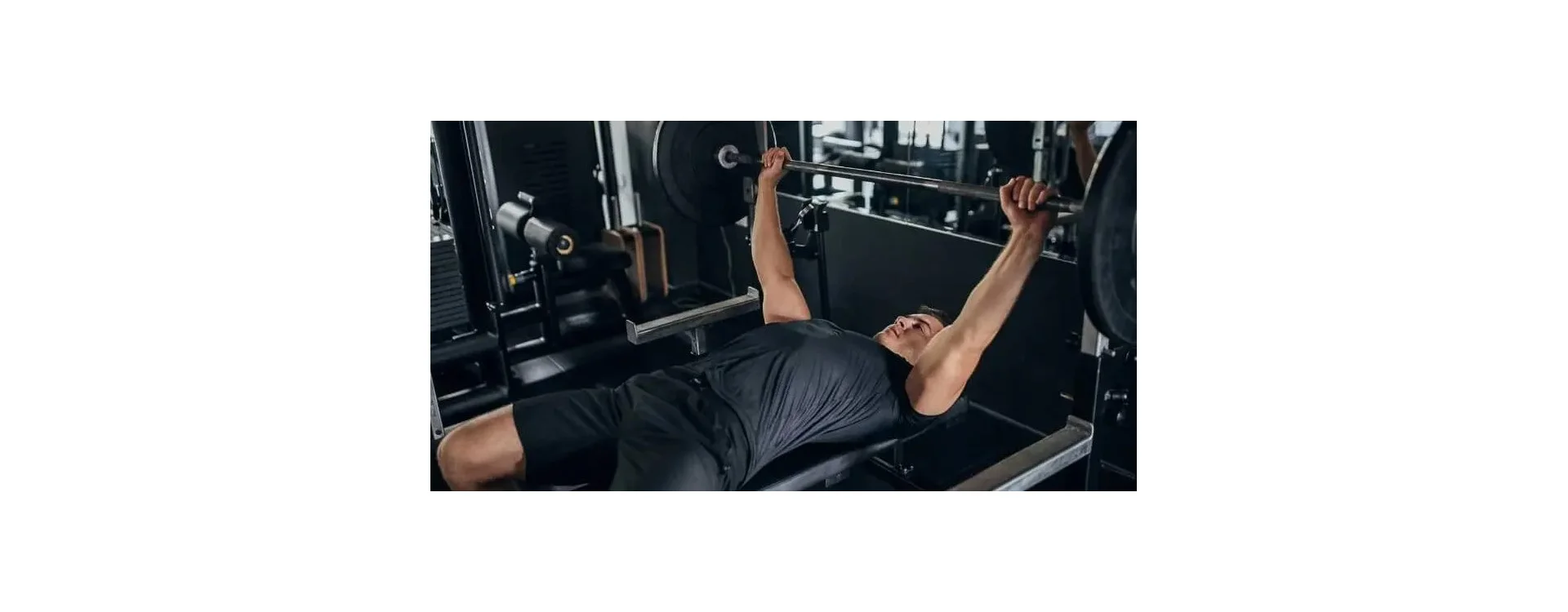
For your arch to hold on the bench press, build it with your legs and hands, not with your back: feet placed to drive toward the head of the bench, open palm set into the bar before you close your hand, then a slide until the back of your neck is pinned. Keep your back loose during this setup and only squeeze your shoulder blades at the start of the descent. Above all, don't let the leg drive go when you unrack the bar from the hooks: that is the moment most arches collapse.
The moment the arch disappears
A nice arch on an empty bench guarantees nothing. What counts is what is left of it once the load is above your chest, and the collapse almost always happens at the same moment: when the bar leaves the hooks. The cause is a very common way of setting up: you get into position, freeze, then unrack the bar and count on the position to follow. Yet three points of contact work at the same time on the bench press, the feet on the floor, the upper back on the bench and the hands on the bar, and each one must stay active from the unrack until the arms are locked out. That is what makes this lift more technically demanding than the squat or the deadlift.
Your legs and hands make the arch, not your back
The useful arch comes from the sternum rising and the rib cage opening. Two pushes aimed in the same direction take care of that: the legs against the floor and the palm against the bar. Your back, on the other hand, must stay loose during the setup. Shoulder blades squeezed too early stiffen the upper back and stop the chest from rising as high as it could. Relax your back and your abs: as the rib cage rises, the shoulder blades find their place on their own.
Setting up in the right order
- Lie down offset from the bar. Don't place yourself directly under it right away: set up slightly further along the bench, so that you have to slide on the bench to get back to it.
- Place your feet to drive horizontally. Heels down or raised, it doesn't matter: go with the foot position that lets you drive hardest toward the head of the bench without your feet slipping. For most lifters, it is roughly directly below the uprights of the rack, with a stance slightly wider than shoulder width. This drive lifts the sternum and opens the rib cage.
- Set the bar in your palm before closing your hand. Take your grip width with an open hand and press your palm against the bar until it settles deep in your hand, where it no longer moves. Squeezing your fingers hard before that point locks your wrist at an unfavorable angle. Well-defined knurling helps you feel that the bar is in place: our knurling guide covers this point.
- Slide until the back of your neck is pinned. Push with your thighs and your palms at the same time. Your body moves up the bench, the bar presses more and more down through the back of your neck, and the arch forms from the combination of these two pushes alone. You are in position when the bar is above your eyes and the back of your neck rests flat and firmly on the bench. Then squeeze the bar as hard as you can.
Unracking the bar without letting anything go
As soon as the bar leaves the hooks, its weight shifts the center of gravity of the whole system toward your feet and pulls the rib cage down. Many lifters relax their legs at that exact moment, and everything sinks. Instead, keep the horizontal drive throughout the bar's path, from the hooks to directly above your starting point. As long as your legs are driving, the back of your neck stays pinned and the arch doesn't move.
Your back: loose during setup, locked for the descent
Squeezing the shoulder blades isn't dropped, it just comes later. Once the bar is above your chest, the rib cage has reached its height: now contract your shoulder blades and the backs of your shoulders to make your upper body rigid in this position. During the descent, keep the intention of pushing your chest toward the bar. Over the last few centimeters, it is the rib cage that makes contact, not the bar that sinks into the sternum.
Breathing specific to the bench press
The bracing used for the squat and the deadlift, belly expanded 360° against the belt, doesn't suit this lift. By filling your torso in every direction, you partly undo the arch. On the bench, send the air to your chest so that it stays high and open, and compact your back instead of inflating it.
| Phase | Do | Avoid |
|---|---|---|
| Position on the bench | Lie down offset, then slide toward the bar | Lie down directly under the bar |
| Feet | Look for the strongest horizontal drive without slipping | Set heel height before the direction of drive |
| Hands | Open palm against the bar, then close the hand | Squeeze before the bar is set |
| Back during setup | Loose, left free to follow the rib cage | Shoulder blades contracted from the start |
| Unrack | Legs active until the starting position | Release the drive as soon as the bar is out |
| Descent | Shoulder blades squeezed, chest moving toward the bar | Let the bar crash onto the chest |
| Breathing | Air into the chest, compact back | Inflate the belly as for the squat |
A bench that doesn't move
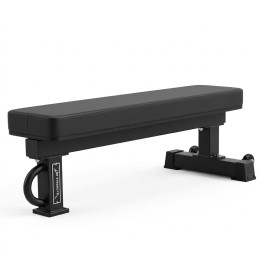
This whole setup relies on a reliable base. A backrest at least 30 cm wide leaves room for the shoulder blades, firm padding with a grippy cover lets you stop the slide exactly where you want, and a height of 42 to 45 cm, the standard for powerlifting benches, lets most body types drive properly with their legs. Add a comfortable load capacity. The UF Power Bench flat bench, with its 35 cm backrest and 750 kg load capacity, was designed for this work; our criteria for choosing a bench go over each of these points in detail.
The Uni Strength equipment for a solid arch
A bench that does not slide, a monolift to unrack without losing your setup, safeties to press heavy alone: here is the equipment we offer to work on your arch, shipped from our warehouse in France.
| Product | Key points | Price incl. VAT |
|---|---|---|
| Competition Flat Weight Bench 30 cm Red - UF Power Bench | Competition-compliant 30 cm flat bench, 750 kg capacity, 10 cm pad | 239,99 € |
| Wide Weight Bench (30 or 35 cm) - UF Power Bench | Flat bench, 750 kg capacity, 30 or 35 cm pad, 11-gauge steel | 239,99 € |
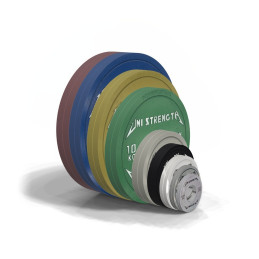
| 159 kg UF Calibrated Plates Set | Cast-iron calibrated plates, IPF colour code, 10 g tolerance per plate | 899,99 € |
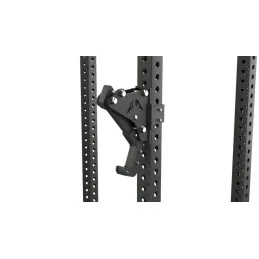
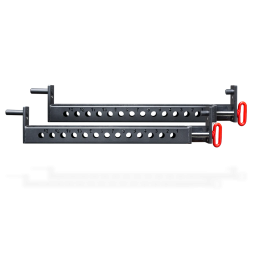
| Monolift for Rack and powerlifting CS-1 | Spring-loaded monolift sold as a pair: squat and bench press without a walkout | 269,99 € |
| CS-1 Folding Safeties | 76 or 104 cm folding safeties, 3 mm steel, 500 kg, sold as a pair | from 249,99 € |
Prices incl. VAT as of 9 October 2026. Free delivery from €300 excl. VAT in mainland France, instalment payment available. For advice on your home gym setup, write to [email protected] or call +33 4 83 39 67 96.
Further on the shop: Flat Weight Benches, CS-1 Rack and Squat Cage Accessories, Calibrated Powerlifting Plates, Weight Benches.
Frequently asked questions
My arch collapses when I unrack the bar: what should I do?
You are probably relaxing your legs as the bar comes out of the hooks. Keep the horizontal drive until the bar is above your starting point.
When should I squeeze my shoulder blades?
At the start of the descent, not before. During setup, a contracted back holds back the rise of the rib cage; let your legs and palms position your shoulder blades.
Is it better to raise my heels?
That is not the right criterion. Go with the foot position that gives the strongest horizontal drive without slipping, usually around directly below the uprights and slightly wider than your shoulders.
Should I go through the whole setup during warm-ups?
Yes, on every set, including with the empty bar, so that each step becomes automatic.
A solid arch is therefore built with your legs and hands, protected during the unrack and only locked in during the descent. To work on it in good conditions, choose a stable base from our weight benches and a suitable bar from our Olympic bars. If you are unsure which model to pick, our article on the best weight bench will guide you, and our SBD tips put the bench press back into the context of preparing for all three lifts. For centering and unracking cues on both the squat and the bench, read how to set up under the bar.