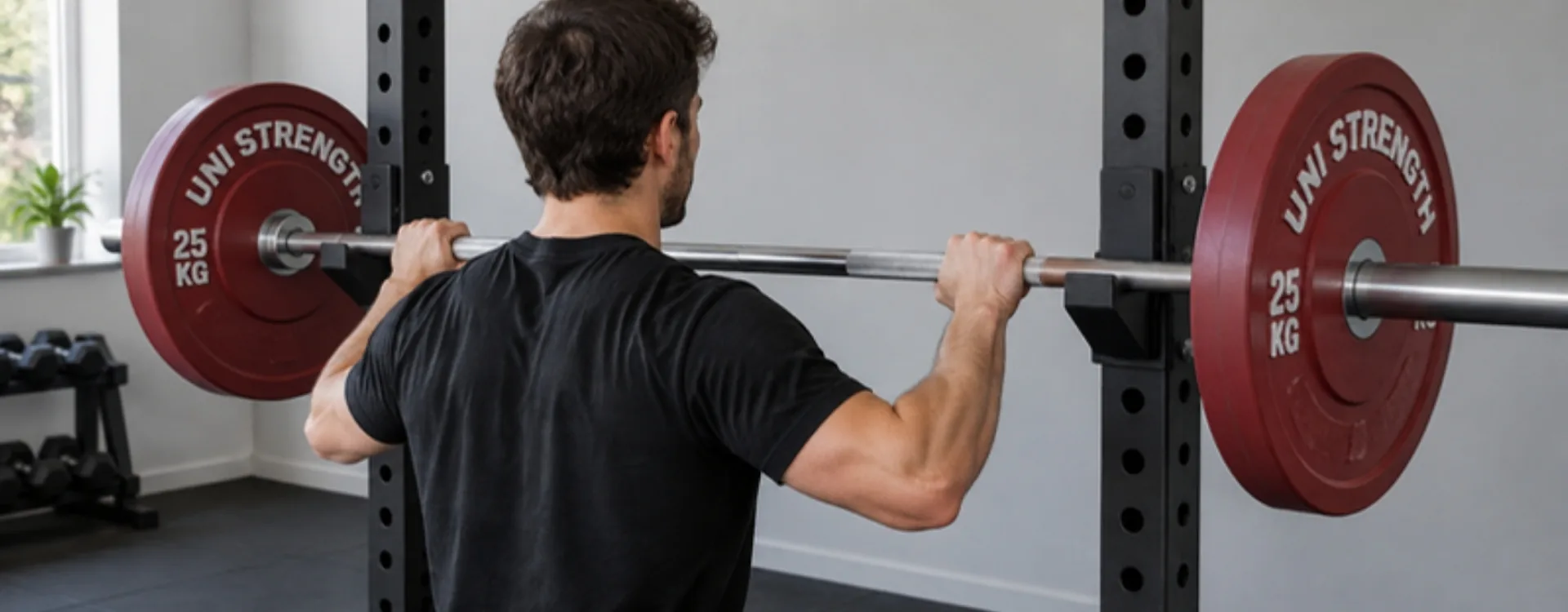
A stable bar starts before the first rep: center it using body landmarks (sternum, thumbs, ankle bones), lock in your hands and upper back, then unrack it with your hips directly underneath. On the bench press, set your hips and heels before you touch the bar, unrack it with locked arms by pulling with your lats, and press it back in an arc toward the uprights rather than straight up.
It all happens before the bar leaves the hooks
With a heavy load, a bar sitting off center, hands that leave slack or hips that are not set force your stabilizers to keep correcting throughout the lift. You pay for that constant catching up when it is time to press. Here, lift by lift and in the order you perform them, are the cues to set during your setup.
Squat: center the bar without relying on your eyes
Being off by one centimeter is enough for one trap to carry more than the other and for the bar to tilt as soon as the load goes up. A quick glance cannot pick up that kind of gap. Use physical landmarks instead:
Sternum on the bar: before you duck under the bar, press the middle of your chest against it. You position yourself by touch, not by guesswork.
Thumbs: place each thumb one thumb width from the knurling ring, so your grip is identical on both sides.
Feet: line up your ankle bone, the bony bump on the side of your ankle, with the knurling ring on the same side. Your base of support becomes symmetrical under the load.
The check: with the bar on your back, let go of it for a split second. If your body moves straight back, without rotating to one side, the bar is centered.
The rings marked in the knurling are there to serve as landmarks, and their position varies with the type of bar: our guide to choosing a weightlifting bar helps you locate them on yours. On a powerlifting bar the two rings are 81 cm apart (IPF standard); on a weightlifting bar, 91 cm (IWF standard).
Squat: hands and upper back that leave no slack
Try sliding your pinky under the bar instead of wrapping it over the top with the other four fingers. Your hand changes orientation, your palm drives force in a straight line into your forearm, and you can squeeze much harder. The bar then stays still on the way down and your small stabilizers no longer have to catch it. If this position bothers your elbows or wrists, widen your hands a little.
Once your grip is set, pull the bar down into your traps, as if you were trying to bend it around your neck. Your lats contract and give your upper back a hard shelf the bar can no longer slide on.
Squat: unrack without shearing your lower back
With your feet firmly planted, rotate your thighs outward, knees pushed out. Your hips go into torque and your glutes and hamstrings tighten before the bar even moves.
Then position your hips directly under the bar, not behind it. Unracking with your torso leaning forward and your hips back puts shear on your lower back from the very first step. With your hips under the bar, you lift it in line and the descent starts with a controlled sit back.
Bench press: set your hips and legs
A detail rarely taught before you lie down: use your hand to pull aside the flesh of your inner thighs that gets squashed against the bench. That tissue locks your hips; once it is cleared, your hips can move forward, your feet can come back, and your arch becomes both bigger and more solid.
Then spread your thighs and drive your heels into the floor. Your glutes and hamstrings are already contracted while the bar is still resting on the uprights: leg drive is built at this stage, not when you press the bar.
Bench press: unrack, lower, press
Unrack with locked arms: elbows straight, bring the bar over your sternum by pulling with your lats. Pushing it out of the hooks loosens your shoulder blades and costs you the base you built on the bench.
Meet the bar: on the way down, lift your sternum up to meet it and keep your whole body braced.
Press in an arc: press while slightly screwing your hands into the bar. The bar does not travel straight up: it drifts back toward the uprights in a J curve, the most mechanically favorable path.
Checklist before your first rep
Lift
Cue
Fault avoided
Squat
Sternum, thumbs and ankle bones lined up with the rings
One trap loaded more than the other, bar tilting
Squat
Pinky under the bar, bar pulled into the traps
Bar moving or sliding during the descent
Squat
Thighs rotated outward, hips under the bar
Lower back sheared on the unrack
Bench press
Hips cleared, thighs spread, heels driven down
Fragile arch, legs kicking in too late
Bench press
Locked-arm unrack with the lats, J-curve press
Loose shoulder blades, less efficient vertical path
Set up your rack and bench so these moves are possible
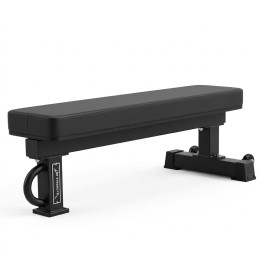
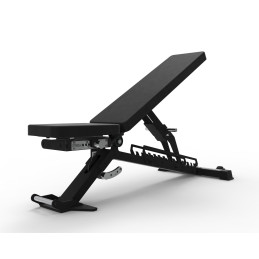
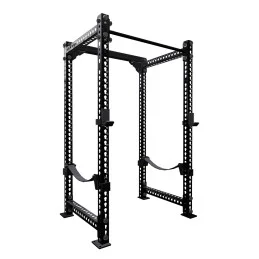
These cues assume your hooks are at the right height. On the squat, you should be able to unrack the bar by straightening your legs 2 to 3 cm, without going up on your toes. A power rack with tight hole spacing like the CS-1 lets you dial in that height to the centimeter. On the bench press, a locked-arm unrack is only clean if the hooks sit just below the height of your extended arms: a standalone bench placed in a rack makes this easy, a bench with fixed uprights rarely does.
The Uni Strength equipment to apply these cues
A rack with fine hole spacing to find the right hook height, a stable bench for your arch, calibrated plates to load accurately: here is what we offer, shipped from our warehouse in France.
Cast-iron calibrated plates, IPF colour code, 10 g tolerance per plate
899,99 €
Prices incl. VAT as of 8 October 2026. Free delivery from €300 excl. VAT in mainland France, instalment payment available. For advice on your home gym setup, write to [email protected] or call +33 4 83 39 67 96.
How do I check that the bar is centered on my back?
Press your sternum against the bar before you get under it, line up your thumbs and ankle bones with the knurling rings, then briefly let go of the bar: your body should move straight back, without turning.
Where should my pinky go on the squat?
Under the bar rather than over it. Combined with pulling the bar down into your traps, this placement keeps the bar from moving.
On the bench press, should I push or pull the bar out of the hooks?
Pull it, with locked arms, using your lats, until it is over your sternum. Pushing it loosens your shoulder blades.
What path should the bar follow on the way up?
A J curve that drifts slightly back toward the uprights. A slight rotation of your hands as you press helps you follow it.
How high should I set the rack hooks for the squat?
Low enough to unrack the bar by straightening your legs 2 to 3 cm, without rising onto your toes. On a rack with fine hole spacing such as the CS-1, that height can be found to the centimeter.