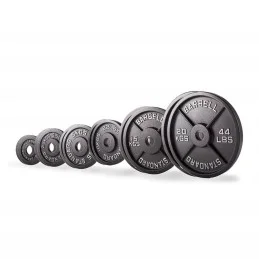
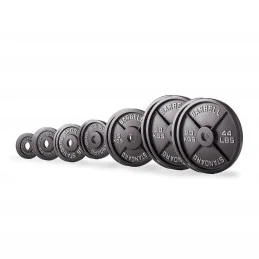
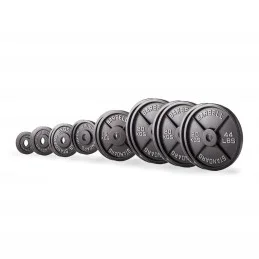
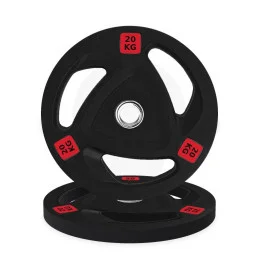
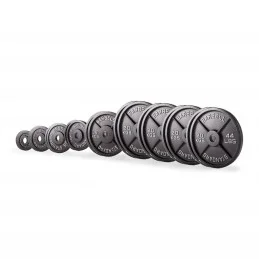
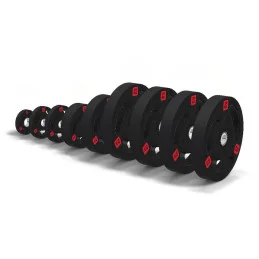
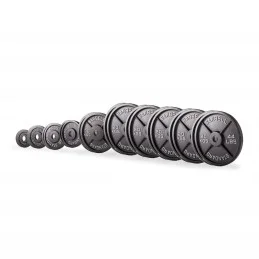
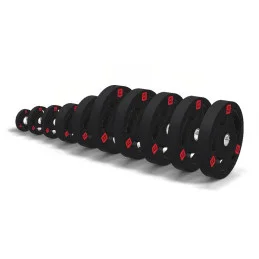
50 mm Olympic Plates: Cast Iron, Rubber and Calibrated Plates
This category brings together 50 mm bore Olympic plates: cast iron plates, rubber plates, calibrated and precision plates, plus training chains. They fit any Olympic bar and allow progressive work for strength, hypertrophy or general fitness.
Exercises and Muscles Worked with Olympic Plates
Loaded on an Olympic bar, plates allow a wide variety of exercises for overall muscle development.
|
Exercise
|
Muscles Targeted
|
|
Bench Press
|
Chest, triceps, shoulders
|
|
Barbell Squat
|
Quadriceps, glutes, hamstrings
|
|
Deadlift
|
Back, hamstrings, glutes
|
|
Barbell Row
|
Back (lats, traps, rhomboids), biceps
|
|
Military Press
|
Shoulders, triceps, upper back
|
Cast Iron or Rubber: Which Plates to Choose?
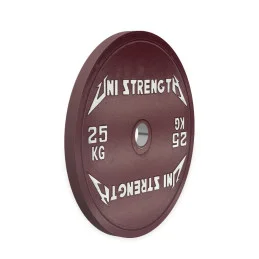
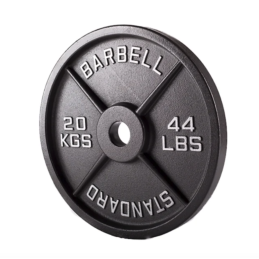
Cast iron is more compact for the same weight: you can load more on a bar and it takes up less storage space. Rubber absorbs impacts, protects the floor and the bar and reduces noise, which makes it a good choice in an apartment. Both suit exercises that require strict control of the movement, such as the bench press, squat or deadlift.
Which Types of Plates to Choose?
We offer a varied range suitable for all levels and needs:
- Olympic cast iron plates: a classic for strength and weightlifting training.
- Calibrated plates: perfect for athletes seeking high load precision.
- Chrome plates: combining performance and aesthetics, ideal for a well-appointed home gym.
- Precision Olympic weights: for those who want exact weight distribution, essential in powerlifting.
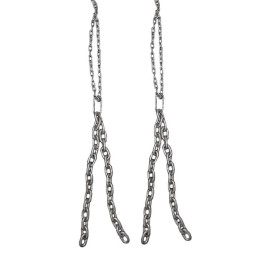
- Training chains: allowing progressive resistance to maximize muscle contraction.
Choose quality weights and boost your performance
Whether you are a beginner or an experienced athlete, for a home gym or a commercial gym, choose the material according to where you train and the precision you need: cast iron or rubber for everyday training, calibrated and precision plates for powerlifting.
Make the choice of performance and equip yourself now for more efficient and secure workouts!
Frequently asked questions about Olympic plates
Cast iron or rubber-coated plates: what is the difference?
Both are 50 mm Olympic plates. Bare cast iron is the most compact and affordable; the rubber-coated version protects the floor, the bar and the other plates from knocks and is quieter. Neither is meant for dropping the bar: use bumpers for that.
Which plate sets do you offer?
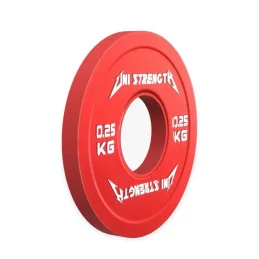
Sets from 107.5 kg to 267.5 kg, in cast iron or rubber, plates in pairs from 1.25 kg to 25 kg and fractional plates from 0.125 kg to 5 kg to fine-tune the load.
Do they fit an Olympic bar?
Yes, all our plates have a 50 mm bore and fit any Olympic bar (power bar, weightlifting bar, all-round bar). They do not fit standard 28 or 30 mm bars.
What are lifting chains for?
Chains add variable resistance: as the bar rises, more links leave the floor and the load increases. They strengthen the top of the movement on squat, bench press and deadlift.
How much total weight does a home gym need?
Count the bar (20 kg) plus plates. A 107.5 kg set is enough to start; 147.5 to 187.5 kg covers an intermediate squat or deadlift. You then add 20 or 25 kg pairs.
Our guides: which weight plates to choose?, olympic weights vs. standard weights for your home gym, how to choose Olympic plates, rubber or cast iron plates.