Why Choose a Barbell?
A barbell offers versatility and efficiency to strengthen the entire body. With constant muscle tension and freedom of movement, it promotes precise and progressive training. Whether to build strength, improve technique, or isolate muscle groups, it's an essential tool for all levels.
How to Choose the Right Barbell?
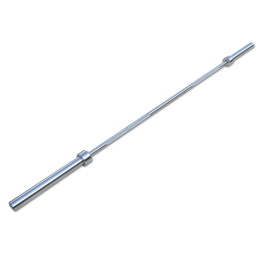
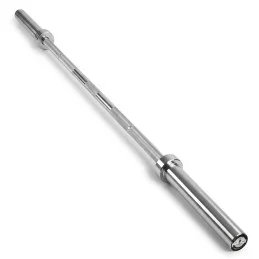
To choose the right barbell, consider your goals, experience level, and types of exercises you plan to do.
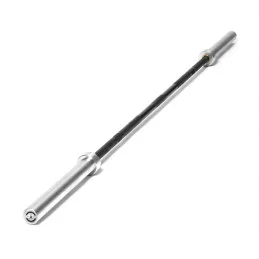
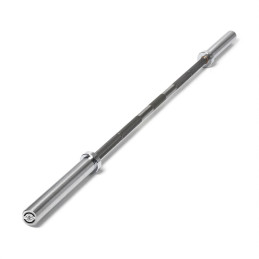
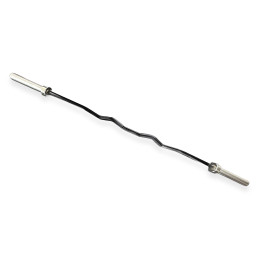
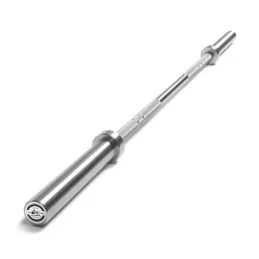
If you're starting out or looking for a versatile tool for moderate loads, a versatile Olympic bar such as the UF Basic is ideal; for arm work, the lighter and more compact EZ bar completes the set-up. For heavy loads or technical lifts like squats or bench press, an Olympic bar is essential due to its durability, standardized length and rotating sleeves.
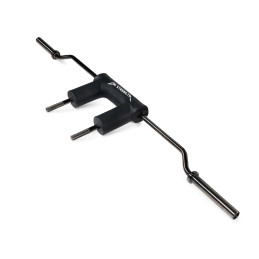
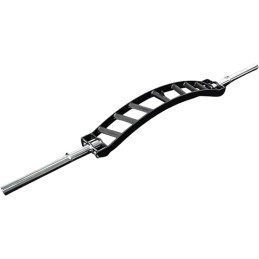
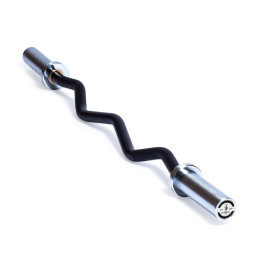
Specialty bars like the EZ bar are great for reducing joint stress during arm isolation exercises, while the Safety Squat Bar spares the shoulders when squatting and the UF-Deadlift Goerner bar is dedicated to the deadlift.
Finally, it's crucial to check the material quality, grip, and maximum capacity to ensure safe, comfortable, and long-lasting use at any training intensity.
Which Exercises to Do with a Barbell?
| Exercise |
Targeted Muscles |
Notes |
| Squats |
Quads, glutes, hamstrings, lower back |
Fundamental lower-body exercise that builds strength and stability |
| Bench Press |
Chest, triceps, shoulders |
Targets upper body strength and hypertrophy |
| Deadlifts |
Lower back, glutes, quads, hamstrings, traps |
Full-body movement ideal for strength and functionality |
| Barbell Row |
Lats, traps, biceps |
Strengthens the back and improves posture |
| Biceps Curl |
Biceps, forearms |
Effective isolation with straight or EZ bar |
| Triceps Extension |
Triceps |
Best performed with EZ bar to protect joints |
| Hip Thrust |
Glutes, hamstrings |
Great for glute strength and hip power |
Why Buy an EZ Curl Bar?
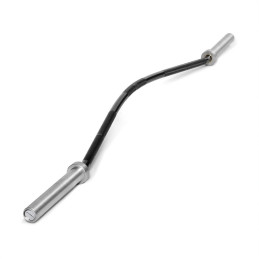
The EZ bar is ideal for isolation exercises, especially for biceps and triceps. Its curved design reduces wrist and elbow strain, offering a more natural and comfortable grip. It allows smooth, precise movements while reducing joint injury risk. Versatile and beginner-friendly, it's perfect for curls and extensions with optimal muscle engagement.
Frequently asked questions about barbells
Which barbell should I choose for my training?
UF-Power Zeus power bar for powerlifting (stiff bar, marked knurling, competition rings); UF-Haltéro Hélios bar for weightlifting (smooth sleeve rotation); 20 kg, 220 cm CrossFit bar for all-round use; UF Basic bar with centre knurl to get started. For variety: Safety Squat Bar, Buffalo, CSB multi-grip, UF-Deadlift Goerner and EZ bars.
Olympic bar or standard bar?
An Olympic bar weighs 20 kg, measures 220 cm and has 50 mm sleeves compatible with all Olympic plates (bumpers, cast iron, calibrated). Standard 28 or 30 mm bars do not take these plates. The whole Uni Strength catalogue uses the 50 mm Olympic format.
What is the centre knurl for?
The centre knurl grips the back during squats and stops the bar from sliding. It is present on power bars and the UF Basic bar; it is absent or very light on a weightlifting bar so it does not irritate the neck during cleans.
Which bar for a small space?
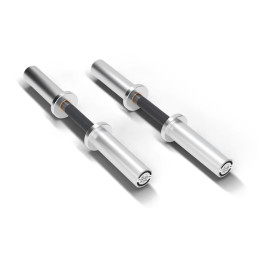
The 120 cm UF-Curl EZ bar, the Rackable Curl EZ bar, the 51.5 cm Castor & Pollux Olympic dumbbell handles and the HRBD adjustable bar (same plates as the adjustable dumbbells) cover arm and shoulder work without a 220 cm bar.
How do I maintain a barbell?
Brush the knurling with a nylon brush after chalk sessions, wipe the bar and apply a thin coat of light oil on bare steel. Do not leave the bar loaded on the rack and avoid damp rooms.
Our guides: best weightlifting bars in 2026, barbell knurling explained, preparing your first powerlifting competition, bar coating and knurling.