Olympic Bar Maintenance Guide
Regular maintenance of your Olympic bar is essential to ensure its longevity, prevent oxidation, and maintain optimal bearing smoothness. Proper maintenance protects your investment and ensures consistent performance during your training sessions.
In short
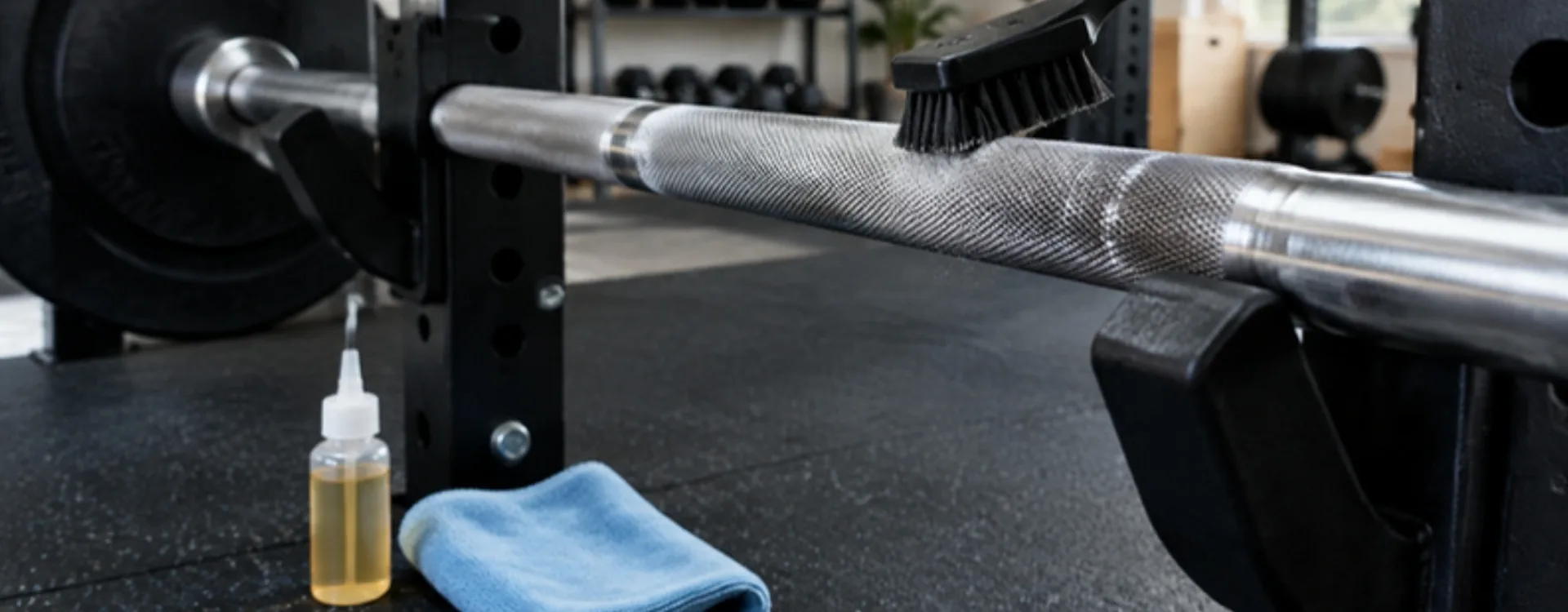
- Equipment: stiff nylon brush, silicone-free oil (3-in-1 or light mineral oil) and a microfibre cloth; keep the copper brush for heavily oxidised bare steel.
- Brush the knurling after every intense session, at least once a week.
- Oiling depends on the finish: bare steel every 1 to 3 weeks, black oxide and zinc 2 to 4 weeks, standard chrome 1 to 2 months, hard chrome, cerakote and stainless steel 1 to 3 months.
- Bearings: 3 to 5 drops of light oil on the sleeve every 2 to 6 months; store the bar horizontally, in a dry place, never on the floor.
Required Equipment
Minimal equipment is sufficient for effective maintenance:
- Stiff nylon brush
- Professional tip: Use a drill-attachable nylon cleaning brush to scrub your bar in record time. This method significantly speeds up the cleaning process.
- Warning: This method is too aggressive for delicate coatings like black zinc or cerakote. Reserve it for bare steel, hard chrome, or stainless steel bars.
- Brass brush (optional)
- Reserved exclusively for heavily oxidized bare steel bars.
- Caution: Can irreparably damage protective coatings. Use as a last resort only.
- Silicone-free oil
- 3-in-1 oil is perfectly suitable and economical.
- Recommended alternatives: light mineral oil or specific Olympic bar oils.
- Clean microfiber cloth
- Essential for wiping excess oil and achieving a flawless finish.
Recommended Cleaning Frequency
Maintenance frequency depends on three main factors:
- Climate conditions: Temperature and humidity directly influence oxidation risk. A warm, humid environment accelerates rust formation and requires more frequent maintenance. Conversely, a dry, temperate climate slows this process.
- Usage intensity: Sweat is your bar's primary enemy. It contains salt that accelerates corrosion. Chalk, while improving grip, absorbs moisture and holds it against the metal, creating an environment conducive to oxidation. The more intensively you use your bar, the more regular maintenance must be.
- Coating type: Each finish has its own corrosion resistance characteristics:
| Finish Type | Corrosion Resistance | Maintenance Frequency |
| Bare steel | Very low | 1 - 3 weeks |
| Black Oxide | Low to moderate | 2 - 4 weeks |
| Zinc (bright zinc / black zinc) | Moderate | 2 - 4 weeks |
| Standard chrome | Good | 1 - 2 months |
| Hard Chrome | Excellent | 1 - 3 months |
| Cerakote | Excellent | 1 - 3 months |
| Stainless steel | Superior | 1 - 3 months |
4-Step Cleaning Protocol
Step 1: Knurling brushing
- When: Ideally after each intensive use, at minimum once per week.
- How: Use a stiff nylon bristle brush following the knurling grooves. Brush in the direction of the ridges to effectively dislodge chalk, dead skin residue, and dried sweat.
- Tip: For quick daily cleaning, a simple wipe with a dry cloth is sufficient after each session.
Step 2: Protective oil application
- Frequency: According to the bar type indicated in the previous table.
- Method:
- Apply a few drops of silicone-free oil to a clean cloth.
- Rub evenly over the entire knurling surface.
- Allow to penetrate for 5 to 10 minutes for optimal protection.
- Brush again with the nylon brush to work the oil into the grooves.
- Important: Never apply oil containing silicone, which would leave a dangerous slippery film.
Step 3: Bearing maintenance (Olympic bars only)
- Signs requiring maintenance:
- Less smooth rotation than originally
- Rubbing or grinding noises
- Abnormal resistance during rotation
- Procedure:
- Position the bar vertically (use bumpers or a stable support).
- Pour 3 to 5 drops of light oil directly onto the rotating sleeve.
- Spin the sleeve several times to distribute the oil.
- Let rest for 2 to 4 hours.
- Repeat the operation on the other side.
- Wipe excess oil.
- Note: This operation is necessary every 2 to 6 months depending on usage.
Step 4: Finishing and wiping
With a clean, dry microfiber cloth, carefully wipe the entire bar to remove excess oil. The bar should have a slightly satin surface, neither greasy nor slippery, with an invisible protective film.
Storage Tips
Do:
- Store your bar horizontally on a wall mount or dedicated rack.
- Choose a dry location, away from humidity and temperature variations.
- Ensure sufficient ventilation around the bar.
- Use a breathable fabric cover if the bar remains unused for a long time.
Avoid:
- Never place the bar directly on the ground (risk of humidity and dust).
- Avoid outdoor storage or in unheated environments.
- Do not leave the bar permanently loaded (risk of metal deformation).
- Never use non-breathable plastic covers (condensation).
Warning Signs and Solutions
- Rust spots appearing: Vigorously brush the affected area with a nylon brush (or brass for bare steel), then oil generously. Repeat if necessary.
- Loss of knurling grip: Deep clean with the intensive brushing method, then reapply protective oil.
- Seized bearings: Lubricate immediately. If the problem persists, professional disassembly and cleaning may be necessary.
Invest 10 minutes every 2 to 4 weeks to enjoy your bar for decades!
To go further in the shop: Olympic bars, Specialty bars, Barbells. Also worth reading: our knurling guide.
Frequently asked questions
What do you need to maintain an Olympic bar?
A stiff nylon brush, a silicone-free oil (3-in-1 or light mineral oil) and a microfibre cloth; a brass brush is only for heavily oxidised bare steel bars.
How often should a bar be cleaned?
Brush the knurling after each intensive session, at least once a week; oiling depends on the coating, the climate and how hard the bar is used (sweat and chalk speed up corrosion).
How do you apply protective oil?
A few drops on a clean cloth, rub over the whole knurling, let it soak in for 5 to 10 minutes, then brush again to work the oil into the grooves and wipe off the excess.