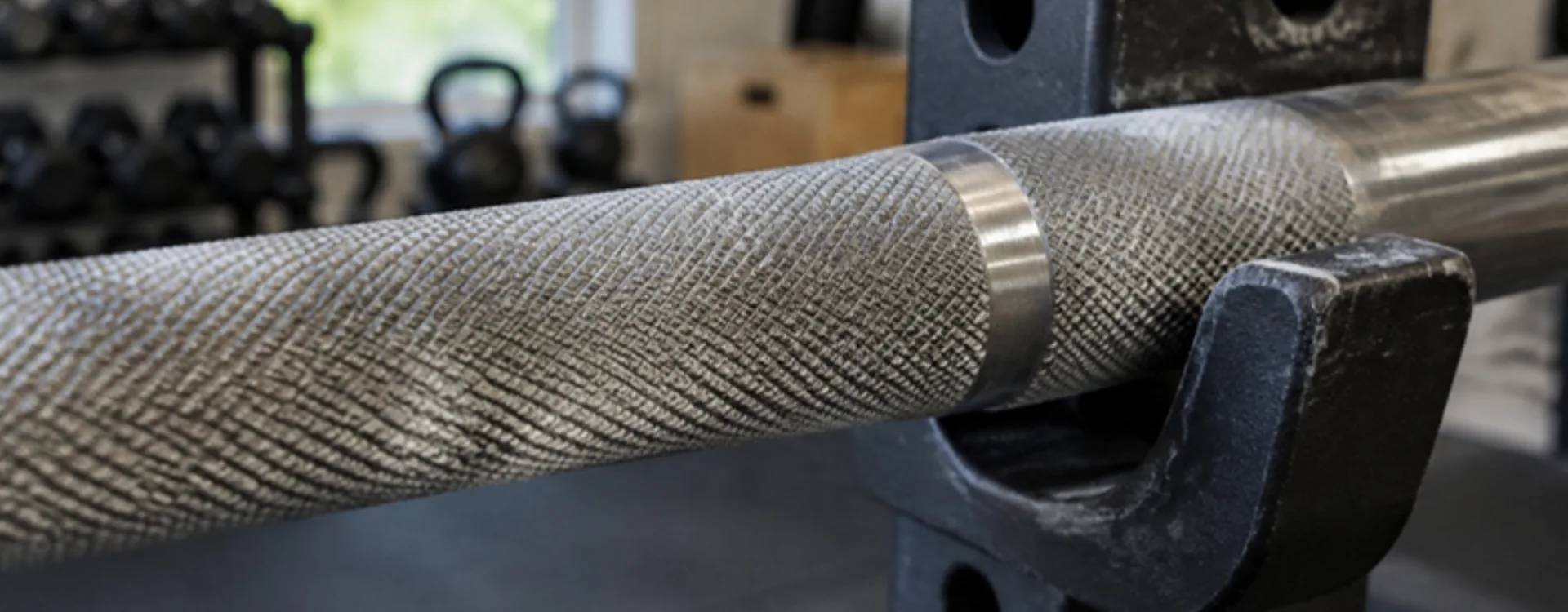
Barbell Knurling Guide
Knurling, also called moletage in French, is one of the most important criteria to consider when choosing a weightlifting bar, but it remains poorly understood by the majority of athletes.
The shape, depth, density, and coating are the main elements that make up the knurling.
In short
- Knurling is the second criterion when choosing a bar, after the type of bar: its shape, depth, density and coating determine the grip.
- Three types: hill (flat tops, gentle, for beginners and sensitive hands), volcano (hollowed top, a balance between grip and comfort) and mountain (sharp points, very aggressive, reserved for powerlifting).
- Choose according to your training: aggressive knurling for powerlifting and heavy loads at low reps, gentler for CrossFit and long sets.
- Centre knurling: a zone of about 10 to 15 cm in the middle of the bar, useful for the squat; usually absent on weightlifting bars.
The importance of knurling
When you consider all the factors that come into play when purchasing a weightlifting bar, knurling is the second most important criterion after the type of bar.
Knurling is used to improve your grip during movements with the bar. Knowing your training style and goals greatly helps determine which knurling suits you best. Knurling is supposed to enhance grip.
If you are a powerlifter, passive knurling will penalize your grip as it will not provide enough traction.
If you are a CrossFitter training with high repetitions, aggressive knurling will harm your grip as it will eventually cause pain.
Knurling should be comfortable enough to allow you to complete your training and effective enough to perform your movements.
Knurling also has secondary benefits, such as helping to center the bar on your back, maintaining a consistent hand position, and much more.
3 types of knurling
There are three main types of knurling, each with its advantages and disadvantages depending on your lifting style, repetition sets, training volume, and general preferences.
Hill Knurling
Hill knurling consists of a pattern with smooth, flat peaks. This type of knurling is ideal for beginners, athletes on a budget, and people with sensitive hands. However, it is not recommended for heavy training. You will likely need to use lifting straps to help your grip, as chalk will not always be sufficient.
Volcano Knurling
Volcano knurling provides good traction without being too aggressive, sitting between passive and aggressive knurling. The top of the relief is hollowed (crater) to allow more contact points. The depth of volcano knurling is one of the biggest factors influencing texture and grip.
Mountain Knurling
Mountain knurling is the most aggressive type and is found almost exclusively on powerlifting bars. This knurling pattern is best suited for advanced athletes training with heavier loads and lower repetitions. It features prominent points resembling mountains, offering a more focused single contact point. Sharpness plays a more important role in this variety, with some having rounded tips and others sharp tips.
The importance of knurling density
Knurling density is another element to consider when choosing your bar. A high density will allow you to maximize your grip while distributing pressure. Consider your training style and preferences to determine which knurling density will suit you best.
Central Knurling
Central knurling is a specific knurling area located in the middle of the bar and extends about 10 to 15 cm in width. It can offer two main advantages during the squat:
- Better grip: central knurling provides a rough surface so the bar does not slip on the back during the squat
- Improved alignment: central knurling can also help align the bar in the middle of the back, which can help avoid squatting with an unbalanced bar
However, potentially in the front squat position, central knurling can be uncomfortable. This is why weightlifting bars generally do not have central knurling, and cross-training bars often have more passive knurling in this area to minimize discomfort. It is important to consider your personal preferences and specific squat needs when choosing a bar with or without central knurling.
To go further in the shop: Olympic bars, Calibrated plates, Barbells. Also worth reading: our Olympic bar maintenance guide.
The knurling on Uni Strength bars
| Discipline | Bar | Knurling |
|---|---|---|
| All-round | UF Basic Olympic bar | 12 cm centre knurl |
| Powerlifting | UF-Power Zeus powerlifting bar | deep, aggressive knurl, 29 mm diameter |
| Weightlifting | UF-Haltéro Helios weightlifting bar | volcano type, moderately aggressive, no centre knurl |
| Deadlift | UF-Deadlift Goerner bar | aggressive, no centre knurl, 27 mm diameter |
| Squat (specialty bar) | UF-Buffalo bar | aggressive, 32 mm diameter |
Specifications taken from the product pages on 9 October 2026.
Frequently asked questions
What is the knurling of a bar?
The pattern cut into the bar to improve grip; its shape, depth, density and the coating determine the grip. It is the second selection criterion after the type of bar.
What are the three types of knurling?
Hill (flat peaks, gentle, for beginners and sensitive hands), volcano (hollowed peak, a good grip-comfort compromise) and mountain (sharp points, very aggressive, reserved for powerlifting).
Which knurling for which practice?
Aggressive for powerlifting and heavy low-rep work; milder for CrossFit and long sets, where too sharp a knurling ends up hurting the hands.