Weight Training Weights: Essential Tools for Your Progress
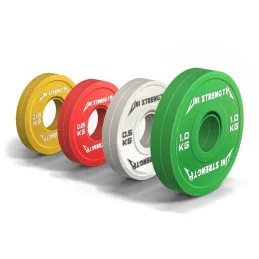
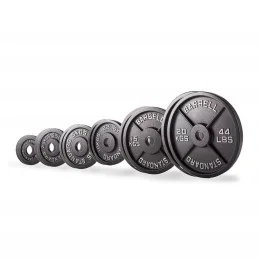
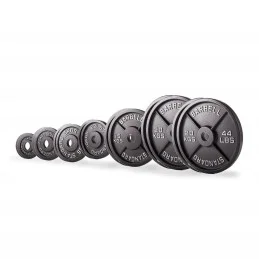
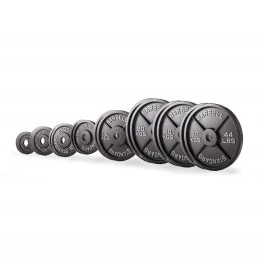
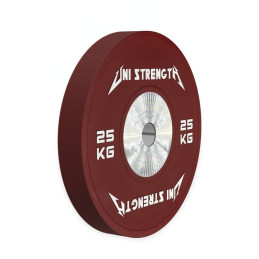
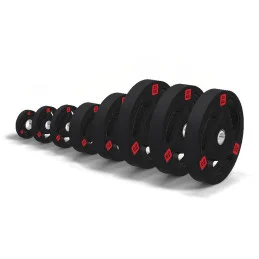
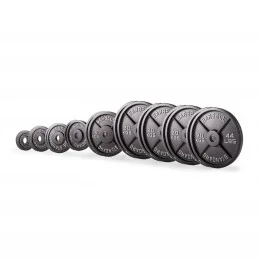
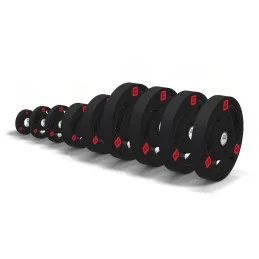
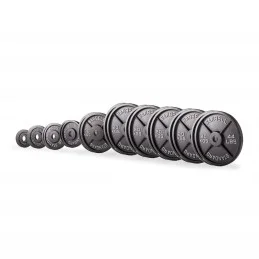
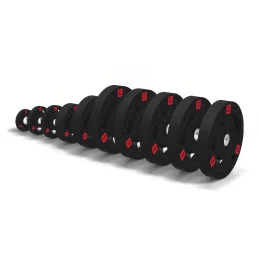
Weight training weights are essential for any workout program aimed at developing strength, power, and endurance. On our site, you will find a wide selection of cast iron plates, bumper plates, and Olympic weights, suitable for all levels and needs. Each type of weight offers specific advantages depending on your practice and goals.
How to Choose Your Weight Training Weights?
If you're a beginner, opt for cast iron plates or light bumper plates, perfect for mastering movements while progressing at your own pace. For experienced athletes, Olympic weights and heavier bumper plates allow you to reach ambitious goals while ensuring great safety.
Each type of available weight from Unistrength is designed to meet professional standards, ensuring an optimal training experience. Transform your training with reliable, durable equipment suited to your ambitions.
What Weight to Start Weight Training With?
If you're a beginner, it's essential to choose weights suited to your level to avoid injuries and promote optimal progress. To start, choose light weights that allow you to perform your movements with good technique.
Here are some guidelines:
- Adjustable dumbbells: Perfect for discovering basic exercises like bicep curls or lateral raises.
- 2.5 kg and 5 kg plates: Ideal for bars and more global exercises such as the bench press.
The goal is to find a load that challenges you without compromising your posture. A general rule: you should be able to perform between 8 and 12 repetitions with slight fatigue at the end of the set.
How to Increase Your Weights in Weight Training?
To progress effectively in weight training, it's crucial to increase your weights progressively, a method known as progressive overload. Here are some tips:
- Track your progress: Record the weights used for each exercise and adjust them over the weeks.
- Increase in small increments: Increase weights by 1 to 2.5 kg per week for isolation exercises and by 5 to 10 kg for compound movements such as squats or deadlifts.
- Improve your technique first: Do not increase the weights until you master the movement with proper execution.
- Listen to your body: If the load is too heavy and affects your posture, slightly reduce it to avoid injuries.
The key to progress is consistency and maintaining good execution at each stage.
What Type of Weights to Use for Weight Training?
Depending on your training goals, choose equipment suited to your objectives: dumbbells for isolation, weight plates for barbell training, or kettlebells for more dynamic work. Maintain proper posture with a neutral spine and engage your core to maximize efficiency while preventing injuries. Prioritize progressive overload to stimulate muscle growth.
Our Most Affordable Weight Training Weights
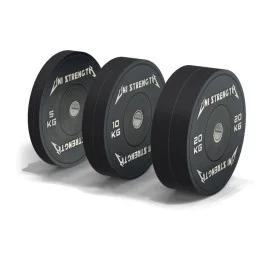
Discover our selection of affordable bumper plates, designed to balance performance and accessibility. Whether you choose cast iron plates or rubber-coated weights, you will benefit from durable and suitable products for both home gyms and commercial fitness centers. Equip yourself with high-quality plates, dumbbells, and bars to train with confidence!
Frequently asked questions about weight plates
Which weights should I choose to train at home?
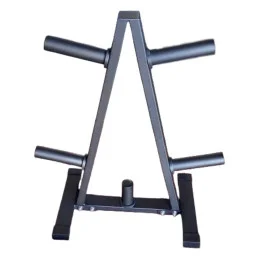
It depends on your space and your exercises. With little space, a pair of adjustable dumbbells replaces a dumbbell rack: 2 to 32 kg in 2 kg steps, 4 to 36 kg expandable to 65 kg, or up to 41.5 kg in 1.5 kg steps. With a rack and an Olympic bar: 50 mm plates, cast iron for squats, bench press and deadlifts, bumpers if you drop the bar. For dynamic work: cast iron kettlebells.
Which types of plates does Uni Strength offer?
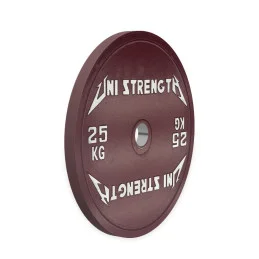
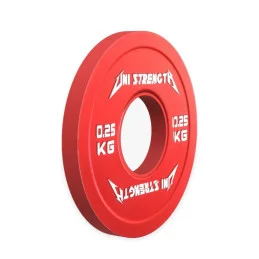
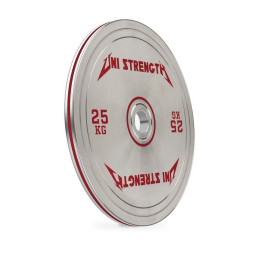
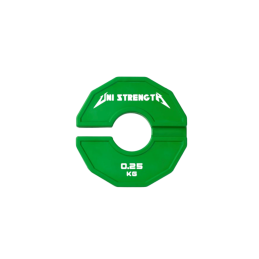
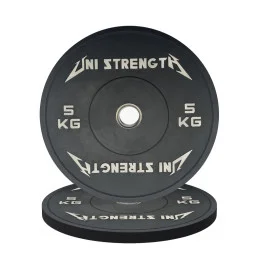
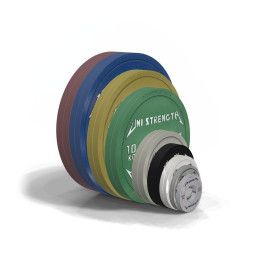
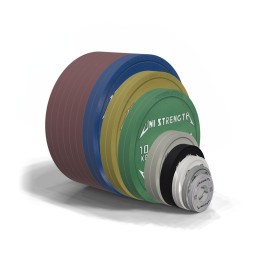
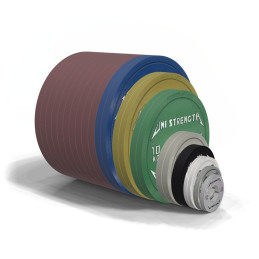
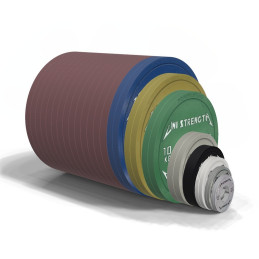
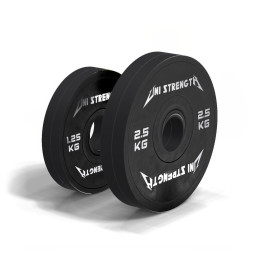
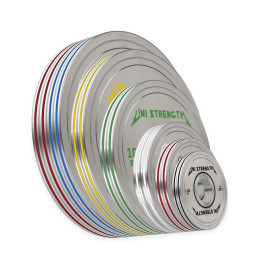
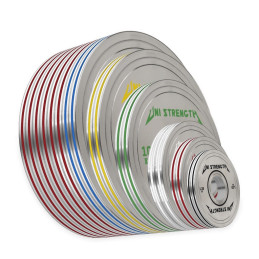
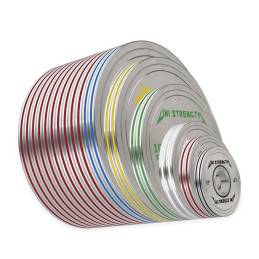
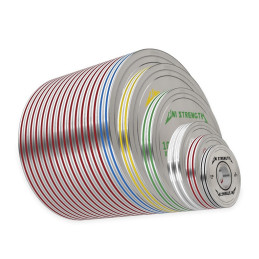
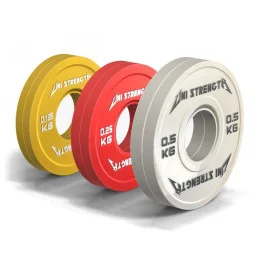
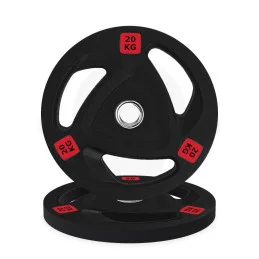
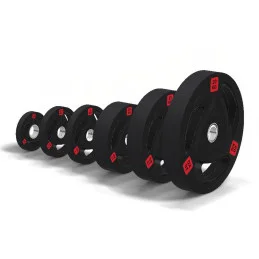
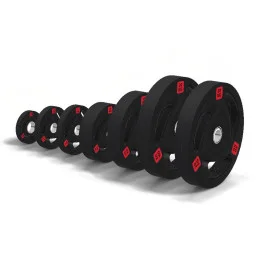
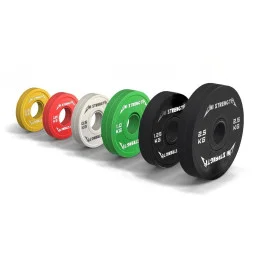
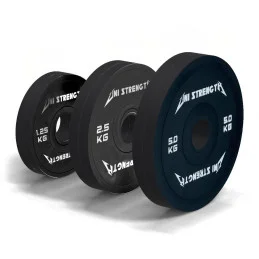
UF calibrated plates (sets from 157.5 to 459 kg, pairs from 0.25 to 25 kg), bumper plates (70, 100 and 150 kg sets, black or competition colours), cast-iron or rubber-coated plates (107.5, 147.5 and 187.5 kg sets) and fractional plates from 0.125 to 2.5 kg. All have a 50 mm Olympic bore.
Bumpers or cast-iron plates?
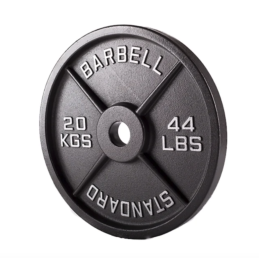
Dense rubber bumpers absorb bar drops: essential for weightlifting and CrossFit. Cast iron and steel are thinner and cheaper, suited to squats, bench press and controlled deadlifts. Many home gyms combine both.
What is a calibrated plate?
An Olympic plate whose real weight is checked to a very tight tolerance, in competition format: same diameter whatever the weight and thin plates, so more can be loaded on the bar. It is used in powerlifting and any training where the load must be exact.
How much total weight to start a home gym?
Count the bar (20 kg) plus the plates. A 107.5 kg set is enough to start; 147.5 to 187.5 kg covers an intermediate squat or deadlift. Then add pairs of 20 or 25 kg and fractional plates to progress in small steps.
Are the plates compatible with my bar?
Yes with any Olympic bar with 50 mm sleeves (power bar, weightlifting bar, all-round bar, specialty bars). They do not fit standard 28 or 30 mm bars. 50 mm collars lock the plates during the exercise.
Our guides: which weight plates to choose?, olympic weights vs. standard weights for your home gym, how to choose Olympic plates, rubber or cast iron plates.