Price:€1,149.99
- Free delivery in metropolitan France from €300
- Pay in 4 instalments

4 x 34,99 € (including 3,63 € fees) (without fees)
Taking out a loan is a commitment with an obligation of repayment. Verify your ability to repay the loan before committing.
Until 4 maturities - Click to learn more
Taking out a loan is a commitment with an obligation of repayment. Verify your ability to repay the loan before committing.
Your purchase in 4 times without fees, for times, for 34,99 € by month.
0 € today, then 4 payments of 34,99 € each month.
For a credit amount of 139,99 € , to which are added 0 € 3,63 € financing fees, interest, either a total amount due of 143,62 €. The APR fixed is 23.59 % excluding optional insurance and the fixed interest rate of 0 %.
Ideal for breaking through plateaus by adding variable resistance
Like resistance bands, chains let you change the resistance curve of your exercises! For example, you might be able to do a quarter squat with 260 kg but only a full squat with 200 kg. With chains, you can make the weight at the top of the movement 260 kg: as you descend into the squat, more chain rests on the floor and the load gets lighter, giving you 200 kg at the position where you are weakest.
You can also use chains for assistance exercises:
Lying triceps extensions (chains attached to handles, to ease the strain on the elbows)
Dips (chains attached to a dip belt for variable resistance and to overload the lockout)
Curls (hold the chain)
Good mornings (drape the chains around your neck) and more!
Using chains for accommodating resistance is simple. As the bar moves towards the ends of the movement, the chains are lifted off the floor. Depending on how many chains are attached to the bar and how high they hang from it, the chains add weight linearly from the moment they are lifted.
For example, suppose you have a total of 55 kg of chains on the bar (27.5 kg per side). Suppose also that the chains only start to lift when the bar is 30 cm from the starting position, and that the total range of motion of the movement you are performing is 60 cm.
For every centimetre the bar travels above the midpoint (30 cm above the bottom), the bar weight increases by 2.3 kg per side (4.6 kg in total). So at the top of the movement, the last links are lifted and a total of 55 kg of chains has been added.
Main differences between chains and bands:
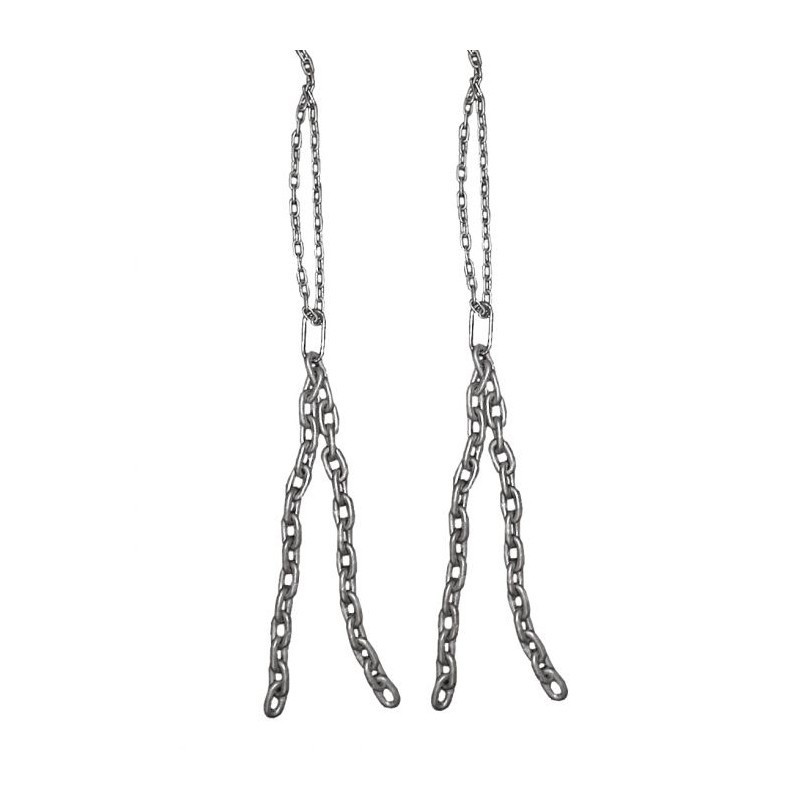
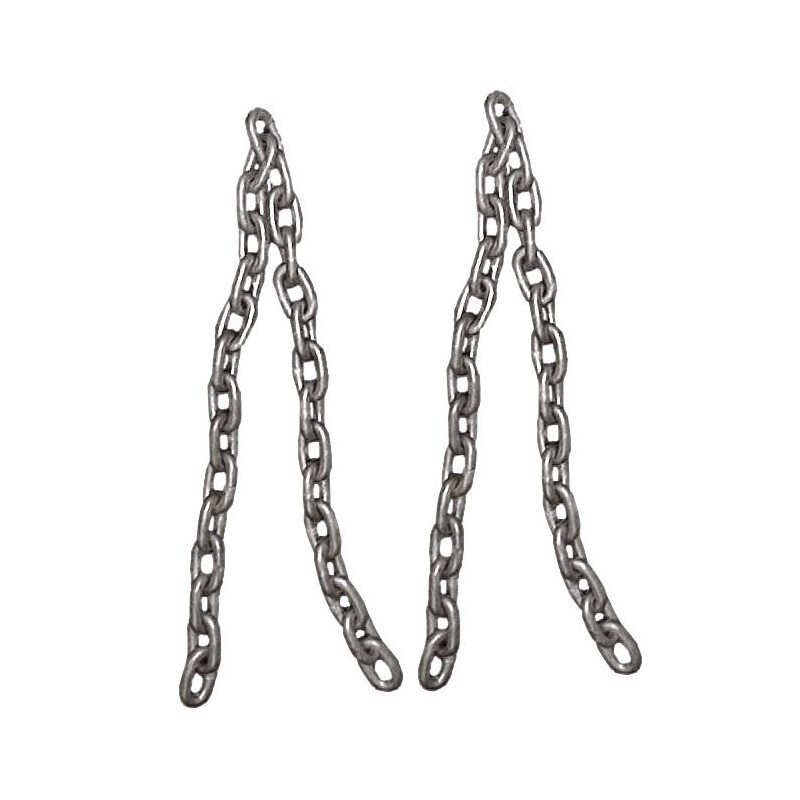
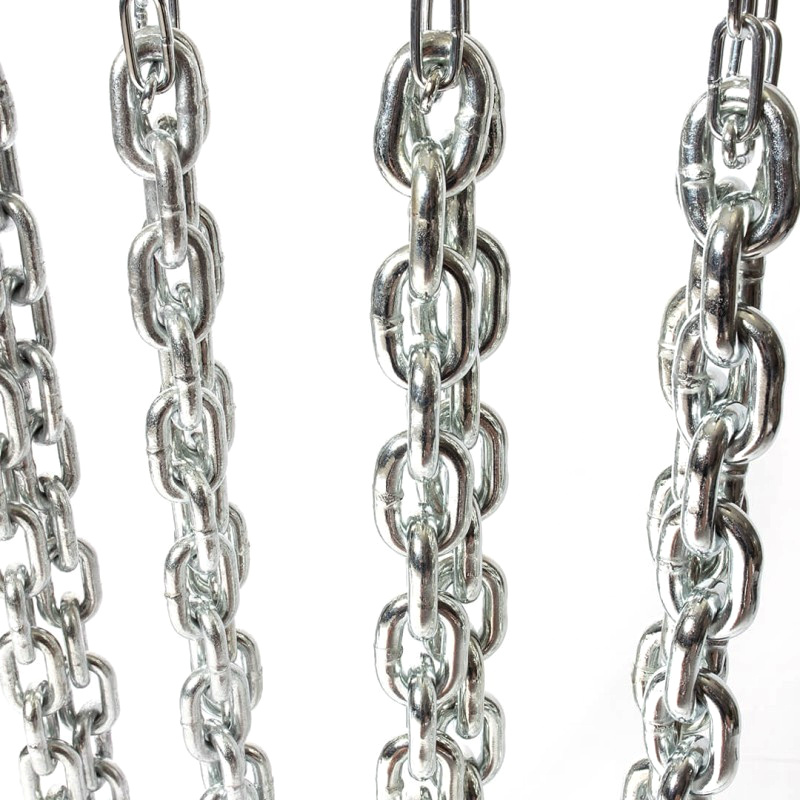
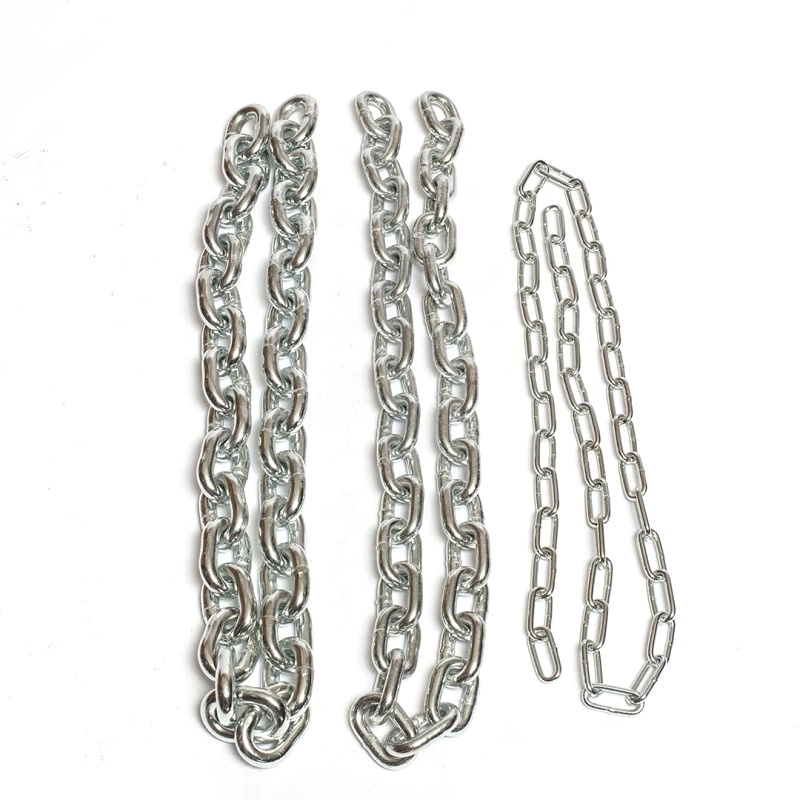
A pair of 183 cm adjustment chains with 0.5 cm links (2.3 kg) and a pair of 152 cm chains with 1.6 cm links (17.7 kg), zinc-plated against corrosion.
As the bar rises, the chains lift off the floor and the load increases linearly; on the way down, more links rest on the floor and the load lightens where you are weakest. For example, with 55 kg of chains lifted from 30 cm over a 60 cm range, every centimetre above the midpoint adds around 4.6 kg.
The squat and barbell movements, but also lying triceps extensions with handles, weighted dips to overload the lock-out, curls holding the chain, and good mornings with the chains around the neck.
Chains are more durable, their resistance does not fade with wear, they barely alter the movement path and they demand less stability.
Review sent
Your review cannot be sent
We use audience measurement cookies, which you can accept or decline. Learn more
Automatic answers based on our terms and product pages. Existing order: [email protected]
Comments (0)
Your review appreciation cannot be sent
Report comment
Report sent
Your report cannot be sent