How to choose your resistance bands?
Elastic bands for strength training have become an essential part of the fitness world. Versatile, practical and effective, they allow you to train anywhere, anytime. But with so many models available, how do you make the right choice? This comprehensive guide will help you select the perfect elastic bands for your needs, level and goals.
In short
- Choose the resistance first: 5 to 10 kg for rehab and warm-ups, 10 to 15 kg to start, 15 to 25 kg for intermediate level, 25 to 35 kg and more for experienced lifters.
- Flat band for stretching, rehab and floor work; tube with handles for standing, dynamic exercises; mini-band to activate the small stabilising muscles.
- Strengths: progressive resistance, low injury risk, minimal space; limit: maximum resistance below heavy loads.
- Replace them at the first micro-cracks or loss of elasticity, and every 6 to 12 months with intensive daily use.
Why work with elastic bands?
Advantages of elastic bands vs. free weights
Elastic bands offer a unique progressive resistance: as you stretch them, the resistance increases. This feature makes it possible to work the muscles differently from traditional weights, stimulating the muscles throughout the entire range of movement. Their exceptional portability is their first major advantage: you can take your gym anywhere, whether on a business trip or on holiday.
Safety is another major advantage. Unlike free weights, elastic bands drastically reduce the risk of injury. No dropping a dumbbell on your foot, no getting stuck under a bench press bar. Resistance naturally adapts to your strength in each movement, creating intrinsic protection against trauma.
The economic aspect is not negligible either. For the price of a monthly gym membership, you get complete, durable equipment. A single elastic band can be used to work the whole body, with an impressive variety of exercises.
Elastic bands: for whom and why?
Elastic bands are suitable for everyone, without exception. Beginners will find them a way of learning movements gently, without the fear of handling heavy loads. The progressive strengthening they provide forms a solid basis for moving on to other forms of training.
Experienced athletes use bands as a training supplement to work on specific angles or add resistance to complex movements. Seniors appreciate their gentleness to maintain muscle mass and joint mobility. People undergoing rehabilitation benefit from adapted and progressive therapeutic exercises.
And for frequent travellers, they're the ideal solution for maintaining physical fitness without compromise. No more excuses about not having a gym: your equipment fits in a toilet bag.
Limits to be aware of before buying
Despite their many advantages, elastic bands have some important limitations to consider. Maximum resistance remains limited compared with the very heavy loads used in advanced bodybuilding. A powerlifter looking to develop pure strength will quickly find the limits of this equipment.
Progressive wear and tear is another point to bear in mind. Unlike weights, which last for decades, elastic bands wear out and require regular replacement. The different feel can also confuse those used to free weights, with the progressive resistance curve requiring technical adaptation.
Finally, precise quantification of the workload remains more difficult than with traditional weights, which can complicate training programming for advanced exercisers.
The different types of resistance bands
Flat elastic bands vs tubes with handles
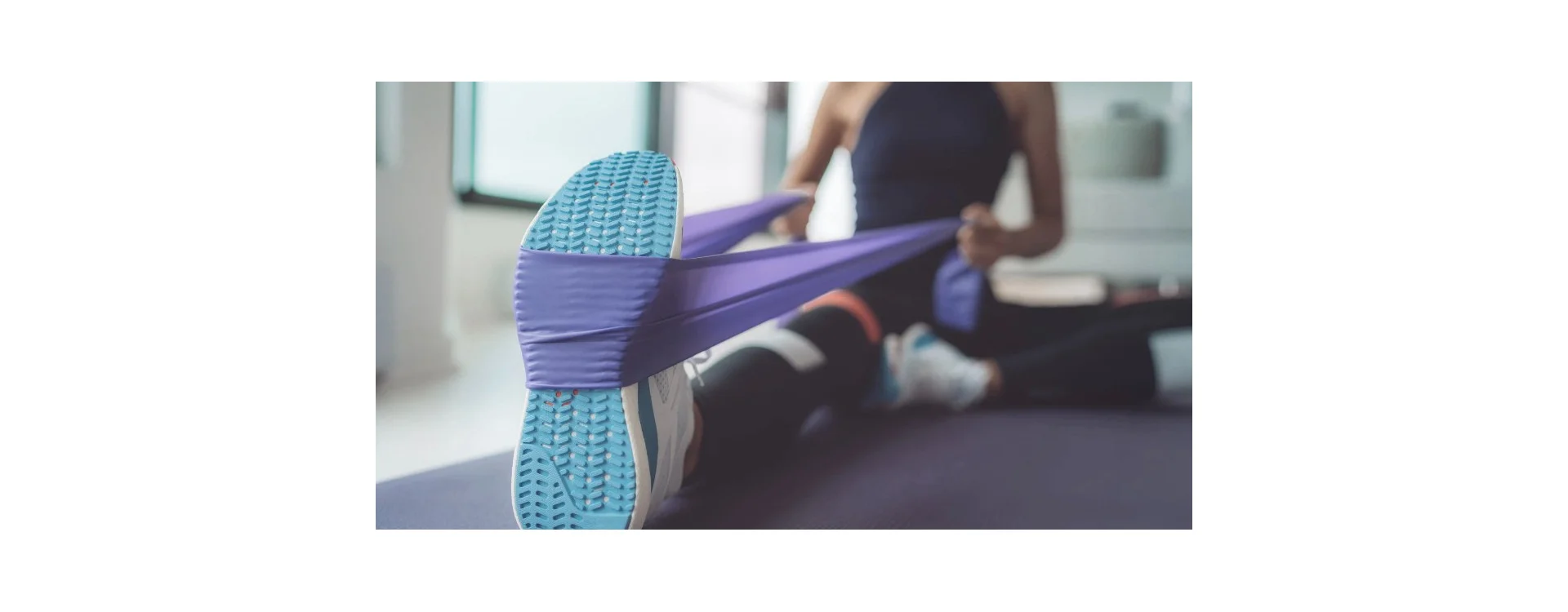
Flat elastic bands are strips of latex or fabric without integrated handles. Their maximum versatility makes them the tool of choice for stretching, rehabilitation and floor exercises. Their ease of transport and attractive price appeal to minimalists. However, they are less comfortable for certain standing exercises requiring a firm grip.
Tubes with handles combine tubular elastic bands with fixed ergonomic handles. This configuration makes standing and dynamic exercises much easier. The comfort of the grip enhances the training experience, even though they take up slightly more space. They excel at general strength training and movements involving several muscle groups.
Mini-bands: specific features and uses
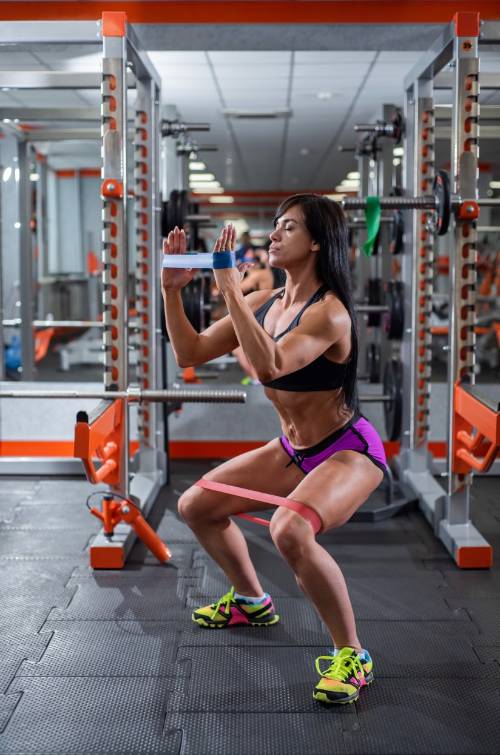
Mini-bands are revolutionising muscle activation and specific warm-ups. These small, closed loops particularly target the small stabilising muscles that are often neglected. Their effectiveness in strengthening the glutes and improving balance makes them popular tools with physiotherapists and physical trainers.
Their use in rehabilitation allows progressive work on the joints with total control of intensity. Sportspeople incorporate them into their warm-up routine to specifically activate the muscle chains that will be used during the main workout.
Suspension straps vs traditional bands
Suspension straps create a training system using mainly body weight with constant core bracing. They excel at functional work and improving overall stability. They complement traditional elastic bands to create complete and varied training programmes.
Traditional bands offer pure resistance without requiring the use of body weight. This allows muscle isolation and targeted work on specific groups. Modular resistance adapts precisely to the needs of each exercise and level of exerciser.
Uni Strength elastic bands for every level and need
Flat elastic bands come in a range of resistance levels, generally expressed in kilograms. For beginners, these 5 to 15 kg elastic bands allow you to learn the basic movements gently. Intermediate exercisers will appreciate the 15-25 kg bands for more intense muscle work.
Experienced athletes will opt for these 25 to 35 kg bands for effective work on large muscle groups. For high-intensity training, these 35-45 kg bands meet the requirements of advanced athletes.
The most resistant models, such as these 45-60 kg elastic bands, are aimed at expert users looking for maximum resistance. The range is completed with intermediate resistances and specialised models for specific needs.
This approach integrates the links in a natural way, focusing on the technical features that readers are looking for.
The essential criteria for making the right choice
Level of resistance: how to find your way around?
Strength is the main selection criterion. It is generally expressed in kilograms or by standardised colour codes. Very light resistance of 5 to 10 kg is ideal for rehabilitation and specific warm-ups. Light resistance of 10 to 15 kg is for beginners and precise isolation exercises.
Standard resistance levels:
- Very light (5-10 kg): rehabilitation, warm-up
- Light (10-15 kg): beginners, isolation exercises
- Medium (15-25 kg): intermediate level, general exercises
- Heavy (25-35 kg): advanced, large muscle groups
- Very strong (35+ kg): experts, specific exercises
Medium resistance (15-25 kg) satisfies the intermediate level for general, everyday exercises. Experienced exercisers will appreciate the strong resistance of 25 to 35 kg for effective work on large muscle groups. Above 35 kg, we enter the expert level with very specific exercises.
Materials and quality: latex, fabric or rubber?
Natural latex offers optimum elasticity and excellent resistance to repeated stretching. Its ability to return to its original shape after use ensures remarkable durability. However, its main drawbacks are its sensitivity to UV rays and the risk of allergies in some people.
Reinforced fabric revolutionises comfort of use, with a soft surface in contact with the skin. Its greater durability and lack of allergic risk will appeal to sensitive users. The slightly higher cost is justified by the longevity and comfort of use.
Synthetic rubber offers an interesting alternative to latex, with good overall resistance. Although its elasticity may sometimes be lower, it represents an acceptable compromise for many users.
Length and width: impact on your exercises
Length directly determines versatility of use. Models measuring 120 cm are suitable for basic exercises and simple stretching. The 150 cm length offers optimum versatility for the majority of common exercises. The 200 cm versions are ideal for exercises with a large range of motion and multiple anchorages.
The width influences comfort and the distribution of resistance. Thin bands of 1 to 2 cm provide precision with light resistance. Medium width bands of 5 to 10 cm offer the best compromise between versatility and comfort. Wide bands of 15 cm or more maximise resistance while providing excellent stability.
Accessories included: handles, carabiners, door anchors
Ergonomic handles transform the training experience, bringing comfort and safety to dynamic exercises. Their non-slip design prevents accidental slipping during exercise. High-quality carabiners ensure a secure connection between elastic bands and accessories, a crucial safety feature.
The door anchor opens up a world of possibilities by creating a fixed anchor point for a variety of exercises. Its ease of installation means that any door can be transformed into a stable attachment point. Ankle straps specialise in working the lower limbs at angles that would otherwise be impossible.
Choose according to your level and objectives
Beginners vs advanced: the key differences
Beginners will prefer light to medium resistance to gradually master the movements. A complete kit with illustrated exercise guide facilitates independent learning. The emphasis is on progressive strengthening and discovering the sensations specific to elastic bands.
Advanced exercisers will be looking for medium to very strong resistance to intensify their training. They will opt for specialist bands to meet their specific needs. Their expertise enables them to integrate bands into complex programmes with advanced progression objectives.
Specific objectives: rehabilitation, fitness, weight training

Rehabilitation requires ultra-soft bands that are progressive and comfortable. Flat bands and mini-bands dominate this field, with very light to light resistance. Gentleness and precision of movement take precedence over pure intensity.
Fitness and toning are perfectly suited to tubes with handles and complete kits. The light to medium resistance levels enable effective overall work. Versatility and ease of use guide the choice of complete, upgradeable solutions.
Intensive weight training requires high-resistance tubes and possibly suspension straps. Medium to very high resistance effectively stimulates the developed muscle groups. Durability and maximum resistance are the priority criteria.
Practical buying guide
Budget: value for money
Investment in resistance bands depends on your ambitions and requirements. A decent quality beginner's kit costs between 15 and 30 euros, which is enough to get you started with this form of training. Intermediate kits from 30 to 60 euros offer greater versatility with more accessories and greater durability.
The professional kits from 60 to 120 euros are aimed at intensive users demanding the maximum from their equipment. The quality of the materials and the finish justify this investment for regular use. Single bands from 5 to 25 euros offer a modular approach to specific needs.
Always opt for quality for a lasting purchase. A well-made 40-50 euro kit will last much longer than several low-end kits that are replaced regularly. The real savings are measured over the actual period of use.
Recommended brands and where to buy
A reliable brand can be recognised by its quality and safety certifications, positive user reviews and favourable independent tests. Responsive customer service and an extended warranty are proof of the manufacturer's confidence in its products. Innovation and ongoing research distinguish market leaders from followers.
Specialist shops offer the advantage of expert advice and the chance to test before you buy. E-commerce sites offer a wider choice with detailed customer reviews. Pharmacies are a good option for specific rehabilitation needs.
Pitfalls to avoid when shopping
Common mistakes to avoid:
- Choosing solely on price without considering quality
- Neglecting the quality of the accessories that make the difference
- Underestimating your future resistance needs
- Ignoring essential safety certifications
Beware of abnormally low prices, which often conceal poor quality materials. Systematically check the origin and certifications of products. Warranty conditions show the manufacturer's confidence in the durability of its elastic bands.
Guarantee and after-sales service
A minimum 12-month guarantee on manufacturing defects is the acceptable standard. Customer service must be responsive to technical queries and complaints. The availability of spare parts significantly extends the life of your equipment.
A flexible returns policy in the event of non-satisfaction demonstrates the vendor's confidence. Don't hesitate to test this responsiveness before you buy by asking specific technical questions.
Using and maintaining your elastic bands
First steps: how to get off to a good start
The 2 to 3 week adaptation phase requires patience and a gradual approach. Start by testing each resistance to understand the specific sensations. First master the basic movements before gradually increasing the intensity. This methodical approach prevents injury and optimises learning.
Essential exercises include stretching and warm-ups to discover progressive resistance. Squats with lateral resistance effectively strengthen the glutes. Pull-ups develop the back while extensions target the triceps. This solid base will enable you to progress to more complex movements.
Maintenance and lifespan
Regular maintenance will ensure that your elastic bands last as long as possible. Washing with warm water and mild soap after each use removes perspiration and residue. Air-drying prevents deformation from direct heat sources.
Storage in a dry place away from direct light preserves the elasticity of the materials. Regular checks can detect the first signs of wear before they become critical. The quality of the initial material, the frequency of use and the storage conditions determine the ultimate longevity.
When should elastic bands be replaced?
Critical signs requiring immediate replacement:
- Visible micro-cracks on the surface
- Significant loss of elasticity after stretching
- Permanent deformation, even at rest
- Material fraying at points of tension
The frequency of replacement varies according to the intensity of use. Occasional use gives a service life of 2 to 3 years. Regular use requires replacement every 1 to 2 years. Intensive daily use requires replacement every 6 to 12 months to maintain safety and efficiency.
To go further in the shop: Kit of 7 Uni Strength elastic bands - training band, Resistance bands, Uni Strength 5-band resistance kit, CS-1 Band Pegs.
Frequently asked questions
What is the advantage of a band over free weights?
Progressive resistance that increases with the stretch, lower injury risk, a low price and equipment that fits in a wash bag.
What are the limits of resistance bands?
A maximum resistance below the heavy loads of advanced training, wear that requires replacement, and a load that is hard to quantify precisely.
Flat band, handled tube or mini-band?
The flat band for stretching, rehab and floor work; the handled tube for standing and dynamic exercises; the mini-band for activation and warm-up of the small stabilising muscles.