The 8 Best Back Exercises

Strengthening your back is essential, not only for aesthetic reasons, but also for long-term health. A strong back contributes to better posture, prevention of lower back pain and improved overall sporting performance.
Whether you're a beginner or an expert, incorporating targeted exercises into your routine can transform your posture, strength and daily well-being.
In short
- Pull-ups are the benchmark exercise: lats, rhomboids, trapezius and biceps, 3 to 4 sets of 6 to 12 reps (assisted version to start).
- Alternate vertical pulls (pull-ups, lat pulldown) and horizontal pulls (barbell row, seated cable row) to work the whole back evenly.
- Beginner: 2 sessions a week with 3 to 4 exercises; intermediate: 2 to 3 sessions with 4 to 5 exercises; advanced: up to 3 sessions.
- Allow 48 to 72 hours of recovery between two hard sessions; protein: 1.6 to 2 g per kilo of body weight.
The 8 most effective exercises for building back muscle
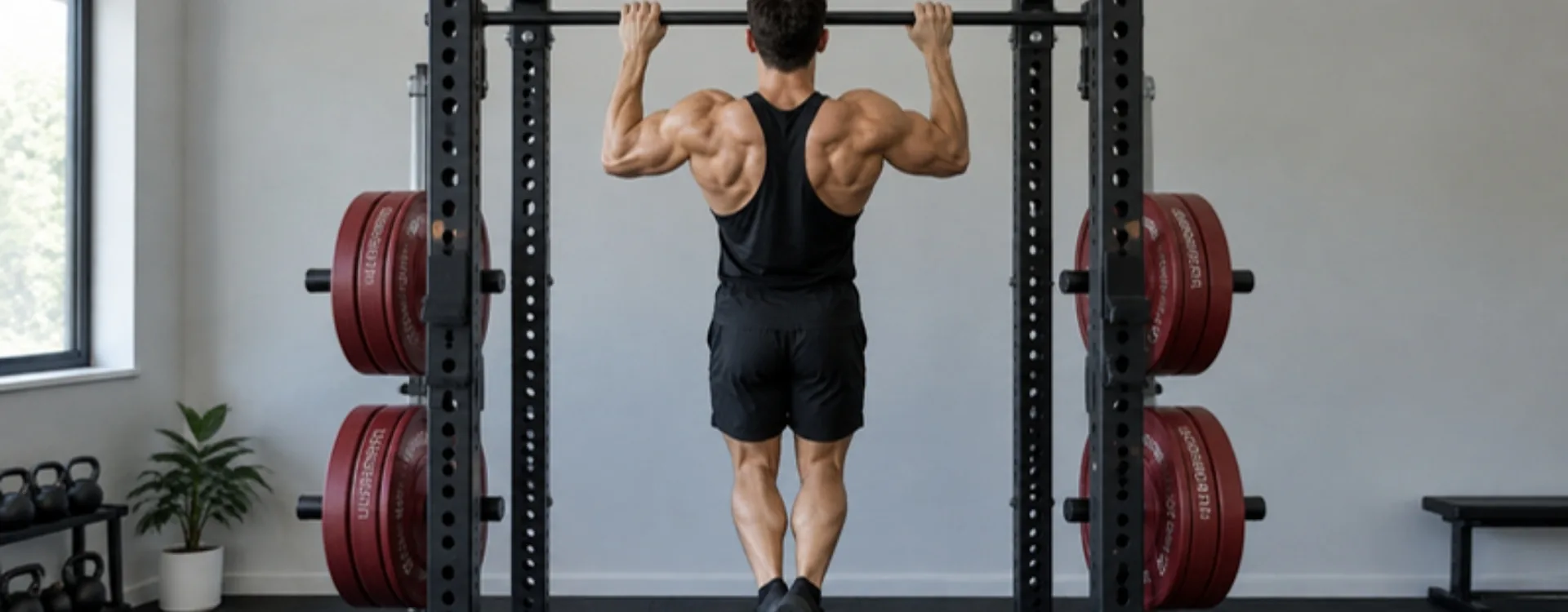
1. Pull-ups

Specifics: Pull-ups are the benchmark exercise for developing the back. They mainly involve the lats (latissimus dorsi), but also the rhomboids, trapezius and biceps.
How to perform the exercise:
- Suspend yourself from a fixed pull-up bar with your hands pronated (palms facing forward) and slightly more than shoulder-width apart.
- Start with arms straight, then pull your body upwards until your chin is above the bar.
- Slowly lower yourself back down, controlling the movement.
- For beginners, assisted variants (with elastic or machine) enable gradual progress.
Recommended sets: 3 to 4 sets of 6 to 12 repetitions, depending on your level.
2. Bent over row

Specifics: This versatile exercise targets the dorsi longus, rhomboids and trapezius, while working the stabilizing muscles of the trunk.
How to perform:
- Hold a bar with a pronated grip, hands slightly wider than shoulder-width apart.
- Bend your knees slightly and lean your torso forward at around 45°, with your back straight.
- Pull the bar towards your abdomen, contracting your back muscles.
- Lower the bar, controlling the movement.
- Keep your back fixed throughout the exercise to avoid injury.
Recommended sets: 3 to 4 sets of 8 to 12 repetitions.
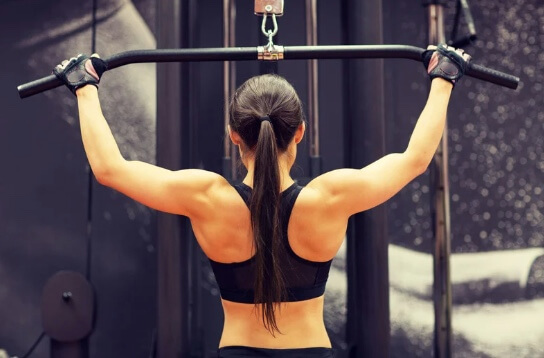
3. Lat pulldown

Specifics: An accessible alternative to pull-ups, this exercise primarily targets the long back and allows precise control of the load used.
How to perform:
- Sit facing the pulley knees braced under the supports.
- Grasp the bar with a wide, pronated grip.
- Pull the bar towards your chest, contracting your back muscles.
- Pull up slowly, controlling the movement.
- Keep your chest upright throughout.
Recommended sets: 3 to 4 sets of 10 to 15 repetitions.
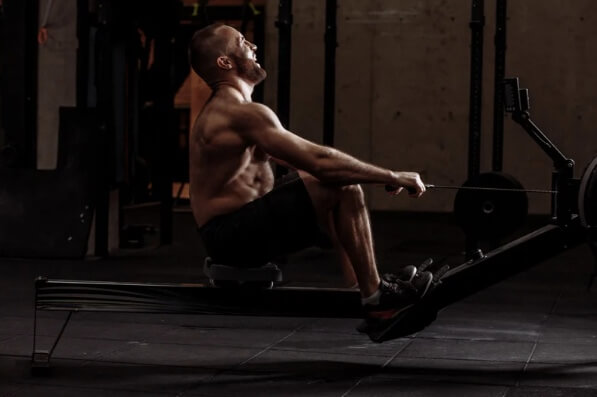
4. Horizontal pulley pull (seated row)

Specifics: Excellent for developing the thickness of the back, this exercise works the rhomboids, middle trapezius and lats.
How to perform:
- Sit facing the machine, feet braced against the supports.
- Grasp the handle with your arms straight out in front of you.
- Pull the handle towards your abdomen, keeping your back straight and squeezing your shoulder blades.
- Return to the starting position, controlling the movement.
Recommended sets: 3 to 4 sets of 10 to 15 repetitions.
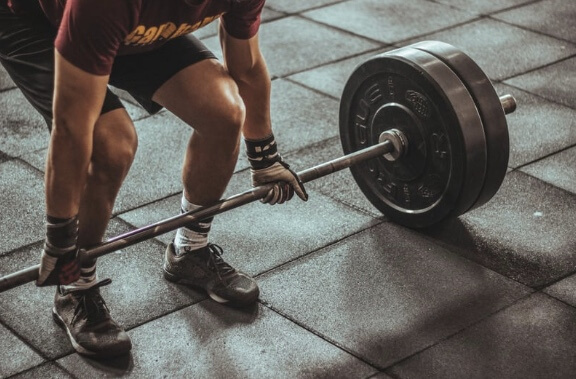
5. Deadlift
Specifics: A complete exercise that trains the entire posterior chain, including the erector spinae, lumbar vertebrae, latissimus dorsi and hamstrings.
How to perform the exercise:
- Stand with your feet hip-width apart and a barbell on the floor in front of you.
- Bend at the knees and hips to grasp the bar, hands slightly further apart than the legs.
- Stand up, pushing on your legs and keeping your back straight.
- At the end of the movement, contract your glutes and back muscles.
- Lower back down, controlling the movement and pushing your hips backwards.
Recommended sets: 3 to 4 sets of 6 to 10 repetitions.
6. Reverse fly
Specifics: Specifically targets the rhomboids and middle trapezius, muscles essential for shoulder posture and stability.
How to perform:
- Hold a dumbbell in each hand, chest inclined at around 45°, arms hanging down.
- Spread your arms out to the sides, keeping your elbows slightly bent.
- Squeeze shoulder blades together as much as possible at the end of the movement.
- Return slowly to the starting position.
Recommended series: 3 sets of 12 to 15 repetitions.
7. The Superman
Specifics: Bodyweight exercise ideal for strengthening the erector spinae and lumbar vertebrae, particularly beneficial for preventing back pain.
How to perform:
- Lie on your stomach, arms stretched above your head.
- Simultaneously lift arms, chest and legs off the floor.
- Hold the contracted position for 2 to 3 seconds.
- Lower slowly and repeat.
Recommended series: 3 sets of 10 to 15 repetitions or hold for 5 to 10 seconds.
8. Face pull
Specifics: Excellent for strengthening the often-neglected back of the shoulders and trapezius, contributing to better posture and preventing muscle imbalances.
How to perform:
- Stand facing a high pulley, grasp the rope with both hands.
- Pull the rope towards your face, spreading your elbows to the sides.
- At the end of the movement, your hands should be close to your ears.
- Return slowly to the starting position.
Recommended sets: 3 sets of 12 to 15 repetitions.
Equipment used for these 8 exercises
| Exercise | Equipment | Key figures |
|---|---|---|
| 1. Pull-ups | Straight pull-up bar for the CS-1 rack | steel, 32 mm diameter, 104 cm wide |
| 2. Bent over row and 5. Deadlift | UF Basic Olympic bar | 20 kg, 220 cm, 50 mm sleeves, 350 kg maximum load |
| 3. Lat pulldown | Athena high pulley or adjustable pulley for the CS-1 rack | CS-1 pulley: 250 kg maximum load, aluminium pulleys |
| 4. Seated row | CS-1 adjustable pulley and ergonomic pull handles | handles: wider grip to spare the forearms |
| 6. Reverse fly and 8. Face pull | Resistance bands | 7 sizes, 2 to 100 kg resistance |
| 7. The Superman | No equipment | on the floor, on a mat |
Specifications taken from the product pages on 1 October 2026.
How can you incorporate these exercises into your training program?
For optimum results, it's essential to integrate these exercises into a structured, progressive program, adapted to your level. If you're a beginner, start with two back-strengthening sessions a week, selecting three to four exercises per session. This allows you to build a solid muscular base without overloading your body.
If you're at an intermediate level, move up to two to three sessions a week, incorporating four to five varied exercises to give the different areas of the back a balanced workout. Advanced exercisers can go up to three specific sessions a week, playing on variations in angle, intensity and load to keep progressing.
For harmonious development, it's important to alternate between vertical pulling movements (such as pull-ups or vertical pulley pulls) and horizontal pulling movements (such as rows or horizontal pulley pulls). This complementarity enables you to target all your back muscles in a balanced way.
Uni Strength tips to maximize results
Before each session, make sure you warm up properly: five to ten minutes of light cardiovascular activity, followed by mobility movements targeting the shoulders and upper back, will help prepare your body for exertion and prevent injury.
During exercise, focus on neuromuscular connection: try to feel the contraction of your back muscles with each movement, rather than simply moving loads. It's this quality of execution that will make the difference in the long term.
Progression is also essential: whether you're adding weight, increasing reps or improving technique, make sure you're always stimulating your muscles in an increasing way. Don't forget to respect the necessary recovery times: give your back muscles between 48 and 72 hours' rest between two intense sessions, to allow them to rebuild efficiently.
Finally, don't forget that results also come from your diet. A protein-rich diet, with a recommended intake of 1.6 to 2 g per kilo of body weight, promotes muscle recovery and the development of lean body mass.
By following a complete and coherent program, combined with these essential recommendations, you'll build lasting strength , endurance and aesthetic appeal, while protecting your postural health over the long term.
All our strength training tips.
Why train your back?

Strengthening your back is fundamental to maintaining good physical health, balanced posture and avoiding aches and pains. A stronger back helps prevent chronic muscular tension, particularly in the lower back, which is very common among people who are sedentary or spend long hours sitting down. It also plays a central role in trunk stability and injury prevention, as it supports the spine and balances the efforts made by other muscle groups. Working the back muscles also improves the symmetry of the upper body, which in turn promotes better overall posture. Finally, a strong back is a key asset for sporting performance, as it is involved in the majority of functional movements, whether pulling, lifting or carrying. Neglecting the back creates a muscular imbalance that can affect the whole body.
The main muscles of the back
The back comprises several muscle groups essential to posture, strength and trunk stability:
-
Latissimus dorsi: the largest V-shaped muscle in the back, responsible for pulling movements (pull-ups, rowing) and arm adduction.
-
Trapezius: located between the neck and shoulders, divided into upper, middle and lower fascicles. They are involved in elevating, retracting and lowering the shoulder blades.
-
Rhomboids: deep and positioned between the shoulder blades, they bring them together and stabilize the shoulder girdle.
-
Erectors of the spine: deep muscles that run along the spine. They enable back extension, maintain upright posture and support trunk movements.
-
Multifidi and deep stabilizing muscles: Small muscles around the vertebrae, essential for fine spinal stability and prevention of low-back pain.
Working all these muscles in a balanced way ensures a strong, resistant and functional back, essential for both performance and postural health.
To go further in the shop: Athena Pack: all-in-one pulley, J-hooks, safeties, dips, T-bar rowing support and leg holder, Cable pulleys, Straight pull-up bar - Rack CS-1, Power racks.
Frequently asked questions
What is the reference exercise for the back?
Pull-ups: they work the lats, rhomboids, traps and biceps; 3 to 4 sets of 6 to 12 reps, with an assisted variation (band or machine) to start.
How do you train the back without a pull-up bar?
The lat pulldown targets the lats with precise control of the load (3 to 4 sets of 10 to 15 reps); the seated row builds back thickness.
Is the deadlift a back exercise?
Yes: it works the whole posterior chain, spinal erectors, lower back, lats and hamstrings, in 3 to 4 sets of 6 to 10 reps, back straight and hips pushed back on the way down.
Also worth reading: Chest and back: set your elbows and wrists to target the right muscle.