What's the difference between a flat bench and an incline bench?
In short. The difference between a flat bench and an adjustable bench is the angle: the flat bench has a fixed horizontal surface, more stable, more compact and cheaper, ideal for the bench press, rows and dips; the adjustable bench changes the angle of the backrest and seat to target the upper chest and shoulders and vary curls, at the cost of a bulkier mechanism and a slightly higher budget.

Anyone who commits to a training program knows that the weight bench is a must. However, with the variety of options available, including the flat bench and the incline bench. However, with the variety of options available, including the flat bench and the incline bench, it can be difficult to determine which is best suited to your needs. This article explores the distinctions between these two types of bench, helping you to make an informed choice for your training equipment.
Flat bench features
General description
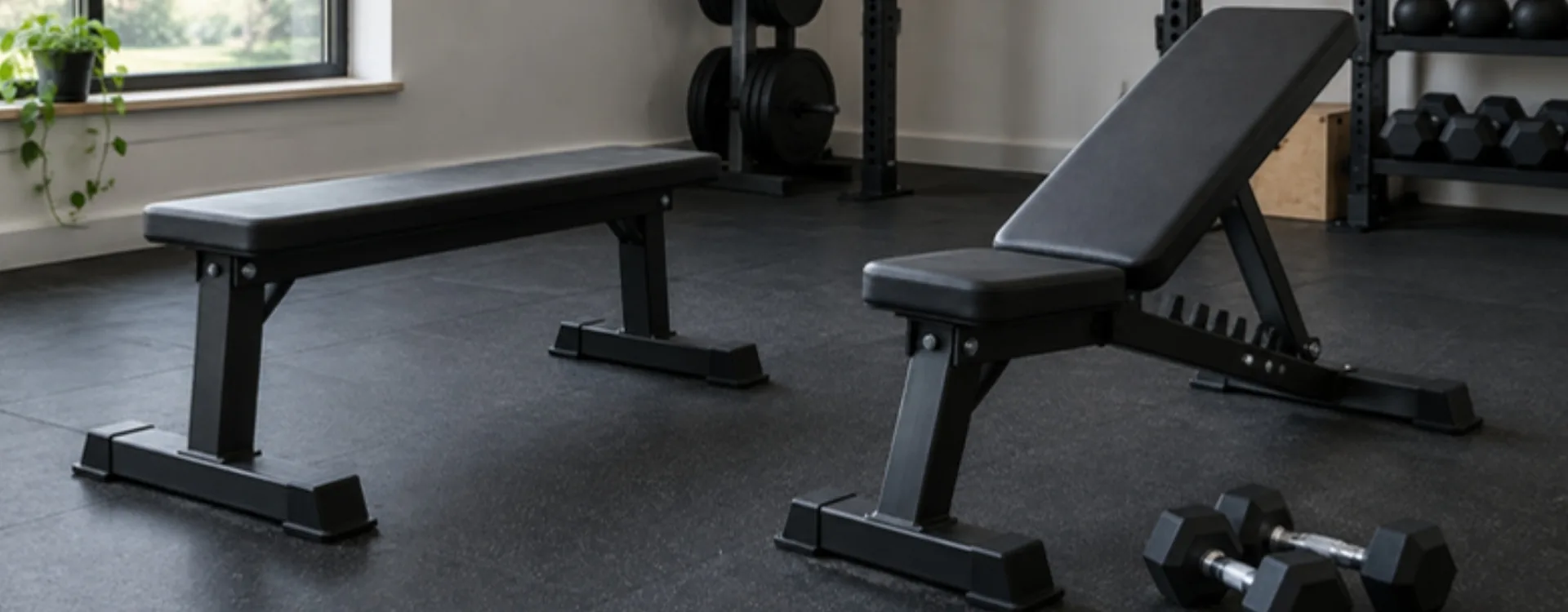
The flat bench is distinguished by its simplicity and efficiency. Its horizontal lying surface offers optimum stability, making it a popular ally for basic exercises. Its rectilinear structure provides maximum stability, essential when performing exercises requiring significant core strength.
Its no-frills design ensures that it remains a benchmark for durability and ease of use. In this respect, it is ideally suited to gym environments, where robustness is paramount.
Exercises compatible with the flat bench
Although the flat bench may seem limited by its lack of flexibility, it is nonetheless suitable for an impressive variety of exercises. These include:
- Bench press, for chest development.
- Single-arm rowing to strengthen the back.
- Triceps dips, which effectively target the triceps.
These simple yet powerful exercises highlight the considerable potential of the flat bench.
Advantages of the incline bench
Versatility and adjustability
In comparison, the incline bench is characterized by its ability to adjust the angle of the seat and backrest, offering unrivalled flexibility. This angle adjustment makes it possible to target different muscle groups more specifically, enriching the diversity of the workout.
With an option to raise or lower different parts of the bench, this type of equipment is ideal for those looking to refine their technique or diversify their sessions.
Exercise possibilities with the incline bench
Its versatility opens the door to a wide range of activities. Here are just a few examples of exercises performed on an incline bench:
- Incline bench press, to put extra pressure on the upper pectoral muscles.
- Seated military press, optimizing shoulder work.
- Incline biceps curls to maximize muscle contraction.
Practical considerations when choosing a bench
Space and storage
One of the crucial questions to consider when selecting a bench concerns the space available. Flat benches are often more compact, making them easier to fit into tight spaces. What's more, its simplistic design means less weight, making it easy to move around.
On the other hand, tilt benches often require a slightly larger infrastructure to support the different angles of inclination. It may therefore require a little more space.
Budget and quality
As with any purchase of strength training equipment, cost is an essential consideration. A basic flat bench can be acquired at a low cost, while being extremely durable. However, it would be wise to take a close look at the quality of the materials and the sturdiness of the construction.
Conversely, a tilting bench generally represents a slightly higher investment, justified by the adjustment mechanisms it incorporates. However, the possibility of performing more varied and specific workouts could more than make up for this financial difference.
Tips for optimizing the use of your chosen bench
Safety first
Whatever bench you choose, safety must come first. Always check stability before using a bench. For incline models, systematically test the adjustment mechanisms to prevent any failure during training.
It's also advisable to start with moderate loads to gradually get used to the movement, then gradually increase the weight, especially for novices.
Vary training programs
One of the best ways to get the most out of your weight bench is to vary your routines. Exploring different exercises will allow you to work all your muscle groups, while keeping the workout dynamic and motivating.
Incorporating accessories such as dumbbells or resistance bands can also enrich the training experience, fully exploiting the potential of your equipment.
When weighing up the pros and cons, knowing which bench to choose is essentially a matter of personal preference and fitness goals. The flat bench appeals for its simplicity and sturdiness, while the incline bench appeals to those seeking a diversified workout. By thinking through your priorities - space, budget, exercise variety - you can make the best choice to achieve your goals with Uni Strength, your trusted partner in strength training equipment.
To go further in the shop: Flat benches, Adjustable benches, Weight benches. Also worth reading: every exercise you can do on a bench.
One flat bench and two adjustable benches from the range
| Type | Model | Key figure |
|---|---|---|
| Flat | UF Power Bench wide flat bench | 43 cm high, 35 cm wide, 750 kg maximum load |
| Incline | UF-5 Plus incline bench | backrest adjustable from 0 to 88° in 6 positions, 500 kg maximum load |
| Incline and decline | UF-4 adjustable bench | decline, flat and incline positions, 500 kg maximum load |
Specifications taken from the product pages on 9 October 2026.
Frequently asked questions
What is the difference between a flat bench and an adjustable bench?
A flat bench has a fixed horizontal surface that is very stable, ideal for the bench press, rows and dips. An adjustable bench changes the angle of the backrest and seat to target other areas such as the upper chest or shoulders.
Which one takes up less space?
The flat bench: more compact and lighter, it is easy to move. An adjustable bench needs a little more room for its adjustment mechanisms.
Which one to choose on a tight budget?
A quality flat bench costs less and lasts a long time. An adjustable bench is a bit more expensive, but the variety of exercises makes up for the difference if you want to diversify your sessions.