Best exercises to develop your pectorals

Having well-developed pectorals is a goal pursued by many bodybuilders. Whether for aesthetic reasons or to improve functional strength, effective pectoral training requires a well-structured approach.
These muscles play a fundamental role in many upper body movements, both in everyday life and in sporting performance. Strengthening your pectorals will bring you many benefits.
Discover the best exercises for building up your pectoral muscles, an adapted training program and nutritional advice to optimize your progress.
In short
- The core exercise is the bench press with a barbell or dumbbells on a flat bench.
- The upper chest is trained with the incline dumbbell press, bench set between 30 and 45°.
- Without equipment, push-ups are enough to start; incline or decline push-ups shift the work towards the lower or upper chest.
- Combine compound exercises (presses, dips) with isolation work (dumbbell flyes, cable crossover), and increase load and volume gradually.
The 7 best exercises for developing pectoral muscles
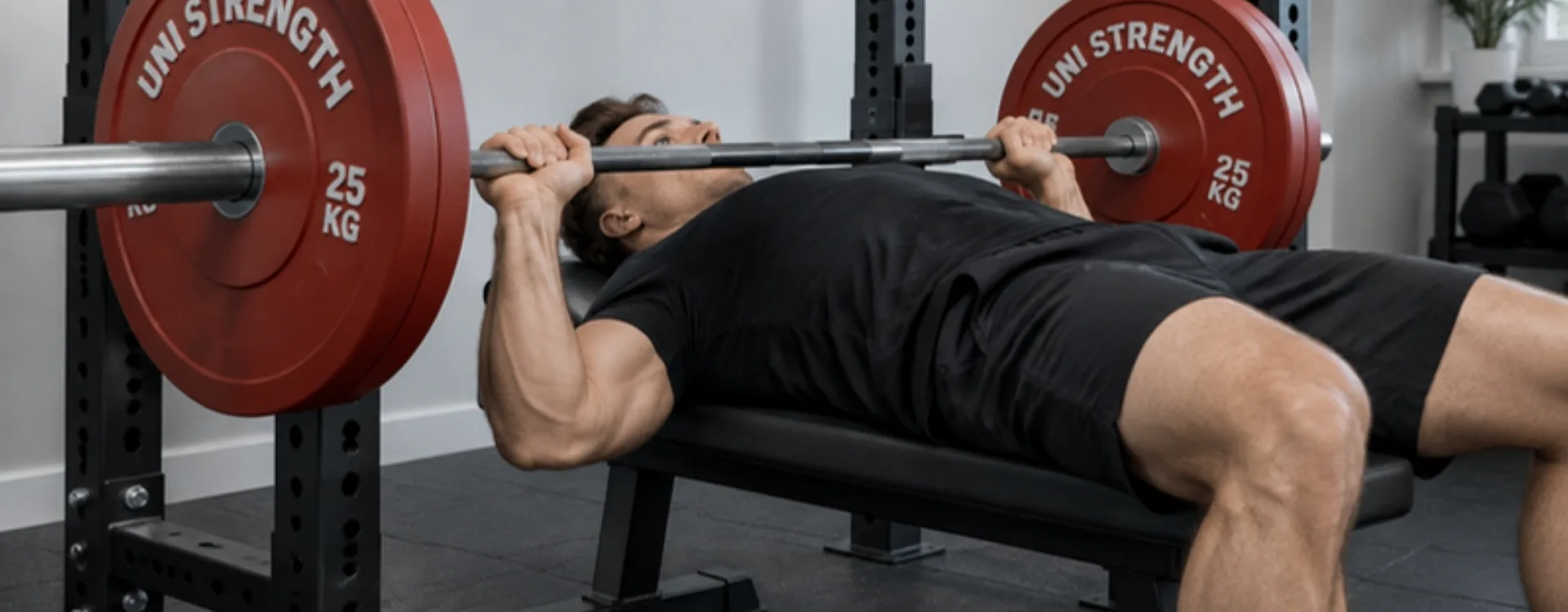
1. Bench press with barbell or dumbbells
Equipment required: Barbell, weights and a flat bench.
Execution of movement:
- Lie on a flat bench, feet firmly planted on the ground.
- Grasp the barbell with a grip slightly wider than shoulder-width apart.
- Slowly lower the bar until it lightly touches your chest.
- Push the bar upwards by contracting your pectoral muscles, without locking your elbows completely.
- Repeat the movement, keeping full control of the load.
2. Dumbbell incline press
Equipment required: An incline bench (30-45°) and a pair of dumbbells.
Execution of movement:
- Sit on the incline bench and hold a dumbbell in each hand.
- Place the dumbbells at shoulder level, palms facing forward.
- Push the dumbbells upwards, bringing them slightly closer together at the top.
- Lower slowly, controlling the descent to maximize tension on the upper pectorals.
- Repeat, keeping the movement fluid and controlled.
3. Push-ups
Equipment required: None, bodyweight exercise.
Movement execution:
- Place your hands on the floor, slightly wider than shoulder-width apart.
- Keep your body aligned from head to toe, abs tucked in.
- Slowly lower yourself by bending your elbows until your chest almost touches the floor.
- Push up to return to the starting position, contracting your pectoral muscles.
- Vary the exercise with incline push-ups (hands raised) or decline push-ups (feet raised) to target different areas of the pectorals.
4. Dips on parallel bars
Equipment required: A dips station or parallel bars.
Execution of movement:
- Grasp the parallel bars with a neutral grip, arms straight.
- Tilt the torso slightly forward to better engage the pectoral muscles.
- Slowly lower yourself by bending your elbows until you feel a good stretch in your chest.
- Push back up using the strength of your pectorals and triceps.
- Add weight with a vest or belt if the exercise becomes too easy.
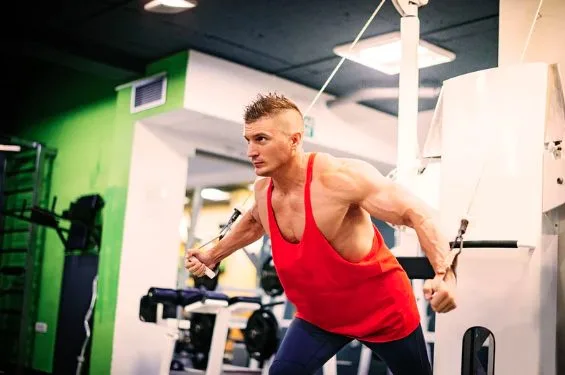
5. Pulley crossover
Equipment required: Two adjustable pulleys.
Execution of movement:
- Stand with a handle on each side in hand.
- Tilt your torso slightly forward and keep your elbows slightly bent.
- Bring the handles forward in an arc until your hands meet in front of you.
- Hold the contraction for a second before slowly returning to the starting position.
- Keep constant tension on the cables to maximize muscle activation.
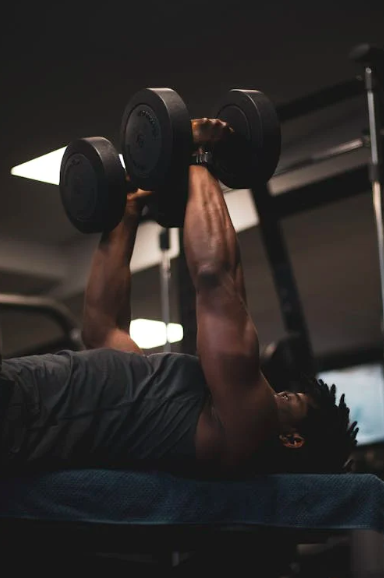
6. Lying dumbbell fly

Equipment required: A flat bench and a pair of dumbbells.
Movement sequence:
- Lie on a flat bench with a dumbbell in each hand, palms facing inwards.
- Extend your arms above your chest, keeping your elbows slightly bent.
- Slowly lower the dumbbells to the sides until you feel a good stretch in the pectoral muscles.
- Raise the dumbbells, bringing them closer together without bumping them, contracting the pectoral muscles.
- Take care not to bend the elbows too much, to keep the tension on the pectorals and not on the arms.
7. Decline bench press with barbell or dumbbells
Equipment required: Decline bench and barbell or dumbbells.
Execution of movement:
- Lie on the decline bench and grasp the barbell or dumbbells.
- Place your hands slightly wider than shoulder-width apart.
- Slowly lower the load towards your lower chest.
- Push the load upwards by contracting your pectoral muscles, without locking your elbows completely.
- Repeat, maintaining total control over the descent and ascent.
Equipment used for these 7 exercises
| Exercise | Equipment | Key figures |
|---|---|---|
| 1. Bench press and 6. Lying dumbbell fly | UF Power Bench flat bench, UF Basic Olympic bar or 4 to 36 kg adjustable dumbbells | bench: 750 kg maximum load, 11-gauge steel; bar: 20 kg, 350 kg; dumbbells: 2 kg increments, expandable to 65 kg |
| 2. Dumbbell incline press | UF-5 Plus incline bench | 500 kg maximum load, 6 backrest positions, 3 seat positions |
| 3. Push-ups | No equipment | on the floor |
| 4. Dips on parallel bars | CS-1 dip bars or Athena dip attachment | CS-1 bars: 230 kg maximum load |
| 5. Pulley crossover | Adjustable plate-loaded pulley | 130 kg, 19 height settings, 28 or 50 mm plates |
| 7. Decline bench press | UF decline attachment | fits the UF-1 Zero Gap, Zero Gap+ and UF-5 Plus benches |
Specifications taken from the product pages on 1 October 2026.
Why is it important to develop your pectoral muscles?

Improving functional strength
The pectoral muscles are involved in many everyday movements, such as pushing a door open, lifting a heavy object or standing up from the floor. Effective strengthening of these muscles improves these movements and reduces the risk of shoulder and arm injuries.
Enhanced sporting performance
In disciplines such as swimming, rugby, climbing and martial arts, strong pectoral muscles improve striking power, upper-body stability and muscular strength.
Muscular balance and posture
Harmonious development of the pectoral muscles helps maintain a balanced posture and avoid muscular imbalances that can lead to back pain and shoulder tension. Well-structured muscle strengthening helps prevent injury.
Aesthetics and self-confidence
Well-defined pectoral muscles are often associated with an athletic, imposing figure. Whether it's to improve your appearance or boost your self-confidence, working out your pecs remains a priority for many bodybuilders. And we understand!
How do you build up your pectoral muscles effectively?
Developing pectoral muscles requires a combination of several factors:
- Targeted, varied training: Integrating polyarticular and isolation exercises stimulates all muscle fascicles.
- Continuous progression: Gradually increasing the load, volume and intensity of training sessions is essential to promote muscle growth.
- A suitable diet: A sufficient intake of quality proteins, carbohydrates and lipids is essential to promote recovery and muscle gain.
- Sufficient recovery time: Rest and sleep allow muscles to rebuild and strengthen.
Anatomy of the pectoral muscles

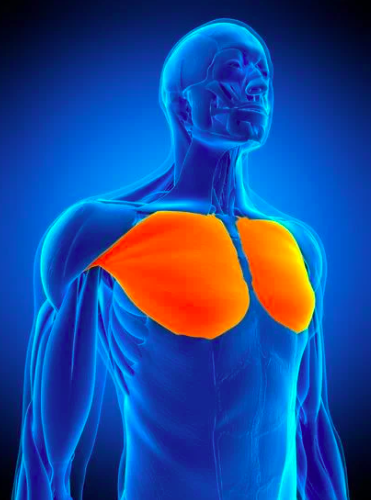
The pectorals are essential muscles of the upper body, playing a central role in most pushing movements. They consist mainly of two muscle groups: the pectoralis major and the pectoralis minor.
The pectoralis major is the most visible and largest muscle in the chest. It extends from the sternum and clavicles to the humerus, enabling a wide range of movements such as adduction, flexion and internal rotation of the arm. This muscle is divided into three distinct fascicles: the clavicular fascicle, located on the upper part of the torso and mainly involved in incline exercises; the sternal fascicle, which represents the central area and is activated by classic movements such as the bench press; and finally, the abdominal fascicle, which is located in the lower part of the pectorals and is more involved in exercises in the decline position.
Beneath the pectoralis major lies the pectoralis minor, a deeper, less visible muscle. It nevertheless plays an essential role in stabilizing the scapula and facilitating certain movements of the shoulders and ribcage.
Effective training of these muscles requires a variety of exercises incorporating different inclinations and angles of movement.
Why aren't your pectorals developing?
The lack of pectoral progression is often linked to a number of common mistakes. Lack of progressive overload prevents the stimulation needed for muscle growth, as lifting the same loads over and over again limits gains. Poor exercise execution reduces pectoral activation and can lead to compensation by the shoulders and triceps, making training less effective.
Insufficient training volume and frequency also hampers results. Working the pectorals too infrequently or with too few sets is not conducive to hypertrophy. Diet plays a key role: inadequate caloric and protein intake limits muscle gain. Finally, recovery is essential, as muscles develop during rest phases. Without sufficient sleep and recovery, progress can be significantly slowed.
To go further in the shop: Weight bench, Flat Bench Weight Training, Adjustable dumbbells, Athéna Dip Bar Attachment for Rack and Pulley 60x60 mm.
Frequently asked questions
What is the basic chest exercise?
The bench press with a bar or dumbbells on a flat bench, grip slightly wider than the shoulders, lowering until the bar brushes the chest, without locking the elbows at the top.
How do you target the upper chest?
With the incline dumbbell press on a bench at 30–45°, bringing the dumbbells slightly together at the top and controlling the descent.
Can you build the chest without equipment?
Yes, with push-ups, hands slightly wider than the shoulders and body braced; incline or decline push-ups shift the work to the lower or upper chest.
Also worth reading: Chest and back: set your elbows and wrists to target the right muscle.