Which weight plates to choose?
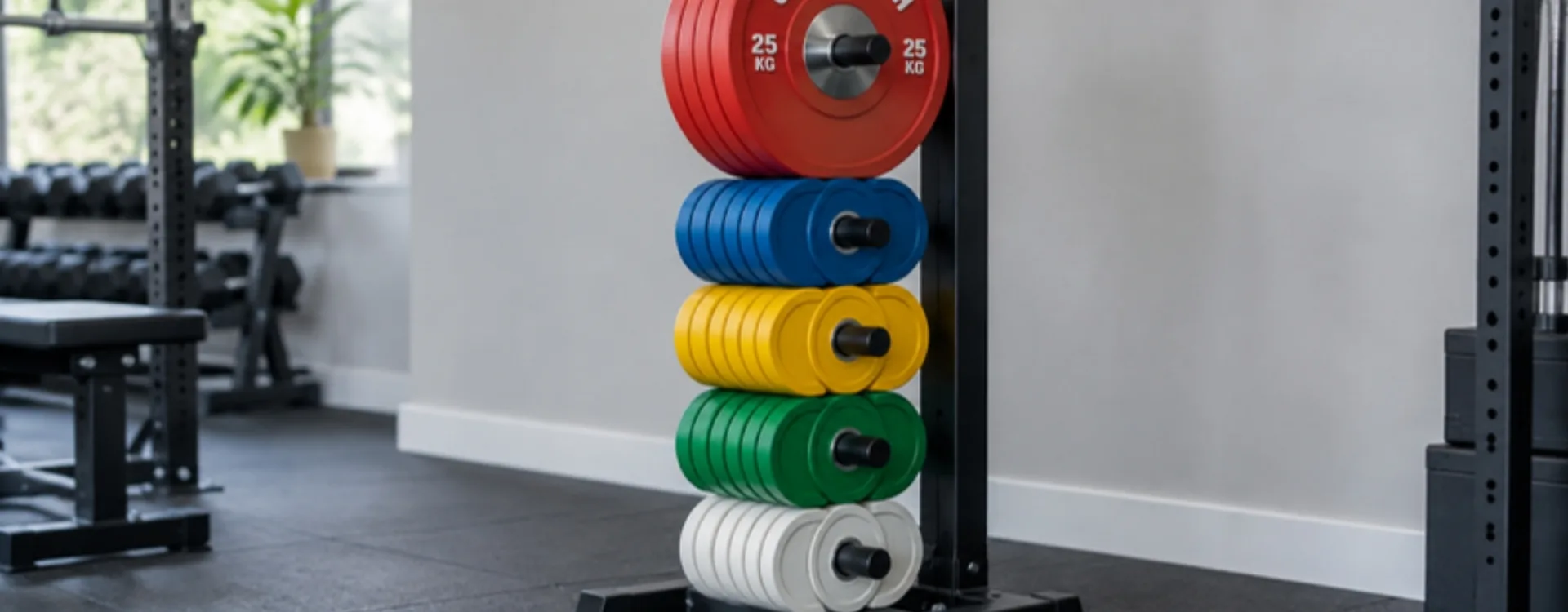
An Olympic weight plate has a 50 mm hole; what changes from one family to the next is the weight tolerance, the diameter and whether you may drop it: calibrated (± 10 g), bumpers (rubber, 450 mm, ± 1 %), cast iron (± 2 % from 10 kg) and rubber.
Choosing the right weight for your weight-training plates may seem simple, but it's crucial if you want to progress safely and effectively. Whether you're a beginner or an expert, using the right plates improves your comfort, optimizes your performance and helps you achieve your goals more quickly.
Key points: Which plate weights should you choose according to your practice?
-
There are several types of plate: standard, Olympic, bumper plates, cast-iron or rubber.
-
Standard plates are suitable for 28 mm bars, while Olympic plates are designed for 50 mm bars.
-
Bumper plates are ideal for weightlifting and CrossFit movements, as they are designed to be dropped to the floor.
-
Cast-iron plates are durable and often more compact, but noisier.
-
Rubber plates reduce noise and protect the floor.
Table: Plate weights and recommended progression
| Level | Drive type | Recommended plate weight |
|---|---|---|
| Beginner | Learning technique, basic movements | 1.25 to 10 kg |
| Intermediate | Strength, hypertrophy, full-body training | 5 to 20 kg |
| Advanced | Weightlifting, CrossFit, maximum strength | 10 to 25 kg (bumper) |
Advantages and disadvantages of different weight-training plates
| Material | Advantages | Disadvantages |
|---|---|---|
| Cast iron | - Excellent value for money - Very durable - Wide choice of weights available |
- Noisy when handled - Can damage the floor - Sensitive to rust |
| Rubber | - Protects the floor - Less noisy than cast-iron - Impact-resistant - Integrated handles |
- More expensive than cast iron - Odor at first - Less durable in hot environments |
| Polyurethane / Resin | - Ultra durable - UV and impact resistant - No odor - Aesthetic finish |
- Very high price - Less common on the market |
| Bumper plates (Olympic) | - Standardized diameter - Suitable for drops - Ideal for CrossFit / weightlifting - Highly resistant |
- High cost - Bulky - Need more storage space |
Quality criteria to check
Weight accuracy
The accepted tolerance for quality plates is generally:
- around 2% for standard plates
- around 1% for Olympic plates
- around 0.5% for competition plates
Ergonomics and safety
Points to check:
- Presence of handles or gripping spaces
- Rounded edges to prevent injury
- Well-machined center for smooth bar insertion
- Burr-free finish with no visible defects
Durability
Indicators of good quality:
- Wear-resistant coating
- No play in center bore
- Quality materials (gray cast iron for metal plates, dense rubber for rubber plates)
- Manufacturer's warranty
Standard vs. Olympic plates
Standard plates:
- Center diameter: 28-30 mm
- Suitable for standard bars
- Generally less expensive
- Limited load capacity (up to 100-150 kg maximum)
- Recommended for occasional users or beginners
Olympic plates:
- Center diameter: 50-52 mm
- Compatible only with Olympic bars
- More robust and precise in terms of actual weight
- Allow much heavier loads (200 kg and more)
- Preferred by experienced athletes and regular users
Which weights to choose according to your level?
The composition of your set should evolve with your progress in strength training.
| Level | Recommended composition | Total load | Approximate budget |
|---|---|---|---|
| Beginner | 2×1.25 kg + 2×2.5 kg + 2×5 kg + 2×10 kg | 37.5 kg (with standard bar) | 30-€80 |
| Intermediate | 2×1.25 kg + 2×2.5 kg + 2×5 kg + 4×10 kg + 2×15 kg | 85 kg (with Olympic bar) | 80-€200 |
| Advanced | 2×0.5 kg + 2×1.25 kg + 2×2.5 kg + 2×5 kg + 4×10 kg + 2×15 kg + 2×20 kg + 2×25 kg | 175 kg (with Olympic bar) | €200+ |
How do I maintain my weight-training plates?
Maintaining your weight-training plates is essential to ensure their longevity. For cast-iron plates, opt for regular cleaning with a dry cloth and occasionally apply a thin coat of anti-rust oil to preserve their condition. For rubber plates, opt for cleaning with soapy water and avoid exposing them for too long to sunlight, which could damage the material. Whatever the type of plate, orderly storage on a suitable rack remains the best solution for maximizing their lifespan and keeping your training space well-organized.
Comparison of Uni Strength weight-training plates
Uni Strength offers several types of plates to meet the needs of exercisers of all levels: from bumper plates for weightlifting to plates calibrated for competition.
Table: comparison of Uni Strength plates: Bumper, Olympic and Calibrated
| Product | Description | Price |
|---|---|---|
| Bumper Plates plates (set of 2) Available from 5 kg to 25 kg |
- Designed for weightlifting, cross-training and intensive training - Made of high-density virgin rubber with stainless steel insert - Minimal bounce, high durability - Diameter 450 mm - IWF standards |
Starting at €59.99 |
| Precision Olympic weights (set of 2) From 0.25 to 2.5 kg |
- Ultra-light plates for precise load adjustment from 125 g - Perfect for controlled progression and training cycles - Compact size, excellent complement to standard plates |
Starting at €18.99 |
| Calibrated plates (set of 2) From 0.25 kg to 25 kg |
- Ultra-precise steel plates with 10 g tolerance - IPF-compliant (color and weight) - Ideal for competition and advanced strength training - Excellent stability, enhanced grip thanks to micro-porous coating |
Starting at €22.99 |
Still have questions?
If this comparison doesn't answer all your questions, don't hesitate to contact us or leave a comment. We'll be delighted to help you make the right choice.
Discover our other articles on strength training equipment
Do you want to optimize your equipment to make even more effective progress? Check out our other practical guides on bars, benches, cages and more at Uni Strength!