What is Pilates?

Pilates is a complete method that combines muscle strengthening, flexibility and mental well-being. Whether you're looking to improve your posture, relieve aches and pains or gently strengthen your body, this discipline is accessible to all and has multiple benefits.
So, are you ready to try Pilates and discover its positive effects on your body and mind?
The origins of Pilates: a method born of rehabilitation
Created by Joseph Pilates, Pilates originated in the early 20th century. A frail child, Joseph Pilates developed a passion for physical training to strengthen his body. During the First World War, he developed rehabilitation exercises for the wounded, using springs and straps.
In the 1920s, he moved to New York and opened a studio where his method won over dancers and athletes alike. Today, Pilates is recognized for its beneficial effects on posture, mobility and deep muscle strengthening.
"My system contributes to the simultaneous development of body and mind at home, from infancy through youth to middle age, and in a progressive way."
How do I start Pilates?
If you'd like to take up Pilates, here are some essential tips for getting started and progressing effectively:
-
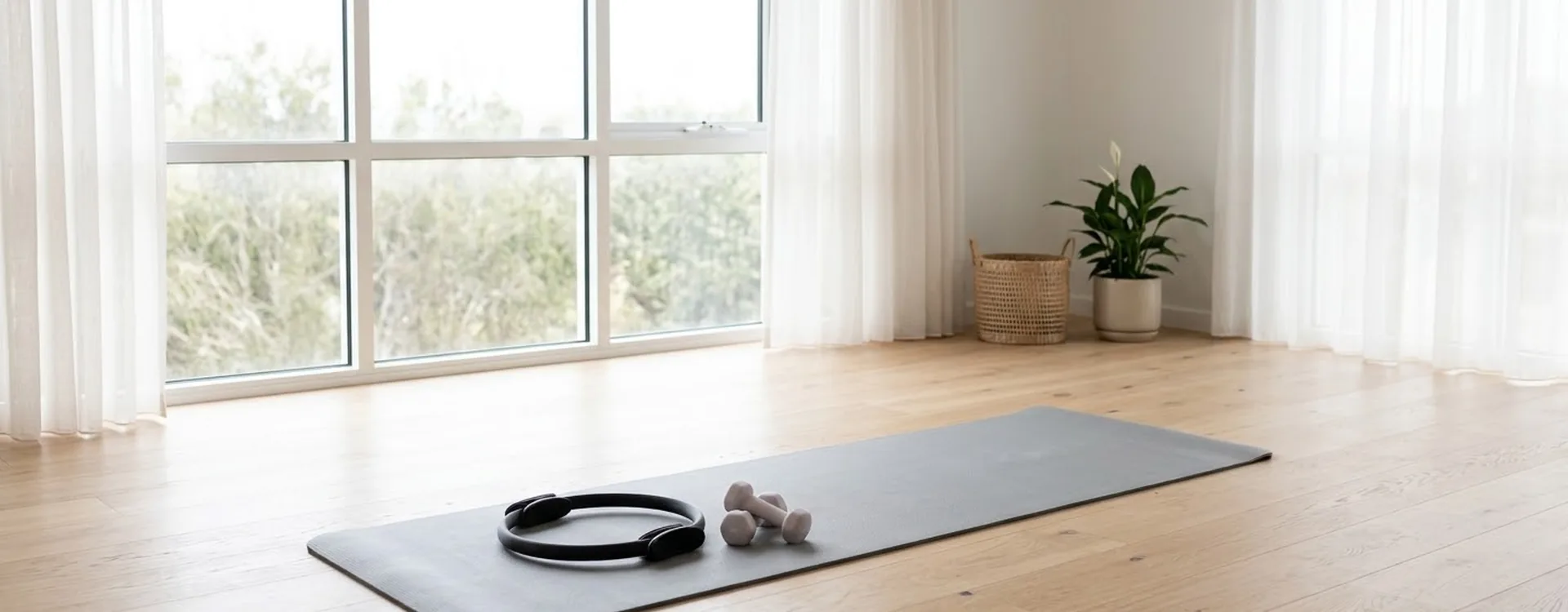
Choose the right type of Pilates: There are two main forms of Pilates: matwork, which is practised only on a gym mat and sometimes small accessories (bands, balloons), and Pilates on machines (Reformer, Cadillac, etc.), which provides more precise support through controlled resistance. For beginners, Pilates on the floor is more accessible and requires no special equipment.
-
Proper equipment: A comfortable mat, soft, breathable clothing and a pair of non-slip socks (optional) are all you need to practice with ease.
-
Learn with a professional: Taking a course with a certified instructor is highly recommended to assimilate the basics, execute movements correctly and avoid postural errors. Online courses can be an alternative, but personalized guidance is still ideal, especially for beginners.
-
Regular practice: to see benefits in terms of posture, muscle tone and flexibility, it's advisable to practice 2 or 3 times a week. Progressive regularity is preferable to intense sessions spaced out over time.
-
Listen to your body and progress gently: Pilates focuses on precision and control of movement. It's important to respect your own rhythm, avoid abrupt efforts and favour quality of execution over intensity. Progressive training guarantees lasting results without the risk of injury.
The benefits of Pilates: a complete method for body and mind
Pilates is a discipline renowned for its many physical and mental benefits. It is suitable for a wide range of people, from athletes to people undergoing rehabilitation, as well as those who simply wish to maintain their body in a gentle way. Here are the main benefits of Pilates.
1. Improved posture and support
Pilates emphasizes body alignment and the strengthening of deep muscles, particularly those of the trunk (abdominal, lumbar and back muscles). By working these stabilizing muscles, it helps to maintain correct posture on a daily basis, reducing pain associated with poor postural habits, such as back pain caused by prolonged sitting.
2. In-depth muscle strengthening
Unlike conventional strength training exercises that target isolated muscle groups, Pilates engages several muscles simultaneously. It mainly involves postural and stabilizing muscles, such as the abdominals, glutes and back muscles. The in-depth workout results in a more harmonious, toned body, without excessive weight gain.
3. Flexibility and improved mobility
One of the aims of Pilates is to lengthen muscles and increase range of movement. Unlike other forms of exercise, which can lead to muscle stiffness, this method promotes flexibility and fluidity of movement. This is particularly beneficial for people with reduced mobility or muscle tension.
4. Stress reduction and improved concentration
Pilates is more than just a physical workout; it also has a mental impact. By incorporating deep, controlled breathing, the practice helps to release tension and reduce accumulated stress. The concentration required to execute each movement with precision promotes a state of full awareness, improving the management of stress and emotions in everyday life.
5. Injury prevention and rehabilitation
Many physiotherapists include Pilates in their rehabilitation protocols, as it helps to strengthen the body without aggressive impact on the joints. It is particularly recommended for people with chronic back, knee or shoulder pain. As the movements are gentle and progressive, they enable muscles to be strengthened while respecting individual capacities and limits.
6. Enhanced sporting performance
Athletes, both amateur and professional, often incorporate Pilates into their training routine. By strengthening deep muscles and improving coordination, it helps optimize performance in various disciplines such as running, dance, tennis and golf. What's more, by reducing the risk of injury, it contributes to sporting longevity.
The 6 fundamental principles of Pilates
Pilates is based on six key principles that guarantee effective and beneficial practice. These principles must be respected to maximize results and avoid poor posture.
1. Breathing
Breathing plays a fundamental role in the Pilates method. It is used to accompany and punctuate movements, while improving muscle oxygenation. Unlike classical abdominal breathing, Pilates breathing is costal: it consists of inhaling through the nose, inflating the ribcage, and exhaling slowly through the mouth, engaging the deep muscles of the abdomen. This technique helps stabilize the trunk and strengthen the core.
2. Centering
Centering, or "Powerhouse" activation, refers to working the deep muscles of the trunk, including the abdominals, lower back muscles, glutes and pelvic floor. Engaging this area is essential to ensure correct execution of exercises and avoid unnecessary tension. By strengthening this solid base, the body gains stability and balance.
3. Control
Every movement must be performed with control and precision. It's not a question of chaining exercises together quickly, but of executing them with full awareness, avoiding any abrupt or disorganized movements. The aim is to have total control of the body, and not to let inertia guide your movements.
4. Fluidity of movement
Pilates emphasizes slow, continuous and harmonious movements. Every transition between exercises must be smooth, with no abrupt breaks. This fluidity helps improve coordination and avoid unnecessary stress on the joints.
5. Concentration
Pilates requires constant attention to perform the exercises correctly and activate the right muscles. It's not just a physical workout, but also a mental one. Greater concentration enables you to feel each movement better and maximize its effects.
6. Precision
Quality is more important than quantity. It's better to perform an exercise correctly with few repetitions, than to string together a series of poorly executed sets. Precision optimizes muscular work and avoids compensations that could lead to imbalances or pain.
By respecting these principles, Pilates becomes an effective method for strengthening the body in depth while improving posture and flexibility.
To go further in the shop: Training accessories, Training equipment, Other equipment.
Frequently asked questions
Where does Pilates come from?
The method was created by Joseph Pilates in the early 20th century, first to rehabilitate wounded soldiers during the First World War, then developed in New York in the 1920s with dancers and athletes.
How do you start Pilates?
Choose between mat Pilates and machine Pilates, get a comfortable mat, learn the basics with a certified instructor and practise 2 to 3 times a week, favouring precision over intensity.
Who is Pilates for?
Everyone: it improves posture, mobility and deep muscle strength gently, which makes it accessible to beginners as well as experienced athletes.