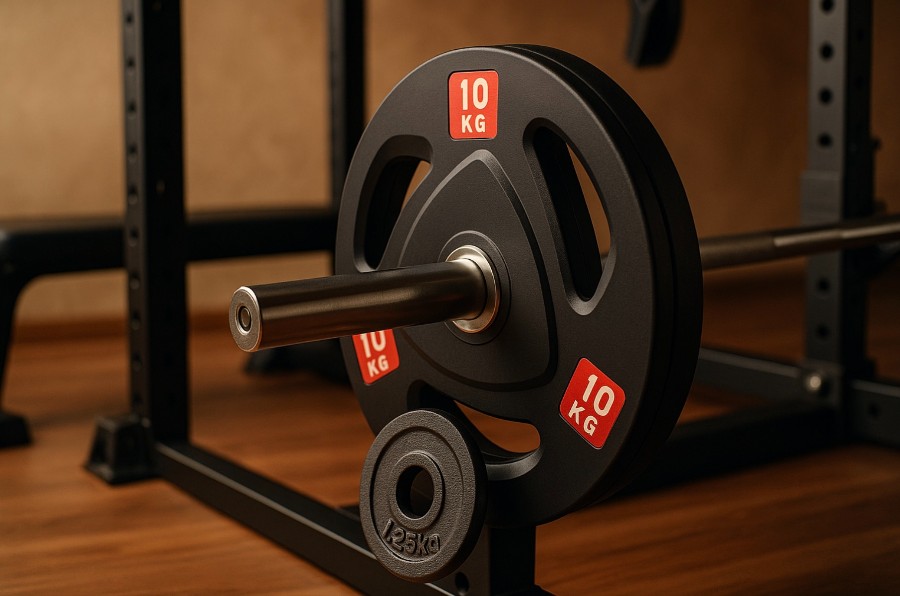
Rubber Olympic Plates vs Cast Iron Olympic Plates: Advantages and Disadvantages
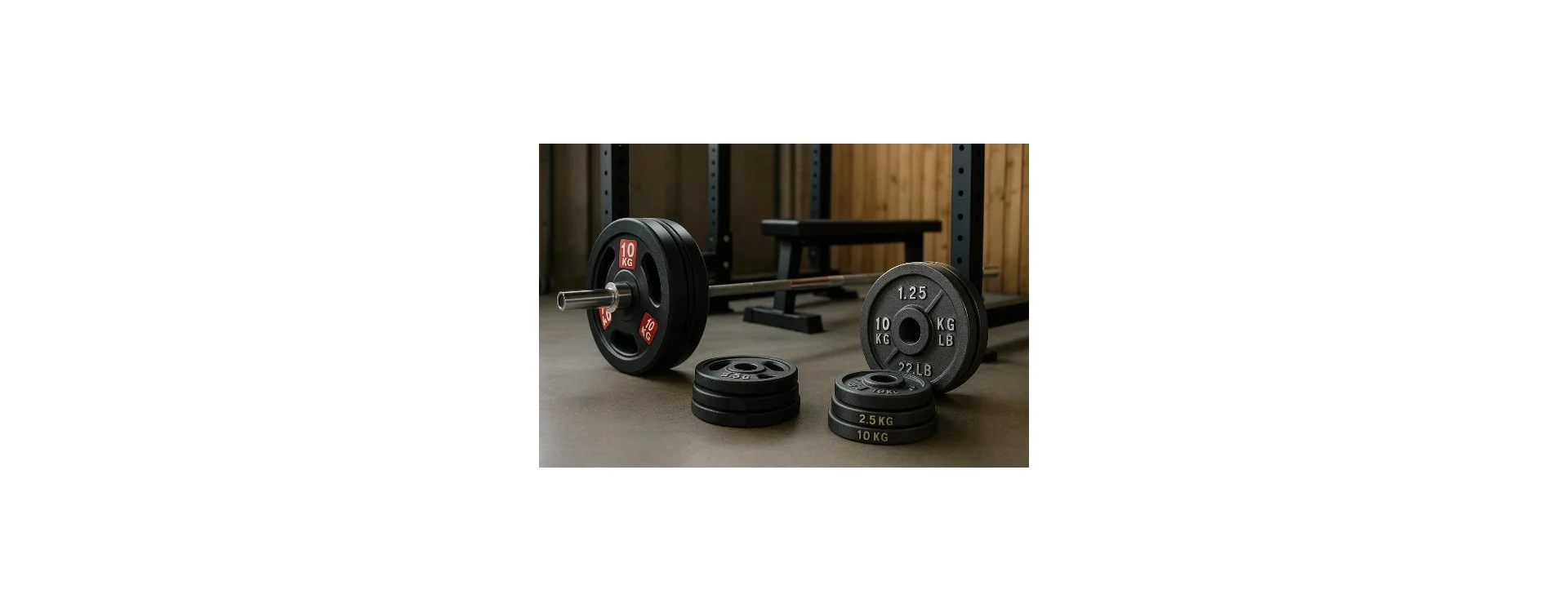
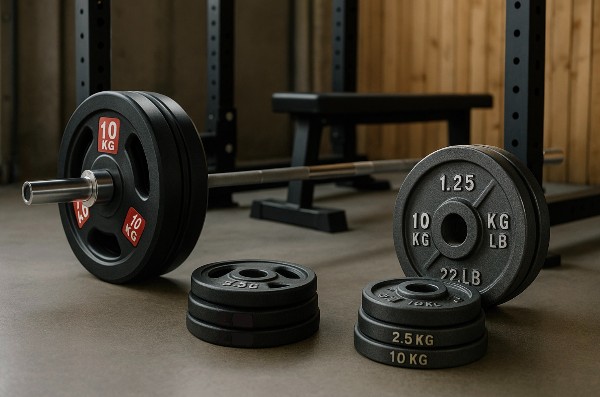
Choosing between rubber Olympic weight plates and cast iron Olympic plates depends on your training location, objectives, and budget. Rubber excels in noise reduction and floor protection, while cast iron offers compactness and density for heavy loading. Both solutions are available with 50 mm bore for Olympic bars, with varying manufacturing quality depending on the ranges. This guide compares essential criteria and gives you clear recommendations based on your profile.

Summary Table
| Criteria | Rubber Plates | Cast Iron Plates |
|---|---|---|
| Noise | Low, cushioned drop | High, metallic impact |
| Floor/bar protection | Very good, shock-resistant | Poor without mats |
| Thickness/loading | More voluminous at equal weight | More compact |
| Precision (tolerance) | Variable by range | Often good in calibrated ranges |
| Grip | Often tri-grip, comfortable grip | Raw, can slip |
| Durability/maintenance | No rust, sensitive to UV/solvents | Can chip/rust |
| Price per kilo | Generally higher | Often more affordable |
| Ideal practices | Weightlifting, cross-training, home gym | Powerlifting, dense loads |
Quick Summary: Which to Choose Based on Your Case
- Apartment / noise-sensitive neighborhood: prioritize rubber Olympic plates
- Load as heavy as possible on a bar: cast iron Olympic plates
- Weightlifting / cross-training with ground drops: rubber
- Tight budget / second-hand market: cast iron, compare per kilo
- Mixed use: rubber base + some heavy pairs in cast iron

Noise and Floor Protection
Rubber weights offer notable noise and vibration reduction: cushioned impacts, better preserved floors and bars. Cast iron is significantly louder; without thick mats or platforms, you expose your floor and bars. For a home gym (and peaceful neighbors), the practical advantage goes to rubber, ideally combined with protective mats.
Loading Capacity and Thickness
At equal weight, a rubber plate is generally thicker than a cast iron plate, which "fills" the bar sleeves faster and may limit total load. Cast iron's density and compactness remain the best option for loading very heavy on a standard bar or when sleeve space is limited.
Precision and Weight Tolerance
Precision depends mainly on the chosen range: you can find very accurate rubber series and others more tolerant, same logic for cast iron, with a clear advantage for calibrated "competition" models. If you follow strict strength cycles, prioritize calibrated plates and micro-plates to fine-tune increments.
Ergonomics and Grip
Rubber plates often offer tri-grip handles and adherent texture, speeding up weight changes and limiting pinching. Raw cast iron gives a direct and stable feel but can be slippery with sweaty hands and less practical on models without handles. For quick sequences, rubber keeps the ergonomic advantage.
Durability and Maintenance
Rubber doesn't rust and tolerates impacts well; however, avoid aggressive solvents and prolonged UV exposure, and air out upon unpacking if a slight odor is present. Cast iron can chip/rust if the paint is damaged: simple maintenance, maximum longevity (regular wiping, dry storage, small touch-ups) allows it to last for years.
Budget, Delivery and Resale
Cast iron is often the most economical per kilo and easy to find second-hand, with good resale value. Rubber generally costs more and shipping costs weigh in, but it reduces the risk of floor damage and significantly improves indoor training comfort; keep in mind the cost per kilo and resale value in your calculation.
Recommendations by Profile
As an express choice guide: prioritize rubber + protective mats for a home gym in an apartment; opt for compact cast iron supplemented by precision micro-plates for powerlifting and dense loads; choose rubber to handle repeated ground drops in weightlifting/cross-training; for beginners/intermediates, compose a pragmatic mix according to budget and objectives (rubber base, heavy pairs in cast iron if density needed).
To go further in the shop: Bumper plates, Steel plates, Calibrated plates. Also worth reading: Olympic vs standard weights.
Frequently asked questions
Rubber or cast iron plates: which for an apartment?
Rubber: it absorbs impacts, protects the floor and the bar and clearly reduces noise, especially combined with protective flooring tiles.
Which ones let you load the heaviest?
Cast iron: at equal weight a cast iron plate is thinner than a rubber one, so the bar sleeves take more load.
Which material is the most economical?
Cast iron is often the cheapest per kilo and resells well second-hand. Rubber costs more but avoids floor damage and improves comfort indoors.