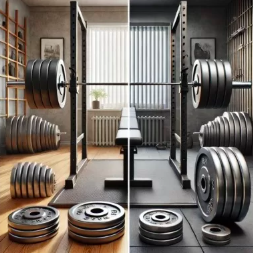
Olympic weights vs. standard weights: which to choose for your home gym?
In short. The difference between Olympic and standard plates is the diameter of the centre hole: 50 mm for Olympic, 25 mm for standard. Standard plates, lighter and cheaper, are enough to start with moderate loads. Olympic plates fit thicker bars with rotating sleeves, handle heavy loads and come in cast iron, rubber bumper or a hybrid version with a steel core and rubber coating, the best suited to training at home.

If you're building your home gym or upgrading your equipment, you're probably faced with a crucial question: Olympic weights or standard weights?
These two options aren't just a question of style, they influence your progress, your performance, and even the durability of your equipment.
Ready to take the plunge? Let us guide you.
Differences between Olympic and Standard Weights
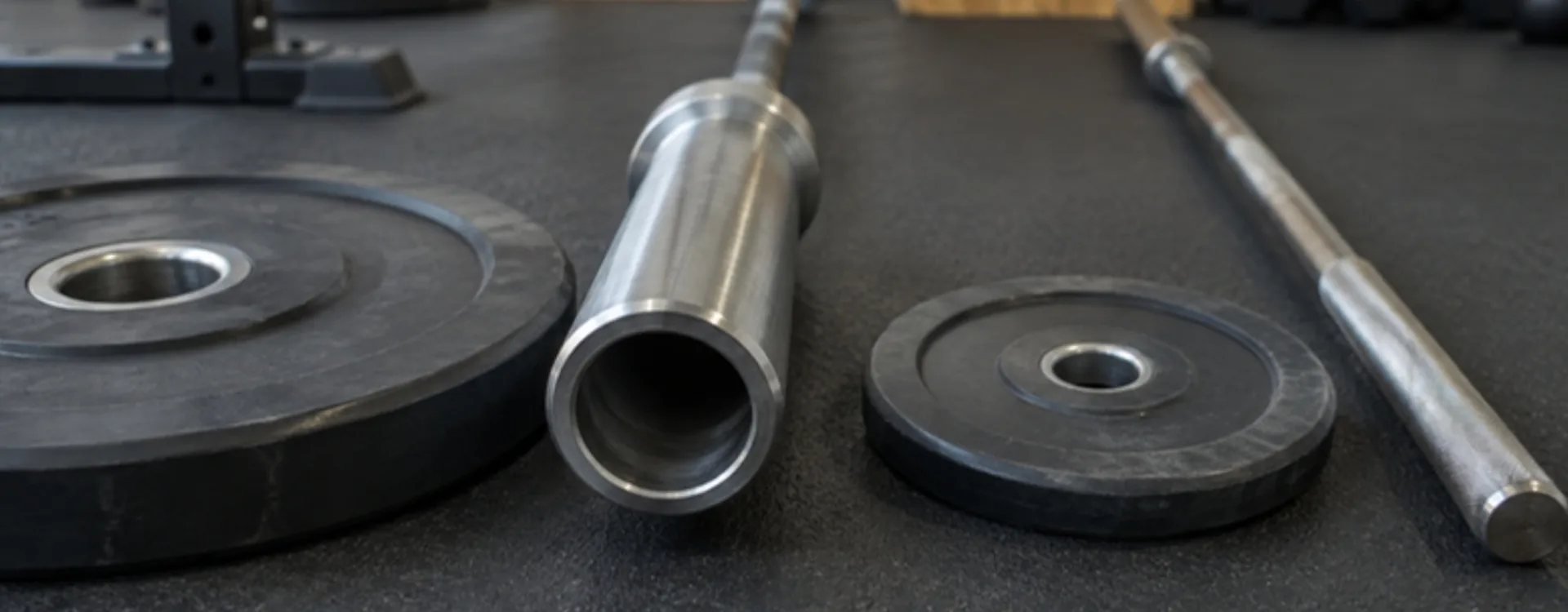
- The main difference between Olympic and standard weights lies in their size and compatibility. Standard weights, with a 25 mm center hole, are designed for thinner, lighter bars, suitable for beginners or occasional use. Olympic weights, on the other hand, have a 50 mm center hole, compatible with thicker, sturdier bars, capable of supporting very heavy loads without deforming.
- Olympic bars also offer superior stability thanks to their wider construction and rotating ends, which reduce tension during complex movements. Finally, Olympic weights are often made from top-of-the-range materials for enhanced precision and superior durability.
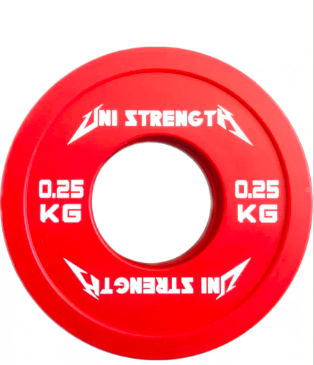
You can buy our precision Olympic weights which enable you to increase your loads progressively, from as little as 0.125 kg:
Standard weights vs. Olympic weights: advantages and disadvantages
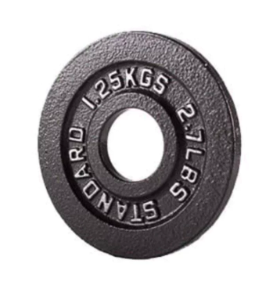
The standard weights are designed for weight bars with a diameter of 25 mm. They are generally lighter, more compact and often used in a domestic context or for moderate training. These plates are ideal for light to medium loads, but lack the robustness and precision required for intensive use. They are also less expensive, making them an economical option for beginners or those with simple strength training needs.
The Olympic weights Olympic weights, on the other hand, are designed for bars with a 50 mm diameter at the ends. Designed to support heavy loads, they are more resistant and manufactured to strict standards, notably in terms of precision and balancing. They are mainly used in gyms and competitions. Often covered with rubber or urethane to protect surfaces and reduce noise, they are more versatile and suitable for intensive or advanced use.
See our plate buying guide.
So, Standard or Olympic?
Your choice depends on your objective. If you're looking for affordable starter equipment, standard weights will suffice for your first few years of bodybuilding. On the other hand, if you're advanced in your training or plan to lift heavy, Olympic weights will let you progress with heavy loads.
At Uni Strength we know that every detail counts. Whether you start with standard weights or go straight to Olympic, we offer robust, reliable equipment for all levels.
Materials: strength and comfort of use
Materials play an essential role in the durability and usability of Olympic plates.
The cast-iron plates are a classic choice, prized for their sturdiness and good value for money. They ensure durability and performance over the years.
However, dropping the bar on the floor is noisier and can damage the floor.
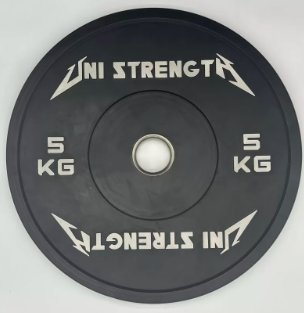
The plate bumpers made rubber are ideal for absorbing the shock of weightlifting movements. They protect the floor and equipment while reducing noise.
There are also hybrid plates, combining a steel core with a rubber coating (like our Olympic weights), to guarantee plate durability while limiting safety and noise risks. For at-home training, we recommend them to limit noise when the bar falls.
The choice of material depends on your priorities: cast iron for strength, rubber for versatility. Steel core with rubber coating is a good in-between.
To go further in the shop: Weight plates, Olympic bars, Bumper plates. Also worth reading: rubber vs cast iron plates.
Frequently asked questions
What is the difference between Olympic and standard weights?
The centre hole diameter: 50 mm for Olympic plates, 25 mm for standard ones. Olympic bars are thicker, sturdier and fitted with rotating sleeves.
Which weights should a beginner choose at home?
Standard weights are enough for a starter budget and light to medium loads. If you plan to lift heavy or progress for years, go straight to Olympic.
Cast iron, rubber or hybrid?
Cast iron is sturdy and affordable but noisy; rubber bumpers absorb impacts for weightlifting; hybrid plates (steel core, rubber coating) combine durability and floor protection.