How to choose rubber tiles for your gym?
In short. To choose rubber tiles for a gym, keep four criteria in mind: thickness (15 mm for light to moderate use, 30 mm for heavy lifting and dropped weights), a double layer of coarse and fine grain, a non-slip surface and glue-free installation that is easy to cut. Tiles protect the floor, absorb vibration and noise, and stabilise heavy lifts such as the squat and deadlift.
Whether you are setting up a professional gym or a home workout space, floor quality is often overlooked... until it becomes a problem. Rubber flooring tiles are today the most effective solution to protect your floor, absorb impacts and train safely. The key is knowing which ones to choose.
Why Install Protective Flooring in a Gym?
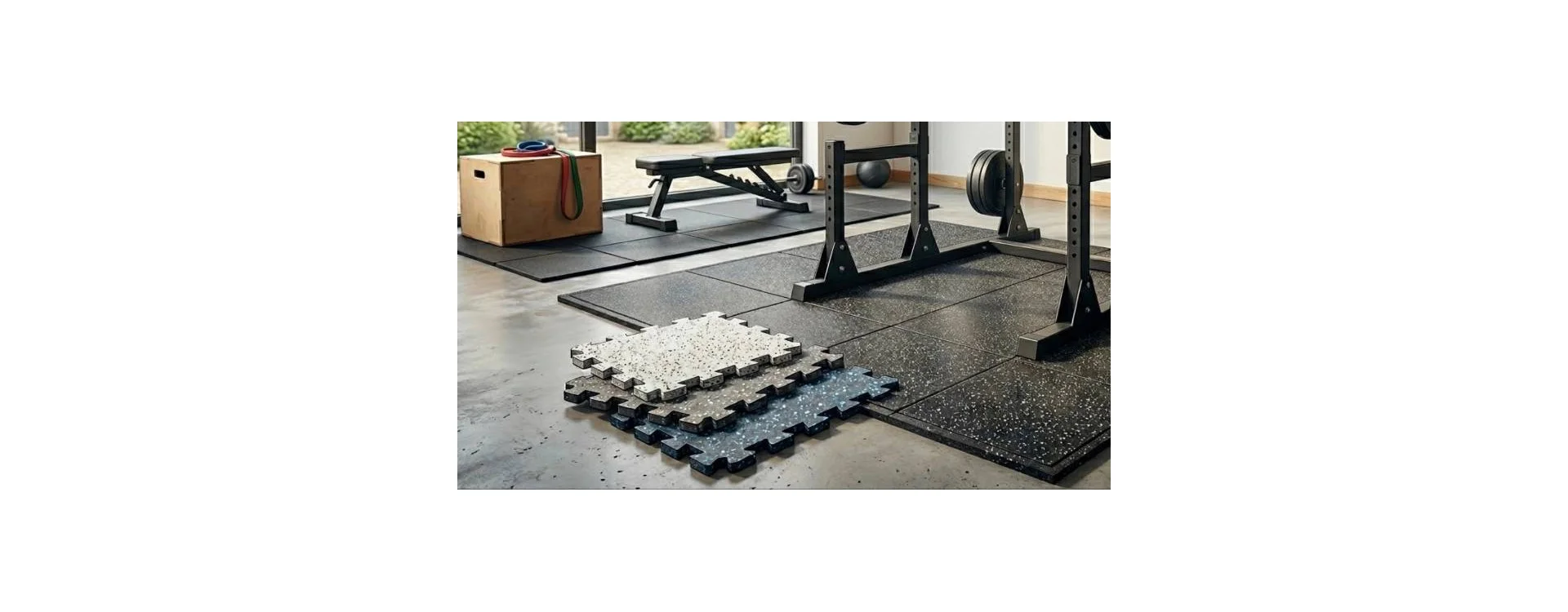
A bare floor, whether concrete, tile or hardwood, is not designed to handle a dropped loaded barbell, the vibrations of a heavy squat or the constant back-and-forth of floor training. Gym rubber floor tiles serve multiple purposes at once:
- Protecting the existing floor from impacts and scratches
- Absorbing vibrations and reducing noise
- Providing increased stability for heavy exercises (deadlifts, squats, bench press)
- Ensuring safety thanks to the non-slip surface
They are also referred to as shock-absorbing tiles, as their primary role is to dissipate impact energy. This is particularly important in spaces dedicated to weight training or Cross Training, where loads are heavy and movements are dynamic.
Key Criteria to Check Before Buying
Thickness: the Most Important Factor
The thickness of rubber gym flooring directly determines the level of cushioning. As a general rule:
- 15 mm: ideal for light to moderate use (cardio, stretching, light dumbbells, group classes)
- 30 mm: recommended for heavy strength training, spaces with dumbbells, barbells and plates
If you practice exercises that involve dropping weights, or if you are equipping a high-traffic gym, go for 30 mm sport floor tiles without hesitation. The extra cushioning protects both your floor and your joints.
Density and Composition
Not all rubber tiles are created equal. A good shock-absorbing tile should feature an ultra-resistant double layer, combining a coarse grain (for deep impact absorption) and a fine grain on the surface (for stability and floor comfort). This type of construction guarantees a much longer lifespan than budget single-layer models.
Non-Slip Surface
A gym floor protection tile must stay firmly in place, even under load. Surface texture plays a key role: it must provide sufficient grip for both footwear and equipment placed on it. Non-slip tiles prevent sliding during dynamic movements and keep the entire training area safe.
Ease of Installation and Maintenance
Good gym flooring should be installed without adhesive and cut easily to fit the shape of the room. Maintenance should remain straightforward: a sweep and a damp clean are all it takes. Rubber tiles are resistant to moisture, heavy loads and intense daily use.
Our Recommendation: Uni Strength Rubber Tiles
At Uni Strength, we offer non-slip rubber protection tiles specifically designed for weight training and Cross Training. Available in 15 mm and 30 mm, they feature an ultra-resistant double layer (coarse and fine grain) for maximum stability, even during the most demanding exercises such as squats or deadlifts.
They effectively absorb shocks, reduce vibrations and protect your floor with no adhesive required for installation. A product built to last, whether in a professional gym or at home.
Gym Floor Tiles for Your Home Gym: an Investment That Makes All the Difference
If you are setting up your home gym, rubber gym floor tiles are one of the first things to plan for, even before installing your equipment. They protect your subfloor, reduce noise for neighbors or the rest of the house, and provide a stable, professional surface to train and progress on.
Once your floor is protected, you can complete your space with the rest of your equipment. Browse all our strength training equipment to build your home gym from A to Z: racks, barbells, plates, benches and accessories.
To go further in the shop: Training accessories, Training equipment, Other equipment. Also worth reading: our guide to building your home gym.
Flooring solutions in the range
| Use | Product | Key figure |
|---|---|---|
| The whole room, tiles laid edge to edge | Protective rubber tiles | 100 x 100 cm, 15, 25 or 30 mm thick, density 950 to 980 kg/m³ |
| Interlocking, no glue | Rubber puzzle tiles | 100 x 100 cm overall, 0.92 m² usable per tile, 15 or 25 mm thick |
| Deadlift area | Deadlift platform | 120 x 100 cm, rubber drop zones, 30 mm cushioning |
Specifications taken from the product pages on 9 October 2026.
Frequently asked questions
Which thickness of rubber tiles should you choose?
15 mm for light to moderate use (cardio, stretching, light dumbbells), 30 mm for heavy lifting, dropped loads and busy gyms.
Why lay tiles in a gym?
To protect the floor from impacts and scratches, absorb vibrations and noise, stabilise heavy exercises and make training safer with a non-slip surface.
How do you recognise a good tile?
A double layer: coarse grain underneath for shock absorption and fine grain on top for stability, a non-slip surface and glue-free installation that is easy to cut.