Best Exercises to Build Your Quadriceps
The quadriceps are at the core of every lower body movement. They generate power in the squat, speed in running, stability during direction changes, and visible volume at the front of the thigh. Building strong legs is impossible without making them a priority.
Developing them requires more than just chaining sets of squats. The best results come from a mix of compound movements (squat, leg press, hack squat), isolation exercises like the leg extension, and consistent progression in both load and technique. Uni Strength offers a full range of strength training machines to structure your leg sessions at home or in the gym.
In this article, we cover the best exercises to build your quadriceps, the equipment suited to each movement, and a ready-to-use programme, whether you train at home or in a commercial gym.
In short
- Best exercises: hack squat, squat, leg press, lunges and leg extension, combining heavy compound lifts with isolation.
- Sample session: hack squat or leg press 4 x 8 to 12, front squat or squat 3 x 6 to 10, leg extension 3 x 12 to 15, lunges 3 x 10 to 12 per leg.
- Go down at least to parallel and add load without sacrificing technique.
- Allow 48 to 72 hours of recovery between two leg sessions.
What Are the Quadriceps Muscles?
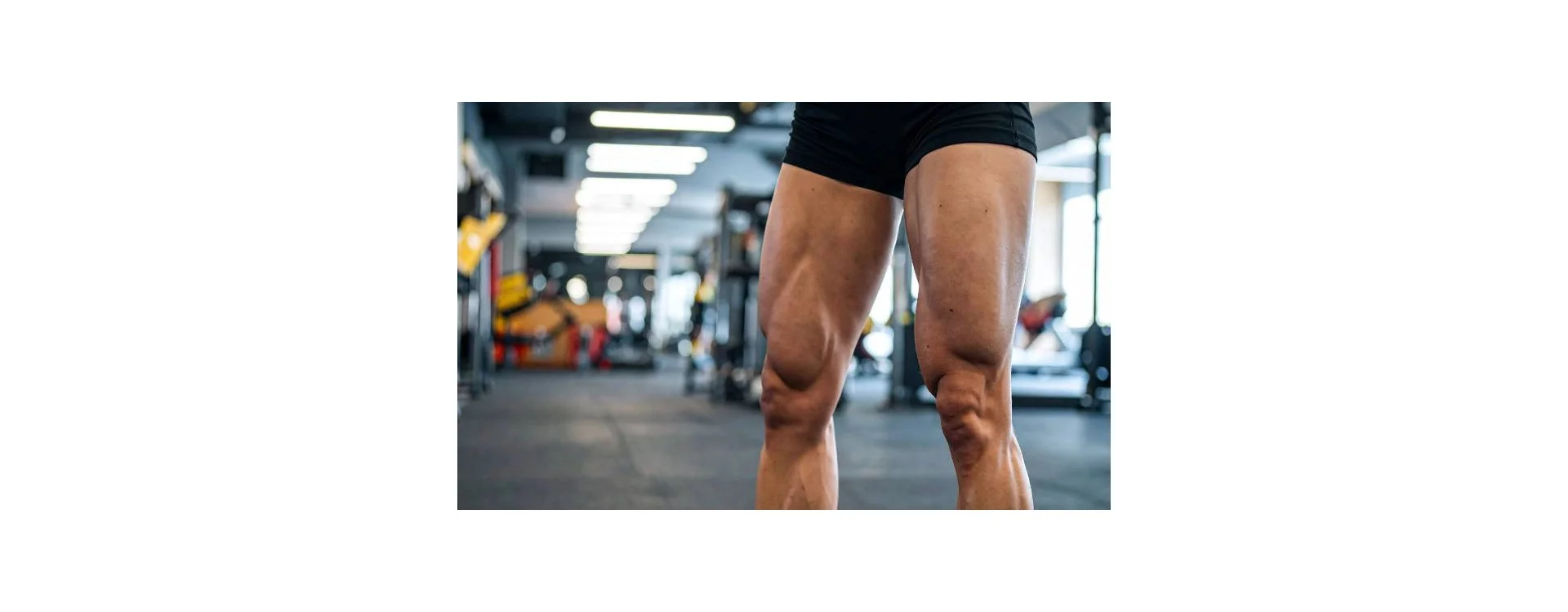
The quadriceps are located at the front of the thigh. As the name suggests, they consist of four muscle heads that work together in most leg movements.
- Rectus femoris: the only head that also crosses the hip joint, particularly active when the torso remains upright.
- Vastus lateralis: located on the outer thigh, it is the largest of the four heads.
- Vastus medialis: on the inner thigh, visible just above the knee (the well-known "teardrop" shape).
- Vastus intermedius: positioned beneath the rectus femoris, deeper and less visible.
Their primary function is knee extension. They are involved in every pushing action of the lower body: squats, climbing stairs, running, jumping, and explosive starts. They also stabilise the knee and contribute to postural control.
The Best Exercises to Build Your Quadriceps
Here are eight exercises to include in your sessions to effectively target the quadriceps, from heaviest to most targeted.
1. Hack Squat
Equipment required: hack squat machine.
Muscles targeted: quadriceps primarily, glutes and hamstrings secondarily.
Execution: back flat against the machine, feet shoulder-width apart at the centre of the platform. Lower under control until the thighs are parallel to the floor, then drive hard through the heels and forefoot to press back up.
Why it works: the guided path allows you to load heavy without managing balance. It is one of the best choices for placing the quadriceps under significant load.
Uni Strength tip: the lower your feet are on the platform, the more the quadriceps are engaged. A combo hack squat and leg press machine lets you perform both movements at the same station.
2. Leg Press
Equipment required: 45-degree incline leg press.
Muscles targeted: quadriceps, glutes, hamstrings.
Execution: back and hips firmly against the pad, feet shoulder-width apart. Lower the weight to approximately 90 degrees at the knee, then press back up with control without locking out the knees at the top.
Why it works: the leg press allows you to load very heavy with excellent stability. It is an ideal exercise for progressing without relying on free squat technique.
Uni Strength tip: to target the quadriceps more specifically, place your feet lower on the platform and use a moderate stance width. A leg press machine is an excellent investment for structuring a serious leg session at home.
3. Leg Extension
Equipment required: leg extension machine.
Muscles targeted: quadriceps in isolation (all four heads).
Execution: seated with your back flat against the pad, the roller positioned just above the ankles. Extend the legs under control, hold a slight contraction at the top, then lower without releasing the tension.
Why it works: this is the most direct isolation exercise for the quadriceps. Ideal for finishing a session, improving the mind-muscle connection, or pre-fatiguing before a heavy compound movement.
Uni Strength tip: avoid going too heavy; prioritise full range of motion and control. A seated leg curl and extension machine lets you work both quadriceps and hamstrings on a single station, saving valuable space.
4. Squat
Equipment required: Olympic barbell, squat rack.
Muscles targeted: quadriceps, glutes, hamstrings, lower back, core.
Execution: bar resting on the traps, feet shoulder-width apart, toes slightly turned out. Descend with a braced back and knees tracking over the feet, reaching at least parallel depth.
Why it works: this is the king of lower body exercises. Quadriceps involvement depends on torso angle: the more upright the torso, the greater the demand on the front of the thigh.
Uni Strength tip: never sacrifice depth to add another plate. A squat rack with properly set safety bars allows you to push your sets without risk.
5. Front Squat
Equipment required: Olympic barbell, rack.
Muscles targeted: quadriceps primarily, core, upper back.
Execution: bar resting on the front delts, elbows high. Descend with the torso as upright as possible and drive back up through the heels.
Why it works: the front-loaded bar position forces a more upright torso, shifting more tension onto the quadriceps than a standard back squat. It is also an excellent exercise for core strength and mobility.
Uni Strength tip: start light to learn the front rack position before adding load. A quality Olympic barbell with good knurling makes the grip significantly more comfortable on this movement.
6. Belt Squat
Equipment required: belt squat machine.
Muscles targeted: quadriceps, glutes, hamstrings, with no axial load on the spine.
Execution: belt around the hips, feet stable on the platform. Squat down while keeping the torso upright, then drive back up through the legs.
Why it works: the load pulls downward at the hips rather than compressing the spine. It is a perfect solution for continuing to load the legs when the back is fatigued or in recovery.
Uni Strength tip: use the belt squat as a complement to heavy barbell squats, not necessarily as a replacement. It is also ideal for athletes training frequently who want to protect their spine over the long term.
7. Forward Lunges
Equipment required: dumbbells or barbell.
Muscles targeted: quadriceps, glutes, hip stabilisers.
Execution: standing, step forward and lower until the rear knee nearly touches the floor. The front knee must track over the foot. Push back with the front leg to return to the starting position.
Why it works: as a unilateral movement, lunges correct imbalances between legs and improve coordination. The shorter the step, the more the quadriceps are engaged.
Uni Strength tip: alternate forward, reverse, and walking lunges to vary the stimulus. Adjustable dumbbells are ideal for adapting the load without cluttering your training space.
8. Bulgarian Split Squat
Equipment required: weight bench, dumbbells (optional).
Muscles targeted: quadriceps, glutes, core.
Execution: rear foot elevated on a bench, front foot approximately one large step forward. Lower under control until the front thigh is parallel to the floor, then drive back up through the front heel.
Why it works: a highly intense unilateral exercise, it builds the quadriceps in depth with minimal equipment. It also improves balance and corrects asymmetries.
Uni Strength tip: a stable adjustable weight bench is essential for performing this movement safely. Avoid lightweight benches that slide or wobble under load.
Comparison Table of the Best Quadriceps Exercises
| Exercise | Level | Equipment needed | Quad targeting | Best for |
|---|---|---|---|---|
| Hack squat | Beginner to intermediate | Hack squat machine | Very high | Volume and heavy loading |
| Leg press | Beginner to intermediate | 45-degree press | High | Load progression |
| Leg extension | All levels | Leg extension machine | Very high (isolation) | Finishing and mind-muscle connection |
| Squat | Intermediate | Barbell, rack | Moderate to high | Overall lower body strength |
| Front squat | Intermediate to advanced | Barbell, rack | High | Quad work and core strength |
| Belt squat | All levels | Belt squat machine | High | Volume without spinal loading |
| Forward lunges | Beginner to advanced | Dumbbells or barbell | Moderate to high | Unilateral work and balance |
| Bulgarian split squat | Intermediate to advanced | Bench, dumbbells | Very high | Deep quad work, minimal equipment |
How to Train Your Quadriceps Effectively?
Beyond exercise selection, a few simple principles allow long-term progress:
- Alternate heavy compound movements (squat, leg press, hack squat) with isolation exercises (leg extension).
- Work through a controlled range of motion, descending at least to parallel.
- Progressively increase load without compromising technique.
- Warm up the knees, hips, and ankles thoroughly before each session.
- Master technique before loading heavy, especially on free-weight movements.
- Allow at least 48 to 72 hours of recovery between two leg sessions.
Sample Quadriceps Programme
Here is a typical session targeting the quadriceps with a good balance of heavy loading, volume, and isolation:
- Hack squat or leg press: 4 sets of 8 to 12 reps.
- Front squat or squat: 3 sets of 6 to 10 reps.
- Leg extension: 3 sets of 12 to 15 reps.
- Lunges or Bulgarian split squat: 3 sets of 10 to 12 reps per leg.
- Finisher (optional): 2 high-rep sets on the leg extension (20 to 25 reps) to fully exhaust the muscle.
This programme is a template. It should always be adapted to your level, recovery capacity, and goals (strength, hypertrophy, aesthetics).
What Equipment to Choose for Building the Quadriceps?
Equipment choice depends on your available space, budget, and training style. Here are the most relevant pieces for structuring a complete quadriceps session:
- Combo Hack Squat and Leg Press Machine: the best option for heavy guided loading, combining two essential exercises on a single station.
- Seated Leg Curl and Extension Machine: ideal for isolating the quadriceps at the end of a session and balancing hamstring work.
- Belt Squat Machine: highly useful for adding volume without accumulating spinal load.
- Squat rack: essential for performing squats, front squats, and their variations safely.
- Adjustable dumbbells: ideal for lunges, goblet squats, and Bulgarian split squats, with minimal footprint.
- Weight bench: useful for Bulgarian split squats and accessory exercises.
The ideal approach is to combine at least one free movement (squat or front squat) and one guided movement (hack squat or leg press) to benefit from both training logics.
Common Mistakes to Avoid When Building the Quadriceps
Loading too heavy at the expense of range of motion. A quarter squat with a heavy weight has almost no effect on the quadriceps. It is always better to reduce the load and descend properly.
Only doing squats. The squat is an excellent exercise, but it is not sufficient on its own. Isolation via the leg extension and guided movements like the hack squat target what the squat does not fully address.
Neglecting eccentric control. The eccentric phase (the lowering) is what drives the most muscle growth. Descending too fast or bouncing at the bottom significantly reduces the effectiveness of the movement.
Poor foot placement on the leg press or hack squat. Placing the feet too high transfers the work to the glutes and hamstrings. To target the quadriceps, position your feet lower on the platform.
Skipping recovery. The quadriceps are a large muscle group that requires adequate time to recover. Stacking leg sessions without rest limits your progress and increases injury risk.
Confusing joint pain with muscle burn. Muscle burn is normal. Pain in the knee or hip is not, and should prompt you to correct your technique or seek professional advice.
Conclusion
The best exercises for building the quadriceps always combine three approaches: heavy compound movements (squat, front squat), guided exercises (hack squat, leg press, belt squat), and isolation work (leg extension). The hack squat / leg press / leg extension combination remains one of the most effective for rapidly developing thigh volume and strength.
With the right equipment, it is entirely possible to build a complete leg session at home or in the gym. At Uni Strength, you will find the machines, racks, and accessories needed to structure a genuine, sustainable, and progressive training routine.
To go further in the shop: Lower-body machines, Squat racks and power racks, Weight benches. Also worth reading: the best exercises to build your legs.
Frequently asked questions
What are the best exercises for the quadriceps?
The hack squat, squat, leg press, lunges and leg extension, combining heavy compound movements and isolation, with steady load progression.
What are the four muscles of the quadriceps?
The rectus femoris (which also crosses the hip), the vastus lateralis (the largest), the vastus medialis (the teardrop above the knee) and the deeper vastus intermedius.
How do you target the quads more on the hack squat?
Place your feet lower on the platform, shoulder-width apart, descend until the thighs are parallel to the floor and push through the heels and forefoot.