Blog navigation

Latest posts

Progressive range of motion: the same bar, an ever longer lift
47 views

The progressive range of motion method means keeping a fixed load, between 100 and 103 % of your max, and lengthening...

Read more
Chest and back: set your elbows and wrists to target the right muscle
48 views

For a chest or back exercise to work the target muscle, first set the direction of your elbows, let your wrists...
Read more
How to set up under the bar for the squat and the bench press
58 views

A stable bar starts before the first rep: center it using body landmarks (sternum, thumbs, ankle bones), lock in your...
Read more
Resistance bands in the home gym: eight uses, from heavy squats to joint care
368 views

In strength training, bands serve eight purposes: making resistance progressive on barbell exercises, lightening the...
Read more
Box squat: technique, box height and programming
504 views

The box squat consists of sitting down on a box placed behind you, staying still for one second without losing your...

Read more

Strength Training Blog: Tips, Buying Guides and Comparisons

 
Sort by:
  • Progressive range of motion: the same bar, an ever longer lift
    Progressive range of motion: the same bar, an ever longer lift
    48 Views

    The progressive range of motion method means keeping a fixed load, between 100 and 103 % of your max, and lengthening the bar path by one notch every session or every other session, starting from a very short range. After 6 to 10 sessions per lift, the cycle ends with a full squat, bench press or deadlift, using the same load you started with. It is meant for advanced lifters who are stuck even though they have already increased volume and intensity.

    Read more
  • Chest and back: set your elbows and wrists to target the right muscle
    Chest and back: set your elbows and wrists to target the right muscle
    49 Views

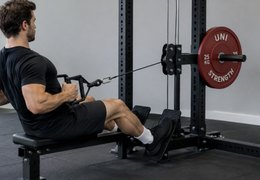
    For a chest or back exercise to work the target muscle, first set the direction of your elbows, let your wrists rotate freely, and pause where the muscle contracts the hardest. An incline press with poorly placed elbows mostly loads the shoulders or triceps, and a pull led by the hands tires the arms first. The bench angle and the load are chosen only once these settings are found.

    Read more
  • How to set up under the bar for the squat and the bench press
    How to set up under the bar for the squat and the bench press
    59 Views

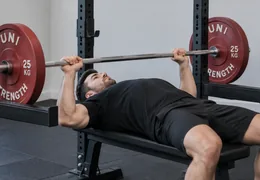
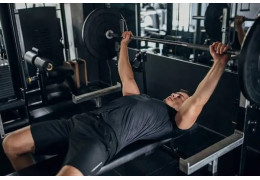
    A stable bar starts before the first rep: center it using body landmarks (sternum, thumbs, ankle bones), lock in your hands and upper back, then unrack it with your hips directly underneath. On the bench press, set your hips and heels before you touch the bar, unrack it with locked arms by pulling with your lats, and press it back in an arc toward the uprights rather than straight up.

    Read more
  • Resistance bands in the home gym: eight uses, from heavy squats to joint care
    Resistance bands in the home gym: eight uses, from heavy squats to joint care
    369 Views

    In strength training, bands serve eight purposes: making resistance progressive on barbell exercises, lightening the bottom of the movement with a reverse setup, developing speed and explosiveness, replacing assistance machines, preparing and recovering around the session, getting a joint working again after an injury, correcting the knee, shoulder and hip, and maintaining conditioning. A rack that offers a low anchor and a high anchor is enough to do it all. Here you will find how to set...

    Read more
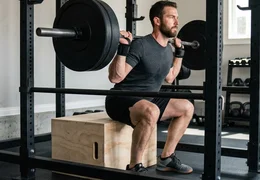
  • Box squat: technique, box height and programming
    Box squat: technique, box height and programming
    504 Views

    The box squat consists of sitting down on a box placed behind you, staying still for one second without losing your brace, then standing back up from the dead stop. Set at parallel, the box imposes the same depth on every rep and forces you to sit your hips back, which works the glutes, hamstrings and lower back more than the quads. It is done in a rack, with the safeties set just below seat height, as a complement to the regular squat and not as a replacement for it.

    Read more
  • How should you prepare for your first powerlifting competition?
    How should you prepare for your first powerlifting competition?
    505 Views

    To prepare for a first powerlifting competition, learn the referees' commands and rehearse them in training, then set a cautious attempt plan, opening with a weight you have recently lifted for three clean reps. Next, sort out the logistics: bag packed the night before, rack heights declared at weigh-in while wearing your competition shoes, food you digest well for a 6 to 8 hour day. On the day itself, the main thing is to leave with a valid total and to understand how a competition runs.

    Read more
  • Bench press: building an arch that holds under load
    Bench press: building an arch that holds under load
    548 Views

    For your arch to hold on the bench press, build it with your legs and hands, not with your back: feet placed to drive toward the head of the bench, open palm set into the bar before you close your hand, then a slide until the back of your neck is pinned. Keep your back loose during this setup and only squeeze your shoulder blades at the start of the descent. Above all, don't let the leg drive go when you unrack the bar from the hooks: that is the moment most arches collapse.

    Read more
  • Olympic weight plates: how to choose them, how much load to plan for and for which exercises
    Olympic weight plates: how to choose them, how much load to plan for and for which exercises
    709 Views

    50 mm bore, cast iron, bumper or calibrated, how much total load to plan for: the guide to choosing your Olympic weight plates without getting it wrong.

    Read more
  • How to build your glutes: the exercises, the programme and the equipment that make the difference
    How to build your glutes: the exercises, the programme and the equipment that make the difference
    696 Views

    Hip thrust, squat, Romanian deadlift: the exercises, the programme and the equipment to build your glutes at home and actually make progress.

    Read more
  • How to build a home gym: the complete guide
    How to build a home gym: the complete guide
    743 Views

    Building a home gym comes down to four steps: choose a space of at least 6 to 10 m² with enough ceiling height, protect the floor with rubber tiles, invest in the bench, barbell and weights trio to cover most exercises, then add a squat rack once your budget allows. With this method, you build a functional home gym without buying equipment you do not need, and you expand it at the pace of your own progress.

    Read more
  • Best Exercises to Build Your Legs (With and Without Machines)
    Best Exercises to Build Your Legs (With and Without Machines)
    1641 Views

    Whether your goal is muscle gain, fat loss or general strengthening, these leg exercises cover every level, from beginner to advanced.

    Read more
  • Top Cable Pulley Machines of 2026
    Top Cable Pulley Machines of 2026
    2266 Views

    A cable pulley machine is one of the most versatile pieces of equipment you can add to your home gym or fitness space. Unlike fixed weight stack machines, a plate-loaded cable system unlocks hundreds of different exercises, from lat pulldowns to cable curls, core stability work and standing rows. The result: one single machine can replace several isolation pieces of equipment.

    Read more
123456>|
Showing 1 to 12 of 68 (6 Pages)