10 best Power Rack exercises to progress in strength training
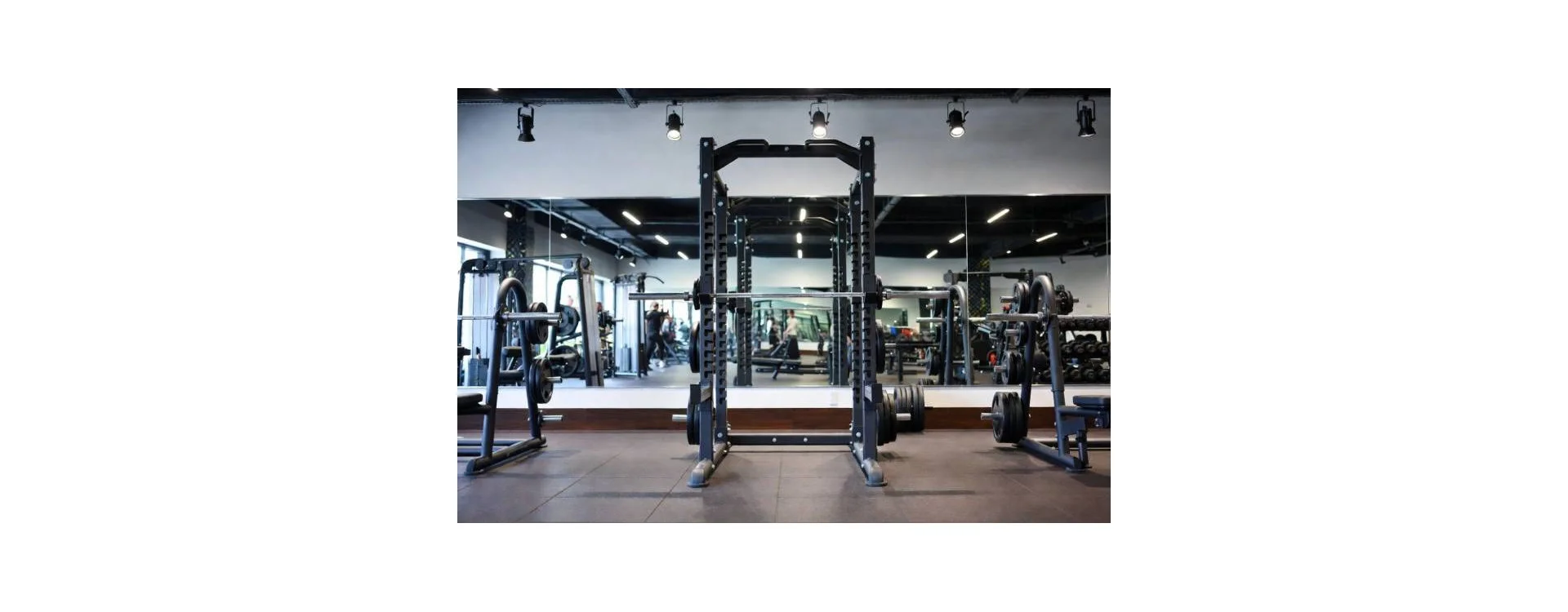
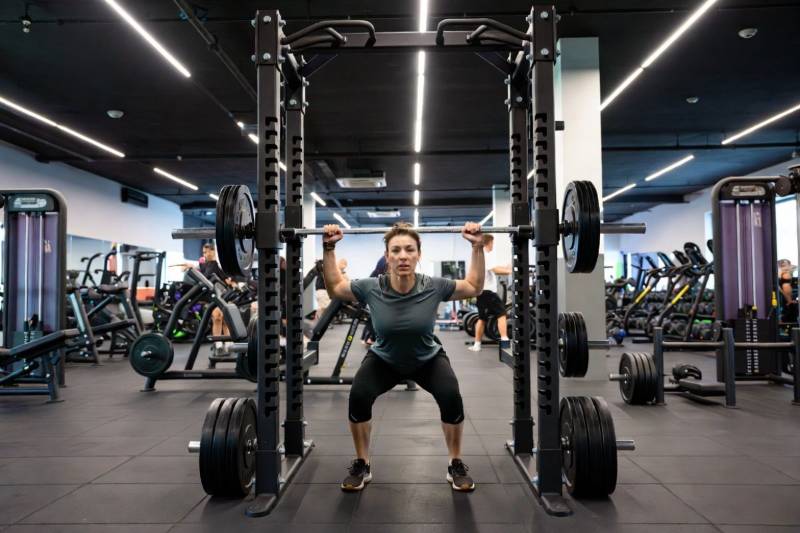
The power rack, also known as a squat cage or weight rack, is undoubtedly the most versatile piece of equipment in any gym. As a complete workout station, it allows you to perform a wide variety of exercises safely thanks to its adjustable safety bars. Whether you're a beginner or an experienced lifter, the power rack gives you the ability to train alone while pushing your limits without risk.
In short
- A power rack lets you train alone with heavy loads thanks to its adjustable safety bars, and opens up more than 50 exercises.
- The 10 key exercises: back squat, bench press, deadlift, overhead press, barbell row, front squat, hip thrust, pull-ups, rack pull and pin press.
- 3 to 4 sessions a week suit most lifters, alternating lower and upper body.
- Progression: add 2.5 to 5 kg on the main lifts every 1 to 2 weeks once technique is solid.
Why the power rack remains essential in 2026?
The weight rack remains the go-to equipment for any serious strength training enthusiast. In a context where gyms are modernizing with connected machines and advanced technologies, the power rack maintains its central position for several reasons:
- Safety: adjustable safety bars allow you to train alone with heavy loads without any risk
- Progression: facilitates progressive overload thanks to a stable and controlled environment
- Versatility: enables over 50 different exercises with a single piece of equipment
- Efficiency: targets multiple muscle groups simultaneously with fundamental compound movements
- Accessibility: available in virtually all gyms and suitable for all levels, from beginner to competitor
In 2026, as fitness trends shift toward functional training and powerlifting, the power rack establishes itself more than ever as the cornerstone of an effective training program. Whether you opt for a complete and modular CS-1 rack or a more compact version, this equipment remains an essential investment.

Summary table of the 10 best exercises
| Rank | Exercise | Target muscles | Level | Effectiveness |
|---|---|---|---|---|
| 1 | Back Squat | Quadriceps, glutes, hamstrings | Beginner to advanced | ★★★★★ |
| 2 | Bench Press | Chest, shoulders, triceps | Beginner to advanced | ★★★★★ |
| 3 | Deadlift | Back, glutes, hamstrings | Intermediate to advanced | ★★★★★ |
| 4 | Overhead Press | Shoulders, triceps, traps | Beginner to advanced | ★★★★☆ |
| 5 | Barbell Row | Back, biceps, rear delts | Intermediate to advanced | ★★★★☆ |
| 6 | Front Squat | Quadriceps, core, upper back | Intermediate to advanced | ★★★★☆ |
| 7 | Hip Thrust | Glutes, hamstrings | Beginner to advanced | ★★★★☆ |
| 8 | Pull-ups | Lats, biceps, forearms | Intermediate to advanced | ★★★★★ |
| 9 | Rack Pull | Back, traps, forearms | Beginner to advanced | ★★★☆☆ |
| 10 | Pin Press | Chest, triceps, shoulders | Intermediate to advanced | ★★★☆☆ |
The 10 best Power Rack exercises
1. Back Squat
The back squat is considered the king of strength training exercises. Performed in a power rack like the CS-Basic rack, it becomes accessible to everyone thanks to the safety bars that eliminate the risk of getting stuck under the bar.
Execution: Place the bar on your traps, descend by bending your knees and hips until your thighs are parallel to the floor, then drive up by pushing through your heels.
Pros
- Complete lower body development
- Excellent hormonal stimulation (testosterone, growth hormone)
- Improved functional strength
- Transfer to many athletic activities
- Ability to work heavy in complete safety
Cons
- Demanding technique requiring learning
- Requires good ankle and hip mobility
- May be contraindicated for back or knee problems
- Significant central nervous system fatigue
2. Bench Press
The bench press is the premier exercise for chest development. Performed in a power rack with safety bars positioned just above the chest, you can train alone with complete confidence.
Execution: Lying on a bench placed in the rack, grip the bar, lower it to the middle of your chest in a controlled manner, then press until your arms are fully extended.
Pros
- Best exercise for chest development
- Also strengthens triceps and anterior deltoids
- Measurable and motivating progression
- Optimal safety with rack bars
- Many variations possible (close grip, incline, decline)
Cons
- Significant stress on the shoulder joint
- Risk of imbalance if back is neglected
- Requires a suitable bench
- Excessive lumbar arch common in beginners
3. Deadlift
The deadlift is a complete pulling movement that engages virtually every muscle in the body. The power rack allows you to work on variations like the rack pull or use the safety bars as height markers.
Execution: Standing facing the bar on the floor, bend at the hips and knees, grip the bar, then lift it while keeping your back straight until you're standing upright.
Pros
- Most complete exercise in terms of muscle recruitment
- Exceptional posterior chain development
- Significant improvement in grip strength
- Maximum athletic transfer
- Core and posture strengthening
Cons
- Complex technique to master
- Risk of back injury if performed incorrectly
- Very taxing on the nervous system
- Significant recovery time required
- May be contraindicated for certain lumbar conditions
4. Overhead Press
The overhead press is the king of shoulder exercises. Performed in a power rack, it offers the ability to start the bar at shoulder height and set the load down safely.
Execution: Standing, bar at collarbone level, press vertically overhead until your arms are fully extended, then lower in a controlled manner.
Pros
- Complete development of all three shoulder heads
- Significant core strengthening (stabilization)
- Improved functional pressing strength
- Very natural and functional exercise
- Visible and measurable progression
Cons
- Generally lighter load than bench press
- Requires good thoracic mobility
- Can be problematic for fragile shoulders
- Excessive lumbar arch to avoid
5. Barbell Row (Bent Over Row)
The barbell row is a fundamental exercise for building a thick and powerful back. The power rack allows you to easily rack the bar between sets.
Execution: Bent forward with a flat back, pull the bar toward your lower ribcage while squeezing your shoulder blades, then lower in a controlled manner.
Pros
- Back thickness development
- Strengthening of rhomboids and mid-traps
- Posture improvement
- Simultaneous biceps work
- Balance with pressing movements
Cons
- Bent position demanding on lower back
- Often poorly executed technique (cheating with momentum)
- Rapid fatigue of spinal erectors
- Difficulty maintaining position on longer sets
6. Front Squat
The front squat places the bar on the front of the shoulders, changing the working angle and targeting the quadriceps more. The power rack is essential for practicing this movement safely.
Execution: Bar positioned on the anterior deltoids, elbows high, descend deeply while keeping your torso as vertical as possible.
Pros
- Enhanced quadriceps targeting
- Less stress on lower back than back squat
- Improved thoracic and wrist mobility
- Significant core strengthening
- Excellent for correcting squat technique
Cons
- Uncomfortable bar position initially
- Requires excellent wrist mobility
- Generally lower loads than back squat
- More difficult technique to master
7. Hip Thrust
The hip thrust is the number one exercise for targeting the glutes. Performed with a bench in the power rack, it allows you to work with heavy loads safely. For even more versatility, some racks with integrated cable system allow you to add complementary isolation exercises.
Execution: Back resting on a bench, bar on hips (with pad), feet on the floor. Drive your hips up while contracting your glutes, then lower in a controlled manner.
Pros
- Maximum glute isolation
- Ability to load very heavy
- Excellent for aesthetics and athletic performance
- Low stress on the spine
- Improved hip power
Cons
- Sometimes tedious setup
- Requires a hip protection pad
- Less natural movement than squat
- Can be awkward in a crowded gym
8. Pull-ups
Most power racks are equipped with a pull-up bar. Pull-ups are an essential exercise for developing a V-shaped back and powerful biceps.
Execution: Hanging from the bar, pull your body up until your chin passes the bar, then lower in a controlled manner.
Pros
- Very effective bodyweight exercise
- Development of lats and biceps
- Improved relative strength
- Many variations (supinated, pronated, neutral)
- Indicator of overall fitness
Cons
- Difficult for beginners
- Sometimes slow progression
- Can be traumatic for shoulders if poorly executed
- Requires additional equipment to add weight
9. Rack Pull
The rack pull is a partial deadlift that focuses on the lockout phase. The power rack safety bars allow you to position the bar at different heights.
Execution: Bar positioned on the safety bars (typically at knee level), perform the upper portion of the deadlift by standing fully upright.
Pros
- Allows working with very heavy loads
- Strengthening of traps and upper back
- Excellent for improving deadlift lockout
- Less taxing on lower back
- Improved grip strength
Cons
- Reduced range of motion
- Does not replace the full deadlift
- Risk of overload with poor technique
- Can create a false sense of strength
10. Pin Press
The pin press is a partial bench press where the bar starts on the safety bars. It eliminates the stretch reflex and forces the muscles to work from a dead stop position.
Execution: Bar resting on the pins at chest level, press to full extension without using the bounce momentum, then return to the pins.
Pros
- Explosive strength development
- Works the sticking point of bench press
- Eliminates stretch reflex
- Improved starting power
- Reduced joint stress compared to full press
Cons
- Generally lower loads than classic bench press
- Less natural movement
- Can excessively fatigue triceps
- Specific technique to master
How to choose your Power Rack?
Choosing a power rack depends on several factors: your training level, available space, budget, and training goals. Here are the essential criteria to consider to make the right choice.
For beginners and limited spaces
If you're new to weight training or have limited space, a CS-Basic rack represents an excellent starting point. The CS-Basic range offers all the essential features for performing fundamental exercises safely: adjustable safety bars, solid J-hooks, and robust construction. This type of rack allows you to perform all 10 exercises presented in this article without compromising on quality.
For intermediate and advanced lifters
More experienced lifters looking for scalable equipment will turn to the CS-1 power rack. This range stands out for its exceptional modularity: the complete and modular CS-1 rack allows you to progressively add accessories and extensions as your needs evolve. Reinforced uprights, multiple attachment points, and compatibility with a wide range of accessories make it a lasting investment for your home gym.
For maximum versatility
If you're looking for an all-in-one piece of equipment capable of replacing several machines, the Athena range combines the best of both worlds. The Athena racks with integrated cable system not only allow you to perform all classic power rack exercises but also add cable movements for muscle isolation: lat pulldown, cable curl, triceps pushdown, face pull, and many more. This configuration is ideal for a complete workout without multiplying equipment.
Structuring your Power Rack training
Having a quality power rack isn't enough: you still need to know how to organize your sessions to maximize results. Here are practical tips for effectively structuring your program.
Recommended training frequency
For most lifters, 3 to 4 power rack sessions per week offer the best balance between muscle stimulation and recovery. This frequency allows you to train each muscle group with sufficient volume while leaving the necessary time for recovery and progression.
Sample weekly split
An effective split to fully utilize your power rack might look like this:
| Day | Focus | Exercises |
|---|---|---|
| Day 1 | Lower body (Quad dominant) | Back squat, front squat, hip thrust |
| Day 2 | Upper body (Push) | Bench press, overhead press, pin press |
| Day 3 | Rest or light cardio | - |
| Day 4 | Lower body (Posterior dominant) | Deadlift, hip thrust, rack pull |
| Day 5 | Upper body (Pull) | Barbell row, pull-ups, rack pull |
Progression and progressive overload
The power rack is the ideal tool for applying the principle of progressive overload, the cornerstone of strength training progression. Thanks to the safety bars, you can attempt heavier loads without fearing failure. Aim for an increase of 2.5 to 5 kg on main exercises every 1 to 2 weeks when you've perfectly mastered the technique.
Essential accessories for your Power Rack
A power rack alone already allows you to perform dozens of exercises, but the right accessories can multiply its potential. The accessories for racks and squat cages transform your workstation into a complete home gym.
Priority accessories
J-hooks and safety bars form the foundation of any power rack. Make sure you have spare J-hooks and safety bars of different lengths to adapt your setup to each exercise.
The dip attachment allows you to add dips to your arsenal, an excellent exercise for the chest and triceps often overlooked in power rack programs.
Landmine attachments open the door to a multitude of unilateral exercises and rotational movements: landmine press, single-arm row, weighted Russian twist.
Conclusion: the 10 best power rack exercises
The power rack is truly the central piece of equipment in any serious weight room. The 10 exercises presented in this article cover all muscle groups and will allow you to build a complete and functional physique. By incorporating these movements into your training routine with regular progression, you will maximize your gains in strength and muscle mass while minimizing injury risk. Whether you choose a CS-Basic rack to start, a CS-1 for its modularity, or an Athena rack for maximum versatility, your investment in a quality power rack will quickly pay off through your consistent progress.
To go further in the shop: CS-1 Power Rack, Squat cage range, Squat cage and Power Rack - CS-Basic, Accessories CS-1 Racks and Squat Cages, Power racks.
The equipment used for these 10 exercises
| Exercises | Equipment | Key figure |
|---|---|---|
| All exercises | CS-1 power rack 204 cm, complete pack | 800 kg maximum load, safety straps and J-cups included |
| Back squat, front squat, rack pull, pin press | CS-1 folding safeties | 500 kg capacity, 3 mm steel, 76 or 104 cm long to match the rack depth |
| Squat, presses, deadlift, row, hip thrust | UF Basic Olympic bar | 20 kg, 220 cm, 50 mm sleeves, 350 kg maximum load |
| Bench press and pin press | UF Power Bench | 750 kg maximum load, 43 cm high |
| Pull-ups | CS-1 straight pull-up bar | steel, 32 mm diameter, 104 cm wide |
| Extra: dips | CS-1 dip bars | 230 kg maximum load, mounts on the rack uprights |
Specifications taken from the product pages on 9 October 2026.
Frequently asked questions
Why train in a power rack?
Adjustable safety bars let you train alone with heavy loads, and a single rack allows more than 50 different exercises.
What is the basic power rack exercise?
The back squat, bar on the traps, descending until the thighs are parallel to the floor, secured by the safety bars of a rack such as the CS-Basic.
How do you secure the bench press in the rack?
By setting the safety bars just above the torso, bench placed inside the rack, controlled descent to mid-chest.
Also worth reading: Progressive range of motion: the same bar, an ever longer lift.