The 15 Best Dumbbell Exercises to Transform Your Physique
In short. The 15 best dumbbell exercises cover the whole body: bench press and incline press for the chest, one-arm row for the back, military press, lateral raises, rear delt fly and Arnold press for the shoulders, alternating curl and hammer curl for the biceps, overhead extension and kickback for the triceps, shrugs for the traps, goblet squat, lunges and Romanian deadlift for the legs. Three to five well-structured sessions a week are enough.
Dumbbells constitute the most versatile tool in the strength training arsenal, allowing you to target each muscle group with formidable efficiency. Whether you train at home or in a gym, mastering fundamental dumbbell exercises guarantees constant and harmonious progression. Unlike guided machines that impose a fixed trajectory, dumbbells engage stabilizer muscles and develop functional strength directly transferable to daily life. This detailed guide presents the 15 essential exercises to build a complete and balanced physique, accompanied by practical tips to optimize each movement.
Table of the 15 Best Dumbbell Exercises
| Exercise | Main Muscle Group | Difficulty | Key Benefits |
|---|---|---|---|
| Dumbbell bench press | Pectorals | Intermediate | Pectoral volume, stabilization |
| One-arm dumbbell row | Back | Intermediate | Back thickness, asymmetry correction |
| Military press | Shoulders | Intermediate | Deltoid mass, overhead strength |
| Goblet squat | Legs | Beginner | Thighs, mobility, technique |
| Alternating bicep curl | Biceps | Beginner | Arm volume, concentration |
| Overhead extension | Triceps | Intermediate | Long head triceps, arm thickness |
| Lateral raises | Shoulders (middle deltoid) | Beginner | Shoulder width, definition |
| Forward lunges | Legs | Intermediate | Quadriceps, glutes, balance |
| Rear delt fly | Posterior shoulders | Intermediate | Posture, injury prevention |
| Romanian deadlift | Hamstrings, glutes | Advanced | Posterior chain, strength |
| Incline press | Upper pectorals | Intermediate | Upper pecs, clavicular definition |
| Hammer curl | Biceps, forearms | Beginner | Brachialis, grip, forearms |
| Shrugs | Trapezius | Beginner | Trap mass, shoulder stability |
| Tricep kickback | Triceps | Beginner | Triceps isolation, definition |
| Arnold press | Shoulders | Intermediate | Complete shoulder development |
Why Are Dumbbells So Effective?
Dumbbells combine versatility, efficiency and safety in a format accessible to everyone. Here are their main advantages:
- Natural freedom of movement: respects individual morphology and reduces joint risks.
- Stabilizer muscle work: each movement strengthens coordination and functional strength.
- Imbalance correction: unilateral work balances strength between left and right sides.
- Superior range of motion: better muscle activation and increased hypertrophy.
- Optimal safety: ability to drop dumbbells safely, ideal for training alone at home.
Find our guide on dumbbell weights for building muscle mass.
Are Adjustable Dumbbells Worth It?
Yes, without hesitation! Adjustable dumbbells represent today the best investment for effective and scalable home training. Rather than accumulating several bulky pairs, a single set of adjustable dumbbells replaces several traditional pairs, while guaranteeing considerable space savings. Uni Strength models stand out for their secure locking system, steel solidity and ergonomic grip offering optimal comfort even during heavy sessions. Whether you're a beginner or advanced, they allow you to adjust the load in seconds, move from one exercise to another without wasting time and follow smooth and precise progression. In summary, Uni Strength adjustable dumbbells are well worth it: they combine performance, space savings and durability — a smart choice for building a complete and lasting home gym.
The 15 Best Exercises Detailed
1. Dumbbell Bench Press

Muscles worked: Pectorals, anterior deltoids, triceps.
How: Lying on a flat bench, dumbbells at chest level with elbows forming a 45-degree angle to the torso. Push the dumbbells vertically by contracting the pectorals until full extension, then lower slowly while controlling the movement. Keep shoulder blades squeezed against the bench throughout execution.
Why: A greater range of motion than with the barbell allows maximum pectoral stretch, recruiting more muscle fibers. Independent work of each arm naturally corrects strength imbalances and improves stabilization. This fundamental exercise builds a powerful and voluminous torso.
2. One-Arm Dumbbell Row

Muscles worked: Latissimus dorsi, trapezius, rhomboids, biceps.
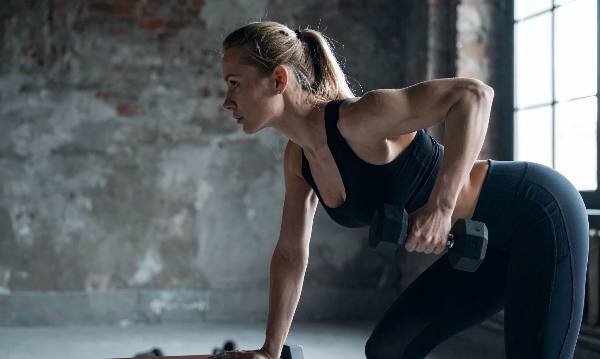
How: Knee and support hand on a bench, torso parallel to the floor. With the free arm, pull the dumbbell toward the hip by initiating the movement with the elbow, not the hand. Allow slight natural torso rotation to maximize the range of motion. Lower slowly while controlling the eccentric phase.
Why: This unilateral movement develops back thickness while identifying and correcting asymmetries. Concentration on one side allows superior neuromuscular connection and optimal range of motion impossible to achieve with a barbell.
3. Dumbbell Military Press
Muscles worked: Deltoids (3 heads), trapezius, triceps.
How: Standing or seated, dumbbells positioned at shoulder level, palms facing forward. Push vertically overhead until full extension without brutally locking elbows. Return controlled to starting position. Standing, engage abs to maintain neutral spine.
Why: King movement for building massive and round shoulders. Standing version also engages the core, developing trunk strength and stability. Arm independence guarantees balanced deltoid development.
4. Goblet Squat

Muscles worked: Quadriceps, glutes, calves, abdominals, forearms.
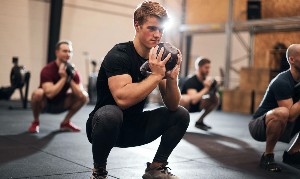
How: Standing, feet slightly wider than shoulder width, hold a dumbbell vertically against the chest with both hands. Descend into full squat, thighs parallel to floor or lower if mobility allows, then rise by pushing through heels. Torso remains upright throughout movement.
Why: Ideal position for all levels. Counterweight facilitates upright torso maintenance, making squat technique learning accessible to beginners. This fundamental exercise develops leg strength and mobility while engaging abs and grip.
5. Alternating Bicep Curl
Muscles worked: Biceps, brachialis, brachioradialis.
How: Standing, dumbbells along the body, alternate flexion of each arm in supination (palm up). Keep elbows fixed against flanks and focus on biceps contraction. Add slight external rotation at movement end to intensify biceps peak contraction. Lower slowly to control eccentric phase.
Why: Essential exercise for developing arm volume. Alternation allows maximum concentration on each biceps, with optimal time under tension. Perfect introductory exercise accessible to all levels, remains effective even for advanced athletes when executed with impeccable technique.
6. Overhead Extension (French Press)
Muscles worked: Triceps (especially long head), shoulder stabilizers.
How: Seated or standing, hold a dumbbell with both hands behind head, elbows pointing toward ceiling. Perform vertical extension keeping elbows fixed and tight, then return controlled. Avoid elbows flaring out laterally during movement.
Why: Specifically targets the long head of the triceps, responsible for arm thickness. Optimal stretch position stimulating maximum hypertrophy. Essential movement for developing complete and voluminous arms, perfectly complementing pressing exercises.
7. Lateral Raises
Muscles worked: Middle deltoid (lateral), upper trapezius.
How: Standing, dumbbells along body, elbows slightly bent. Raise arms laterally to horizontal without using momentum or torso swing. Imagine pouring water from a pitcher at movement end. Lower slowly resisting gravity.
Why: Isolation exercise par excellence for sculpting shoulder width. Specifically develops middle deltoid, creating that sought-after athletic V-silhouette. Strict control eliminates all compensation and maximizes targeted muscle recruitment.
8. Dumbbell Forward Lunges
Muscles worked: Quadriceps, glutes, hamstrings, trunk stabilizers.
How: Standing, dumbbells along body, take large step forward then descend vertically until back knee grazes floor. Front knee doesn't pass toe tip. Push through front heel to return to starting position. Alternate legs or complete all reps on one side before switching.
Why: Functional movement building powerful quadriceps and glutes while developing balance and coordination. Unilaterality naturally reveals and corrects strength imbalances between legs, improving muscular symmetry and preventing injuries.
9. Rear Delt Fly (Posterior Raises)
Muscles worked: Posterior deltoids, rhomboids, middle trapezius.
How: Torso bent at 90 degrees (standing with flexed hips or seated bent forward), dumbbells hanging under shoulders. Spread laterally by contracting rear shoulders, elbows slightly bent. Raise until arms parallel to floor, then return controlled.
Why: Often neglected zone yet crucial for shoulder balance and injury prevention. Strengthens posture by countering excessive anterior deltoid work effects. Strict execution guarantees perfect isolation of this delicate zone.
10. Romanian Deadlift
Muscles worked: Hamstrings, glutes, lower back, trapezius.
How: Standing, dumbbells in front of thighs, descend by pushing hips backward while maintaining nearly straight legs (slight knee bend). Lower until feeling intense hamstring stretch, then rise by contracting glutes and hamstrings. Back remains neutral throughout movement.
Why: Fundamental movement for building powerful posterior chain, base of powerlifting. Develops thick hamstrings and voluminous glutes while strengthening lower back. Optimal stretch position stimulating maximum muscle growth.
11. Incline Dumbbell Press
Muscles worked: Upper pectorals (clavicular head), anterior deltoids, triceps.
How: On bench inclined 30-45 degrees, dumbbells at chest level. Push vertically following slight forward angle, until full extension. Return controlled maximizing upper pectoral stretch. Keep shoulder blades squeezed against bench.
Why: Specifically targets upper pectorals, creating aesthetic demarcation between pecs and shoulders. Often underdeveloped zone requiring dedicated work. Moderate incline optimizes clavicular head muscle recruitment.
12. Hammer Curl
Muscles worked: Brachialis, biceps, brachioradialis, forearms.
How: Standing, dumbbells along body with palms facing each other (neutral grip), flex elbows maintaining this orientation throughout movement. Keep elbows fixed against torso. Rise to maximum contraction, then lower slowly resisting.
Why: Intensely works the brachialis (muscle under biceps) and forearms. Brachialis development literally pushes biceps upward, creating thicker arms viewed frontally. Neutral position allows handling heavier loads than classic curl, stimulating more growth.
13. Dumbbell Shrugs
Muscles worked: Upper trapezius, scapula elevators.
How: Standing, dumbbells along body, raise shoulders vertically as high as possible toward ears. Hold one-second contraction at top, then lower slowly resisting. Avoid any shoulder rotation unnecessarily stressing the joint.
Why: Simple yet remarkably effective movement for developing massive traps. These thick muscles create powerful transition between shoulders and neck, distinctive sign of developed physique. Safe movement allowing very heavy load handling.
14. Tricep Kickback

Muscles worked: Triceps (isolation), shoulder stabilizers.
How: Torso bent at 90 degrees (possible support on bench), arm along body with fixed elbow forming 90-degree angle. Horizontal forearm extension until arm fully extended, then controlled return. Only forearm moves, elbow remains locked in position.
Why: Excellent isolation exercise for maximum triceps congestion. Perfect at end of arm session to completely exhaust muscle fibers. Position offers intense end-of-movement contraction, particularly engaging lateral triceps head.
15. Arnold Press
Muscles worked: Deltoids (3 heads), trapezius, triceps.
How: Seated on bench with backrest, dumbbells in front at shoulder height, palms facing you like at curl end. Push vertically while performing external wrist rotation, finishing palms forward arms extended. Reverse movement during descent.
Why: Invented by Arnold Schwarzenegger himself, this movement engages all three deltoid heads in one exercise through rotation. Stimulates more muscle fibers than classic press, adding thickness and width to shoulders. Advanced movement for experienced athletes seeking complete development.
Can You Train with Dumbbells Every Day?
Technically possible, but rarely optimal. Muscles require rest and recovery to rebuild stronger. Smart programming alternates muscle groups or intensities. For example, day 1 intensive upper body, day 2 intensive lower body, day 3 rest or light cardio, then cycle repetition.
Overtraining signals include:
- Performance stagnation or regression despite constant efforts
- Persistent fatigue, sleep disorders, increased irritability
- Chronic joint pain, recurrent tendon inflammation
Listen to your body and prioritize quality over quantity. Three to five well-structured weekly sessions far surpass seven mediocre sessions exhausting the nervous system.
Tips to Maximize Your Results
Technique trumps load. A perfectly executed movement with 12 kg stimulates more muscle growth than an approximate movement with 20 kg excessively mobilizing auxiliary muscles. Film yourself to correct imperceptible execution flaws.
Methodical progression guarantees constant results. Gradually increase load, repetitions or decrease rest times. Note your performances to objectively track your evolution. This systematic approach transforms training from random activity to precise science.
Quality equipment greatly facilitates progression. Dumbbells like those offered by Uni Strength, with their robust construction and comfortable grip, allow focusing on muscular effort rather than struggling with defective equipment. Investing in adequate equipment constitutes the base of serious and lasting practice.
To go further in the shop: Adjustable dumbbells, Fixed dumbbells, Pair of Adjustable Dumbbells 2-32 kg - 2 kg increments, Hexagonal Rubber Dumbbells from 2.5 to 70 kg - Pair.
The equipment used for these 15 exercises
| Exercises | Equipment | Key figure |
|---|---|---|
| All exercises, light to moderate loads | HR-32 adjustable dumbbells | 2 to 32 kg per dumbbell, 2 kg steps, adjusted by turning the handle |
| Goblet squat, lunges, Romanian deadlift, rows | HR-36 adjustable dumbbells, 100% steel | 4 to 36 kg per dumbbell, 2 kg steps, expandable to 65 kg |
| Heavy loads | Titan 60 adjustable dumbbells | 7.5 to 60 kg per dumbbell, 2.5 kg steps |
| Fast sets and supersets | Hexagonal rubber dumbbells | pairs from 2.5 to 70 kg, steel core |
| Bench press, incline press, one-arm row, overhead extension | UF-5 Plus incline bench | backrest adjustable from 0 to 88° in 6 positions, 500 kg maximum load |
Specifications taken from the product pages on 9 October 2026.
Frequently asked questions
Why are dumbbells so effective?
Natural freedom of movement, work of the stabilising muscles, correction of left-right imbalances, greater range of motion and the option to drop the load safely when training alone.
Are adjustable dumbbells worth it?
Yes: they replace a pile of fixed pairs and are the most scalable investment for home training.
Which dumbbell exercise for the chest?
The dumbbell bench press, elbows at 45° to the torso, whose greater range than the bar stretches the chest more and works each side independently.