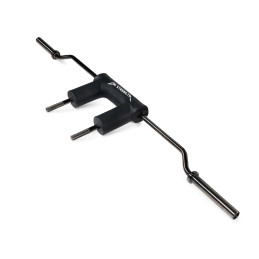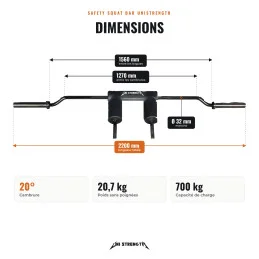
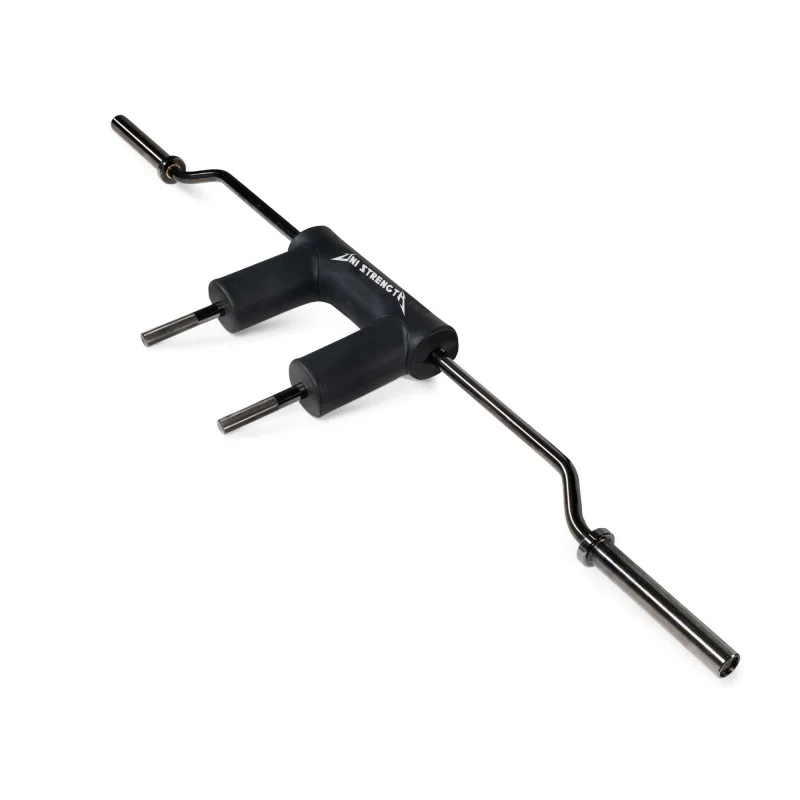
Technical specifications of our Safety Squat Bar SSB:
- Length: 220 cm
- Between collars: 1560 mm
- Between cambers: 1270 mm
- Rack compatibility: up to 124 cm between the outer edges of the J-hooks
- Diameter: 32 mm
- Weight: 20.7 kg (without handles)
- Capacity: 700 kg (190,000 PSI)
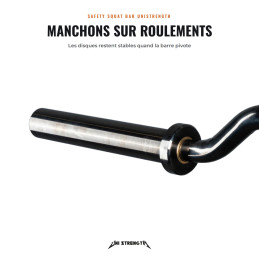
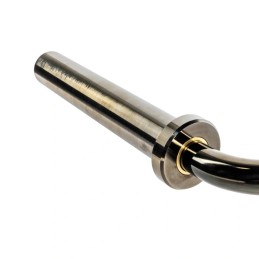
- Olympic sleeves on bearings
- Camber: 20°
- Finish: Black Titanized(black titanium)
The Safety Squat Bars (SSB) are ideal for performing a hybrid movement between the High Bar Squat and Front Squat, with particular emphasis on working the quadriceps and upper back muscles. Thanks to the SSB, you can perform these movements with minimal stress on your shoulders, while maintaining optimum comfort.
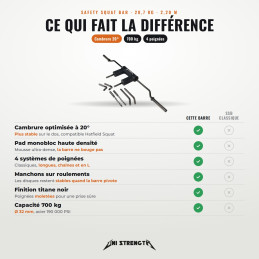
Our Safety Squat Bar has been specially designed with an optimized curvature to maximize stability on your back, making exercises like the Hatfield Squat easier. We've refined the angle of curvature from 22° to 20°, ensuring perfect balance, making this one of the most stable bars on the market.
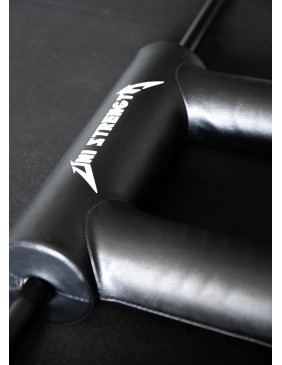
What's more, our high-quality one-piece pad, made of ultra-dense foam, offers incomparable comfort and limits the bar's movements on your back, unlike models with a three-part pad.
Sleeves on bearings. With a cambered bar, the bar rotates on its axis as soon as the torso leans forward, in the good morning, the JM press or the lunge. The bearing-mounted sleeves let the plates spin freely. They stay hanging vertically instead of following the rotation of the bar, which reduces jolts and strain on the handles. Many SSBs do not have them.
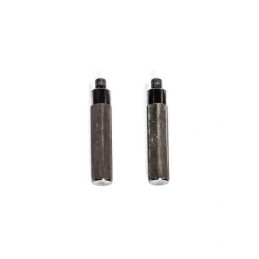
Modular handles:
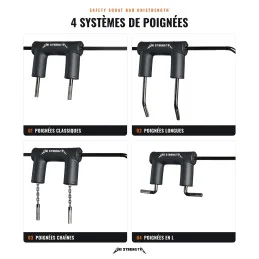
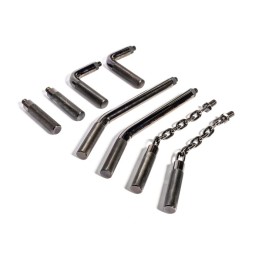
Our bar lets you change the handles to suit your needs and preferences:
- Classic: short handles (included with the "no handles" version), weight 1.9 kg
- Spider / Long: long handles, hands away from the body (included with the "with handles" version), weight 5.3 kg
- SSB Chain Handles: our favorite for a stricter movement (avoids making the exercise easier by pushing the handles upwards, included with the "with handles" version), weight 3.0 kg
- L-shaped handles: hands at 90° (included with the "with handles" version), can also be used with the SSB for rowing board exercises, weight 3.2 kg
- Without handle: ideal for JM Press
All our handles are finished in black titanium with a textured surface (knurling) for optimum grip.
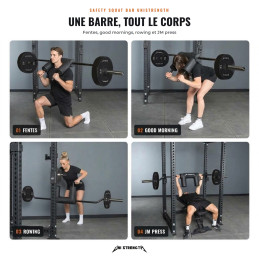
Possible exercises with our SSB:
| Exercise | Target muscles |
|---|
| Squat | Quads, glutes, upper back (bar can be used both ways) |
| Hatfield Squat | Quads, glutes |
| Good morning | Hamstrings, glutes, lower back |
| Lunges | Quads, glutes |
| Sissy Squat | Quads |
| JM Press | Triceps |
| Seal row (L handles) | Back, biceps |
Frequently asked questions
What are the specifications of the Safety Squat Bar Atlas?
Length 220 cm, diameter 32 mm, weight 20.7 kg without handles, capacity 700 kg (190,000 PSI), Olympic sleeves on bearings, 20° camber, Black Titanized finish.
Which handles are available for the SSB?
Classic short handles (1.9 kg, included with the version without handles), long Spider handles (5.3 kg), chain handles (3 kg, for a stricter movement) and 90° L handles (3.2 kg, which also allow plank rows). The last three are included with the version with handles. Without a handle, the bar is used for the JM Press.
Which exercises can be done with the SSB?
Squat (the bar can be used in both directions to emphasise the quadriceps or the posterior chain), Hatfield Squat, good morning, lunges, sissy squat and JM Press.
Why use a Safety Squat Bar?
For a hybrid movement between the high bar squat and the front squat, which emphasises the work of the quadriceps and the upper back while minimising stress on the shoulders.
What changes in the V2 version?
The camber angle goes from 22° to 20° for better balance, the pad is a single piece of ultra-dense foam to limit movement of the bar on the back, and the sleeves are mounted on bearings.
Is the SSB compatible with my rack?
Yes, it fits racks up to 124 cm between the outer edges of the J-hooks.
Is this the most versatile safety squat bar?
It is one of the most complete on the market. 20° camber, 4 handle systems, 700 kg capacity and sleeves on bearings. These bearings make the difference against competing SSBs with fixed sleeves on movements where the bar rotates, such as the good morning, the JM press, lunges or the Hatfield squat. The plates stay stable, the movement is smoother and the handles are not twisted.