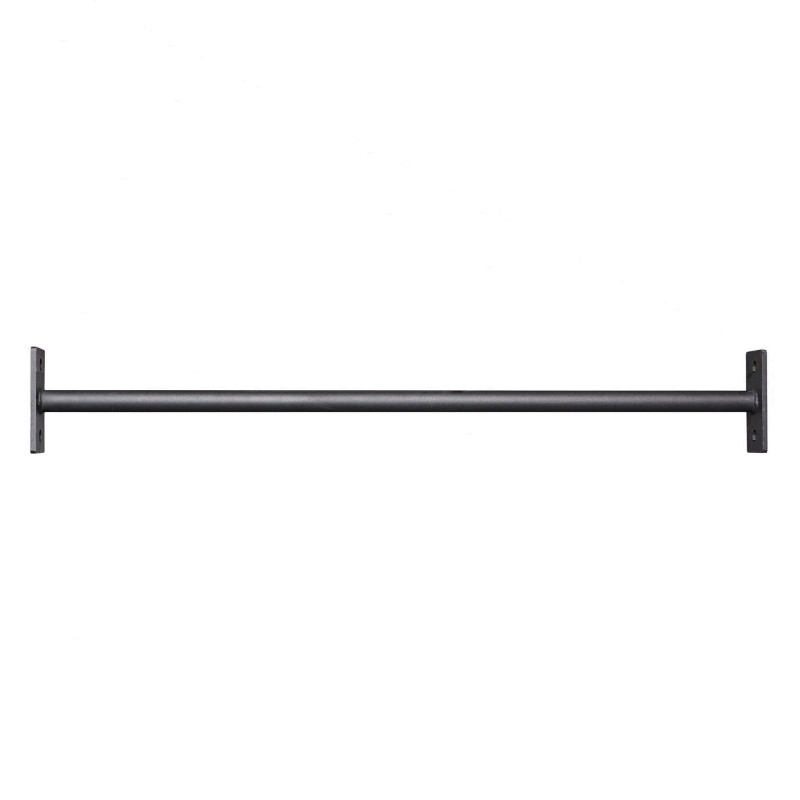
Technical specifications of our pull-up bar
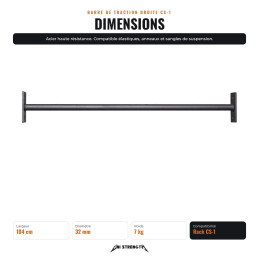
- Material: high-strength steel
- Weight: 7 kg
- Diameter: 32 mm
- Width: 104 cm
- Compatibility: CS-1 Rack (75 x 75 mm uprights, 25 mm holes)
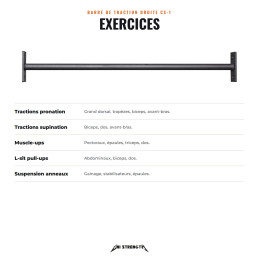
Exercises and muscles worked with the CS-1 pull-up bar
This bar allows a variety of movements to work the whole upper body effectively.
|
Exercise
|
Muscles worked
|
|
Pronated pull-ups
|
Back (lats, traps), biceps, forearms
|
|
Supinated pull-ups
|
Biceps, back, forearms
|
|
Muscle-ups
|
Chest, shoulders, triceps, back
|
|
L-sit pull-ups
|
Abs, biceps, back
|
|
Hanging with rings
|
Core, stabilisers, shoulders
|
Why choose the CS-1 Straight Pull-Up Bar?
Its solid, ergonomic construction ensures an optimal grip and perfect stability for safe, effective training. By offering compatibility with various accessories such as straps and bands, it lets you adjust the intensity of exercises, which makes this equipment ideal for beginners and experienced athletes alike.
CS-1 Straight Pull-Up Bar – the essential accessory for your rack
Ideal for strict pull-ups, kipping pull-ups, muscle-ups and gymnastic movements, it is compatible with the addition of bands, rings or suspension straps, letting you adapt your training to your level and your goals.
Thanks to its ultra-resistant construction, it supports heavy loads and guarantees optimal durability even with intensive use. Whether for upper-body strengthening, improved grip strength or advanced core work, this bar is an essential addition to any home gym or professional training space.
Add this pull-up bar to your rack and improve your performance right now!
Frequently asked questions
What are the specifications of the CS-1 straight pull-up bar?
High-strength steel, 7 kg, 32 mm in diameter, 104 cm wide. Compatible with the CS-1 rack (75 x 75 mm uprights, 25 mm holes).
Which exercises can be done on this pull-up bar?
Pull-ups in pronation and supination, strict or kipping pull-ups, muscle-ups, L-sit pull-ups and hanging with rings or straps.
Can bands or rings be attached to it?
Yes, it is compatible with adding bands, rings or suspension straps to adapt the intensity to your level and goals.
Which muscles are worked?
The back (lats, traps), the biceps, the forearms and the grip, and depending on the variations the chest, shoulders, triceps and core.