
Power Racks & Squat Racks
Power racks, squat cages and pulley racks for home or commercial gyms. Three upright systems that are not compatible with each other, CS-1 (75 mm), Athéna (60 mm) and CS-Basic (50 mm). Choose your range, then add its accessories.
Our products
There are 121 products.
-€69.99
New
Pack
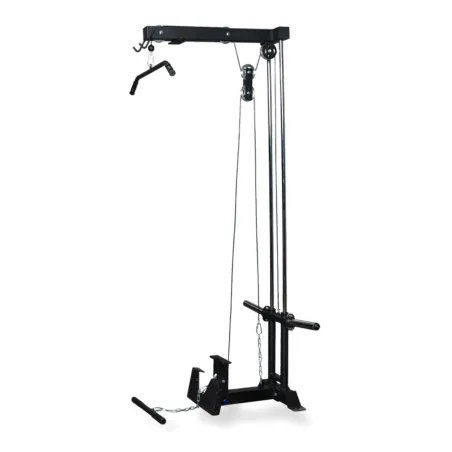
Reduced price:€499.99
Save €69.99
- Free delivery in metropolitan France from €300
- Pay in 4 instalments
-€69.99
New
Pack
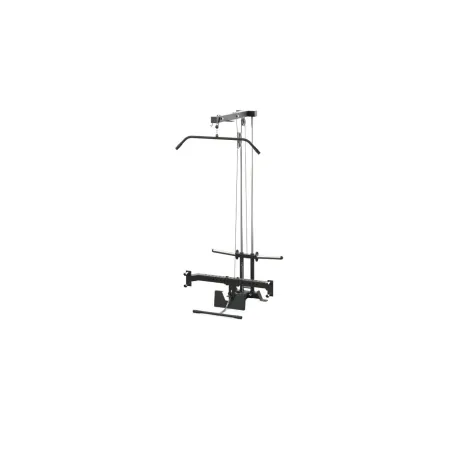
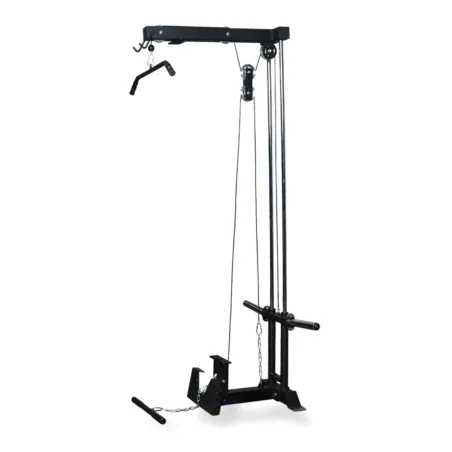
Reduced price:€499.99
Save €69.99
- Free delivery in metropolitan France from €300
- Pay in 4 instalments
-€119.99
New
Pack
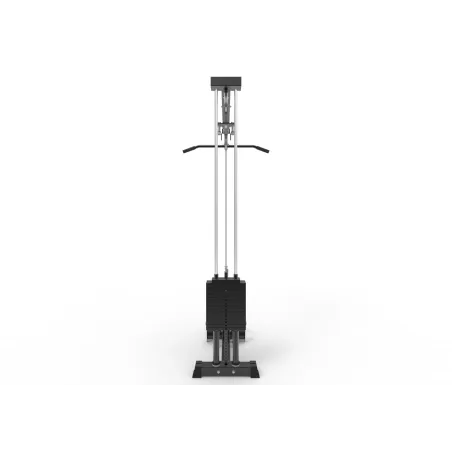
Reduced price:€999.99
Save €119.99
- Free delivery in metropolitan France from €300
- Pay in 4 instalments
-€119.99
New
Pack
Reduced price:€999.99
Save €119.99
- Free delivery in metropolitan France from €300
- Pay in 4 instalments
-€129.98
New
Pack
Reduced price:€1,129.99
Save €129.98
- Free delivery in metropolitan France from €300
- Pay in 4 instalments
-€129.98
New
Pack
Reduced price:€1,129.99
Save €129.98
- Free delivery in metropolitan France from €300
- Pay in 4 instalments
-€149.97
New
Pack
Reduced price:€1,249.99
Save €149.97
- Free delivery in metropolitan France from €300
- Pay in 4 instalments
-€149.97
New
Pack
Reduced price:€1,249.99
Save €149.97
- Free delivery in metropolitan France from €300
- Pay in 4 instalments
Pack
Price:€34.99
- Free delivery in metropolitan France from €300
- Pay in 4 instalments
Pack
Price:€149.99
- Free delivery in metropolitan France from €300
- Pay in 4 instalments
Pack
Price:€174.99
- Free delivery in metropolitan France from €300
- Pay in 4 instalments
New
Pack
Price:€209.99
- Free delivery in metropolitan France from €300
- Pay in 4 instalments
New
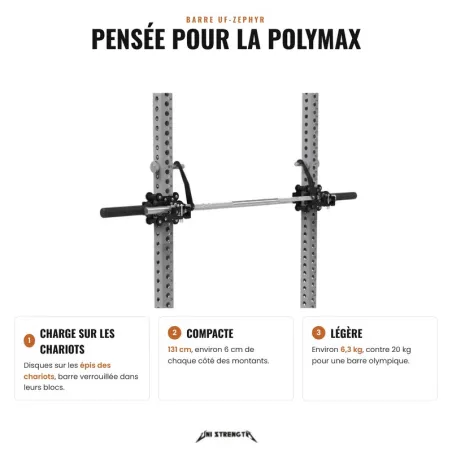
Price:€99.99
- Free delivery in metropolitan France from €300
- Pay in 4 instalments
In strength training, the rack is not just an accessory: it is the centre of your training. Whether you are setting up a compact home gym or a professional gym, the structure you choose determines the quality of your progress and your physical safety. At Uni Strength, we design equipment that combines advanced engineering with raw strength to support your highest ambitions.
What is a power rack?
A power rack is a free-standing steel structure designed to make handling free weights safe during compound movements. Unlike guided machines, it lets you work along natural movement paths, engaging the stabiliser muscles and optimising your biomechanics.
It has two roles: it holds your Olympic bars at different heights and, above all, it acts as a tireless training partner. Thanks to the safety bar rests, you can push your limits to muscle failure without a spotter.
The benefits of a Uni Strength rack for your training
Investing in a Uni Strength rack means getting a tireless "training partner". The benefits are many:
-
Safety and independence: With the spotter arms (safety arms) or safety straps, you can train to muscle failure without risk, even when training alone.
-
Precise adjustment: Our laser-perforated uprights allow precise adjustment of the J-cups (bar hooks), fitting your body perfectly for an optimal start position.
-
Modularity that grows with you: A Uni Strength rack is a base you can add accessories to. Add options (pulleys, dips, plate storage) to turn your station into a complete training centre.
-
Peace of mind: Knowing that your equipment can take several hundred kilos frees your mind and lets you focus solely on your technique and power.
Compare the Uni Strength rack ranges
Three upright systems, not compatible with each other. Choose the range according to your space, budget and exercises, then complete it with its accessories.
| CS-1 | CS-Basic | Athéna | |
|---|---|---|---|
| Uprights | 75 x 75 mm steel tube, 3 mm steel | 50 x 50 mm steel tube | 60 x 60 mm steel tube |
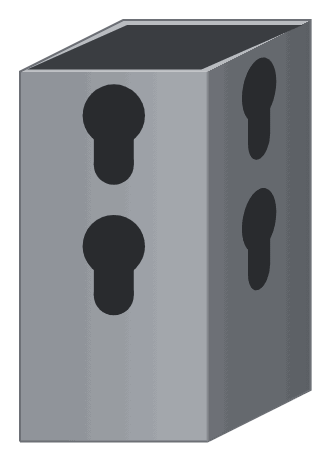
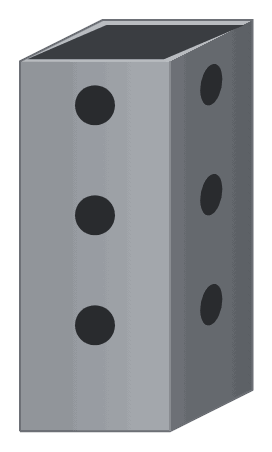
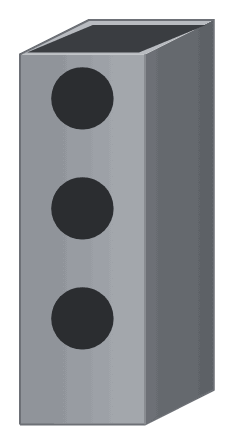
| Holes | 25 mm (1"), optional 16 mm keyhole, on all 4 sides | 25 mm (1"), on the front | 16 mm (5/8") |
| Height | 204 or 236 cm | 212 cm | Pulley 206 or 228 cm, pulley rack 206 or 208 cm, squat stands 184 cm |
| Rated load | 800 kg | 350 kg | Pulley rack 350 kg on the J-hooks and 140 kg on the pulley, squat stands 300 kg |
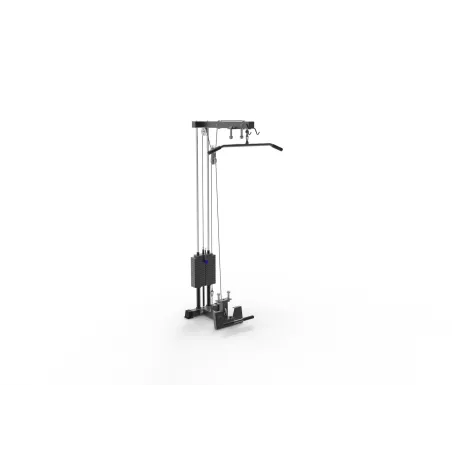
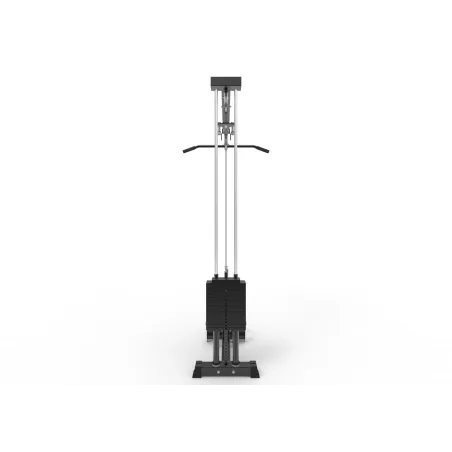
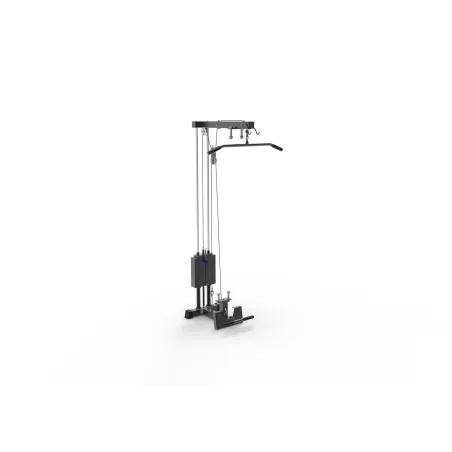
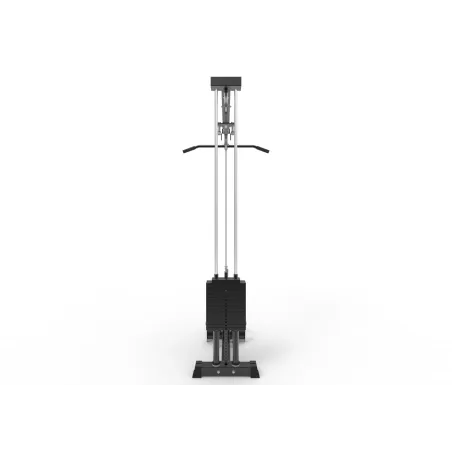
| Strengths | Custom configurator, 6-upright version, folding rack, pulleys, monolift | Ready-to-use packs with dips, J-hooks and storage | Built-in pulley, plate-loaded or 95 kg weight stack |
| Who it is for | Demanding lifters and powerlifters, home gym that grows with you | First rack, controlled budget | Complete pulley and rack training in a compact space |
| See the range | See the range | See the range |
Combo Rack for powerlifters
Inspired by powerlifting standards, the Combo Rack is the dedicated equipment for competition squat and bench press. It allows quick adjustment of the bar height without unloading, ideal for clubs or athletes preparing for competitions.
Which exercises can you do with your rack?
The versatility of our structures lets you target every muscle chain:
-
Lower body: Squat (high bar/low bar), lunges, good mornings.
-
Chest and shoulders: Bench press (flat, incline), military press (OHP).
-
Back and arms: Pull-ups (using the built-in bars), lat pulldowns and cable rows (on the Athénarange), barbell rows.
-
Core: Hanging leg raises, anchor point for suspension straps or resistance bands.
The Uni Strength expert's view:
To make the right investment, two technical criteria should guide your choice: load capacity and modularity.
-
Load capacity: This defines the structural strength of your equipment. For regular training, we recommend a structure that can take at least 300 to 400 kg, guaranteeing an absolute safety margin even when the bar is dropped hard into the hooks at the end of a set. Our high-end models, such as the CS-1, are designed to take far higher loads, meeting the needs of the strongest athletes.
-
Compatibility and upgradability: A rack should not be a fixed purchase. The strength of our ranges, particularly Athéna and CS-1, lies in their compatibility with a large catalogue of accessories.
-
Customisation: You can turn your rack into a complete station by adding dip stations, additional pulleys, lever arms (Jammer Arms) or plate storage holders.
-
Planning ahead: Choosing Uni Strength means equipment that evolves with your level: start with a bare structure and add to it as you progress, for ever smoother, ultra-versatile training.
Our guides: the 8 main benefits of a Home Gym.
Frequently asked questions
Can you add a pulley to a rack?Yes: high/low pulley kit for the CS-1 (up to 250 kg) and for the CS-Basic (120 kg), both loaded with 50 mm Olympic plates. The Athéna has a built-in height-adjustable pulley, plate-loaded or with a 95 kg stack.
It is recommended for pull-ups, explosive movements and the monolift. Without anchoring, weight the structure with plate storage on the uprights (CS-Basic storage extension up to 880 kg, CS-1 modular storage): the rack becomes more stable.
The CS-1 comes in 204 or 236 cm; allow a few centimetres above for pull-ups. The Athéna comes in standard height or 228 cm. Measure your ceiling height before choosing the version.
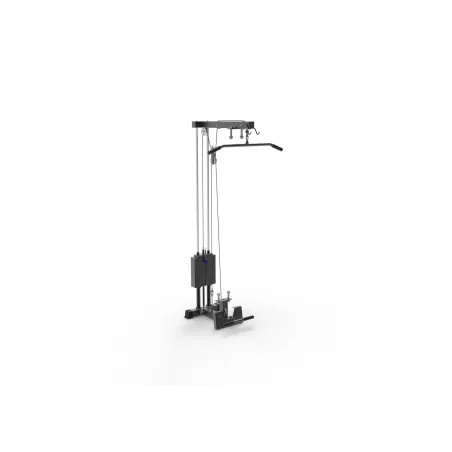
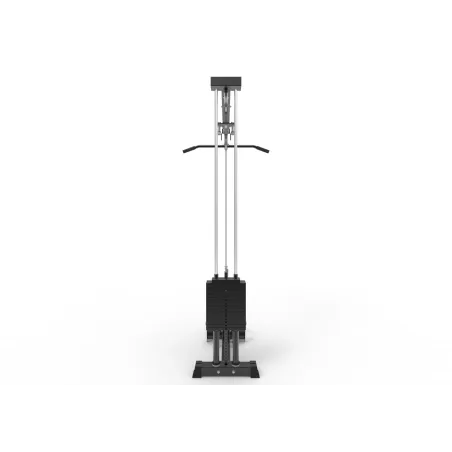
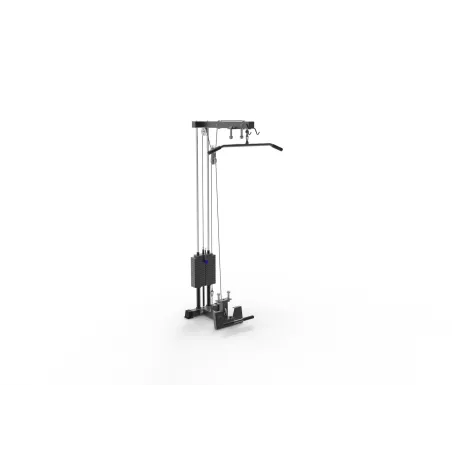
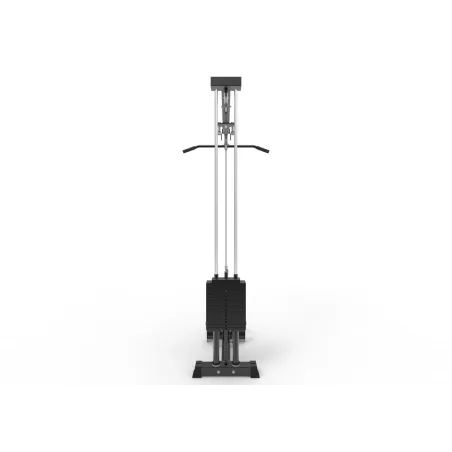
CS-Basic: entry-level rack for the fundamentals, with its own dedicated accessories (dips, 120 kg pulley, 880 kg storage extension). CS-1: modular power rack with 75 x 75 mm uprights, 204 or 236 cm heights, the most expandable range (6-upright extension, monolift, high/low pulley, Polymax 75 x 75 Smith machine). Athéna: 60 x 60 mm uprights built around the adjustable pulley (plate-loaded or 95 kg stack) and the compact all-in-one pulley rack.
Start from four measurements. Ceiling height: the CS-1 comes in 204 or 236 cm, the CS-Basic is 212 cm high and the Athéna all-in-one pulley rack 206 cm. Footprint: 119 x 91 cm for the CS-1, 122 x 122 cm for the CS-Basic; also allow a clear width of at least 220 cm, the length of an Olympic bar, plus room to load the plates. Load: 800 kg rated for the CS-1. Upgrades: the CS-1 takes the most accessories (6-upright extension, monolift, high/low pulley up to 250 kg), the CS-Basic covers squat, bench press and pull-ups with simpler equipment, and the Athéna suits you when the pulley is the priority.
No: the fittings differ (75 x 75 mm for the CS-1, 60 x 60 mm for the Athéna, its own structure for the CS-Basic). Bars, plates and benches, however, are shared: the 122 cm UF Power Bench fits between the uprights of every rack.
Yes. The CS-1 range includes upright extensions, bar holders, dip bars and a 90 kg high and low pulley, expandable to 110 or 130 kg with one or two 20 kg kits.
Do you deliver racks to Belgium and Switzerland?Yes. We ship from our warehouse in France to France and most European countries; shipping costs and delivery times are shown in the cart according to the country. Returns are accepted within 14 days.