Professional floor protection for intensive training
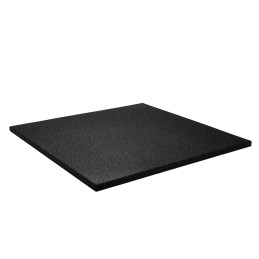
Built to withstand repeated impacts, these rubber tiles are ideal for the squat, the deadlift, weightlifting movements or Cross Training. Their non-slip surface guarantees a firm footing, even during explosive movements.
The 15 mm thickness suits standard fitness areas and home gyms.
Why choose a rubber puzzle tile for your gym
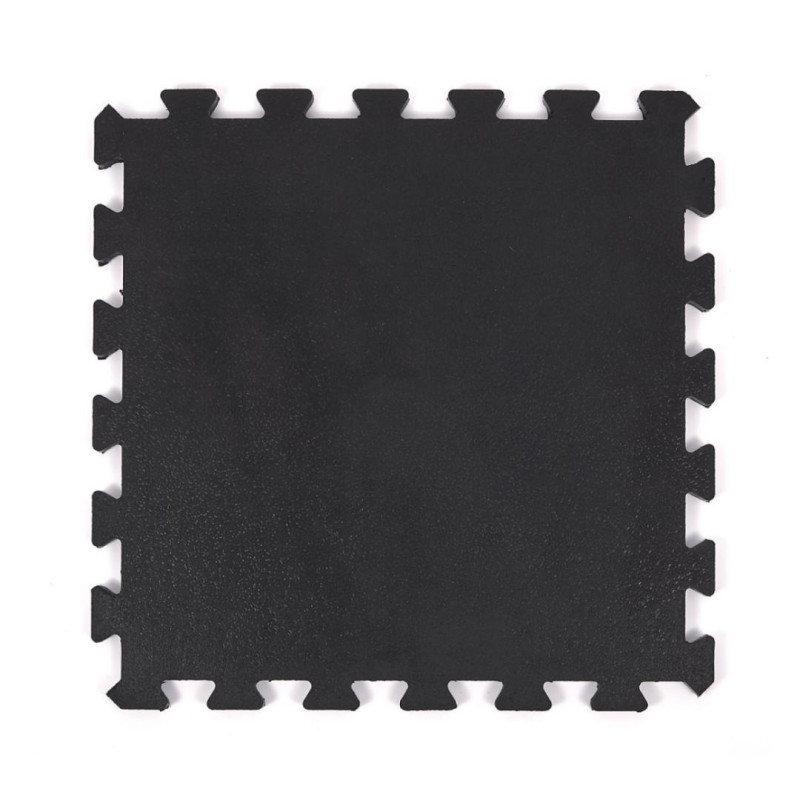
A rubber puzzle tile is a modular interlocking floor covering made of high-density rubber, designed to absorb the repeated impacts of strength training equipment. Unlike EVA foam tiles, the density of 980 kg/m³ limits compression under load and keeps the surface flat over time.
- Shock absorption and vibration reduction : protects the floor, preserves the equipment and limits noise during controlled drops.
- Non-slip surface and stability : the precise interlocking prevents sliding and tile migration during training.
- High-density structure : limits compression under load, keeps the surface flat and durable over time.
- Clean and fast installation : assembly and removal without glue, ideal for temporary or reconfigurable areas.
Protection designed for intensive training
These rubber tiles are designed for the squat, the deadlift, weightlifting movements and Cross Training. The fine-grain non-slip surface keeps you steady, even on explosive movements. The 15 mm thickness suits standard fitness areas and home gyms.
Benefits for gyms and home gyms
Versatile and durable, puzzle tiles suit strength training rooms, weightlifting areas, functional training studios and home gyms. Their 100 x 100 cm format covers small corners and large areas alike with precision, lets you customise the training zone and effectively reduces noise and vibration for a safe, comfortable and high-performing environment, while protecting your installation over the long term.
Technical specifications
|
Overall dimensions
|
100 x 100 cm (±5 %)
|
|
Usable dimensions once assembled
|
96 x 96 cm
|
|
Usable surface per tile
|
0.92 m²
|
|
Thickness
|
15 mm
|
|
Weight
|
14 kg (±5 %)
|
|
Density
|
980 kg/m³
|
|
Surface
|
Fine grain, non-slip
|
|
Material
|
Rubber
|
|
Installation
|
Without glue, on a flat, clean and dry floor
|
|
Cutting
|
With a utility knife
|
|
Maintenance
|
Vacuum cleaner or mop
|
Working out how many tiles you need
The tile measures 100 x 100 cm overall. Once interlocked, with the teeth fitting into the recesses of the neighbouring tile, it covers 96 x 96 cm, that is 0.92 m² of usable surface. Divide each side of your room (in cm) by 96, round up and multiply the two results. Offcuts along the walls are cut with a utility knife.
|
Room (cm)
|
Tiles lengthwise
|
Tiles widthwise
|
Total
|
|
250 x 250
|
3
|
3
|
9
|
|
300 x 300
|
4
|
4
|
16
|
|
400 x 300
|
5
|
4
|
20
|
|
400 x 400
|
5
|
5
|
25
|
|
500 x 400
|
6
|
5
|
30
|
Rubber puzzle tile or EVA foam tile: which one to choose?
|
Criterion
|
Uni Strength rubber puzzle tile
|
EVA foam puzzle tile
|
|
Use
|
Strength training, weightlifting, Cross Training
|
Floor fitness, yoga, children areas
|
|
Behaviour under heavy load
|
High density, limited compression
|
Marks under racks and plates
|
|
Tile stability
|
Precise interlocking, no migration
|
Can slide and come apart
|
|
Floor protection against impacts
|
Yes
|
Limited
|
These rubber puzzle tiles are the ideal choice for any athlete looking to combine durability, safety and clean looks in their training space.
Frequently asked questions
What are the dimensions of a Uni Strength rubber puzzle tile?
Each tile measures 100 x 100 cm overall, teeth included, and covers 96 x 96 cm once interlocked, that is 0.92 m² of usable surface. Thickness 15 mm, weight 14 kg, density 980 kg/m³. Dimensions and weight are given with a manufacturing tolerance of ±5 %.
How many puzzle tiles do I need for my room?
Divide each side of the room in cm by 96, round up, then multiply the two results. For a room of 400 x 300 cm, count 5 x 4 = 20 tiles. Allow one extra tile per side rather than one too few, offcuts are cut with a utility knife.
Why does the tile cover 96 cm and not 100 cm?
The interlocking teeth measure about 4 cm. Once two tiles are assembled, the teeth of one fill the recesses of the other. The surface covered per tile therefore corresponds to the 96 cm spacing, and not to the 100 cm tip-to-tip measurement.
How do you install rubber puzzle tiles?
Installation is done without glue, on a flat, clean and dry floor. The tiles interlock with each other and are cut with a utility knife to fit edges and corners. Assembly and removal are quick, which also suits temporary areas.
Is a 15 mm tile enough for a home gym?
Yes for barbell strength training, racks, dumbbells and Cross Training in a home gym. The density of 980 kg/m³ limits compression under racks and plates.
Do puzzle tiles reduce noise and protect the floor?
Yes, they absorb impacts and reduce vibration, which protects the floor, preserves the equipment and limits noise during controlled drops.
How do you maintain rubber tiles?
The fine-grain top layer is cleaned with a vacuum cleaner or a mop.